Showing posts with label disappointment. Show all posts

Monday, June 13, 2011

Guest Post by Korina Chilcoat: A Young Writer's Journey to Success

Today we're kicking off the summer Dancing With The Pen blog tour with this beautiful essay by Korina Chilcoat, one of our contributing young writers. Come back tomorrow for an interview with Korina. You can read Korina's poem "What Makes You Happy?" in Dancing With The Pen.


A Young Writer's Journey to Success
by Korina Chilcoat

We are artists. Yes, we use the title “writer” to describe what we do but, in fact, we are artists who paint pictures with words. As artists, there is a far different connection with our work than individuals who perform a typical 9 to 5 job. Our work is an extension of our souls, so when we face rejection, are criticized, or don’t have our work accepted it’s not like someone is simply judging the quality of our work. They are judging and evaluating everything we are and who we stand for. It feels like they’re not saying the work isn’t good enough; they’re saying we’re not good enough.

As a fellow artist, I know as well as anyone the heartache that follows after a painful rejection. Like any breakup, the aftermath, for me, is usually marked by several tears shed and a bantering rage against the imbeciles who didn’t find my submission up to par, followed by cookie dough binge eating.

However, somehow I manage to pick myself up and dust myself off and continue on after each fall. To quote a line from the song “Moving Too Fast” from one of my favorite Broadway musicals The Last Five Years, the protagonist Jamie, also a budding author, utters, “Things might get bumpy but some people analyze every detail. Some people stall when they can’t see the trail. Some people freeze out of fear that they’ll fail, but I keep rolling on. Some people can’t get success with their art. Some people never feel love in their heart. Some people can’t tell the two things apart, but I keep rolling on.”

My writing journey started three years ago. Previously, I had written casually for fun and leisure but I thought to myself, maybe I have something important to share with others where they can read the words I write and feel the same way about the things I’m so passionate about. So, I began to research writing contests online. Amidst my busy schedule I would somehow find time to pen thought-provoking essays, emotional poetry, and scandalous short stories. Contest after contest after contest, I would eagerly mail in my carefully crafted literary pieces, ensuring each word rang out clear and vividly on the page.

Unfortunately, editors and judges weren’t as eager. My collection of rejection letters grew into medium-sized heap shoved into a shoebox under my bed, out of sight. But this only made me determined to prove them wrong, that my work was worthy.

I soon doubled the amount of submissions I sent out, sending work to any publication house or contest which I was eligible. My work consisted on everything from the dancing pattern of honeybees to poetry about heart-broken, distant lovers. Still, I wasn’t getting the news I desired. My unbridled optimism began to fade with the passing days and increasing income of rejection letters and worst of all no news at all. I began to doubt myself. Was my work good enough? Why didn’t anybody see potential in what I was producing? Should I continue to create or choose a more sensible, rewarding hobby? My submissions slowed and eventually nearly came to a complete halt.

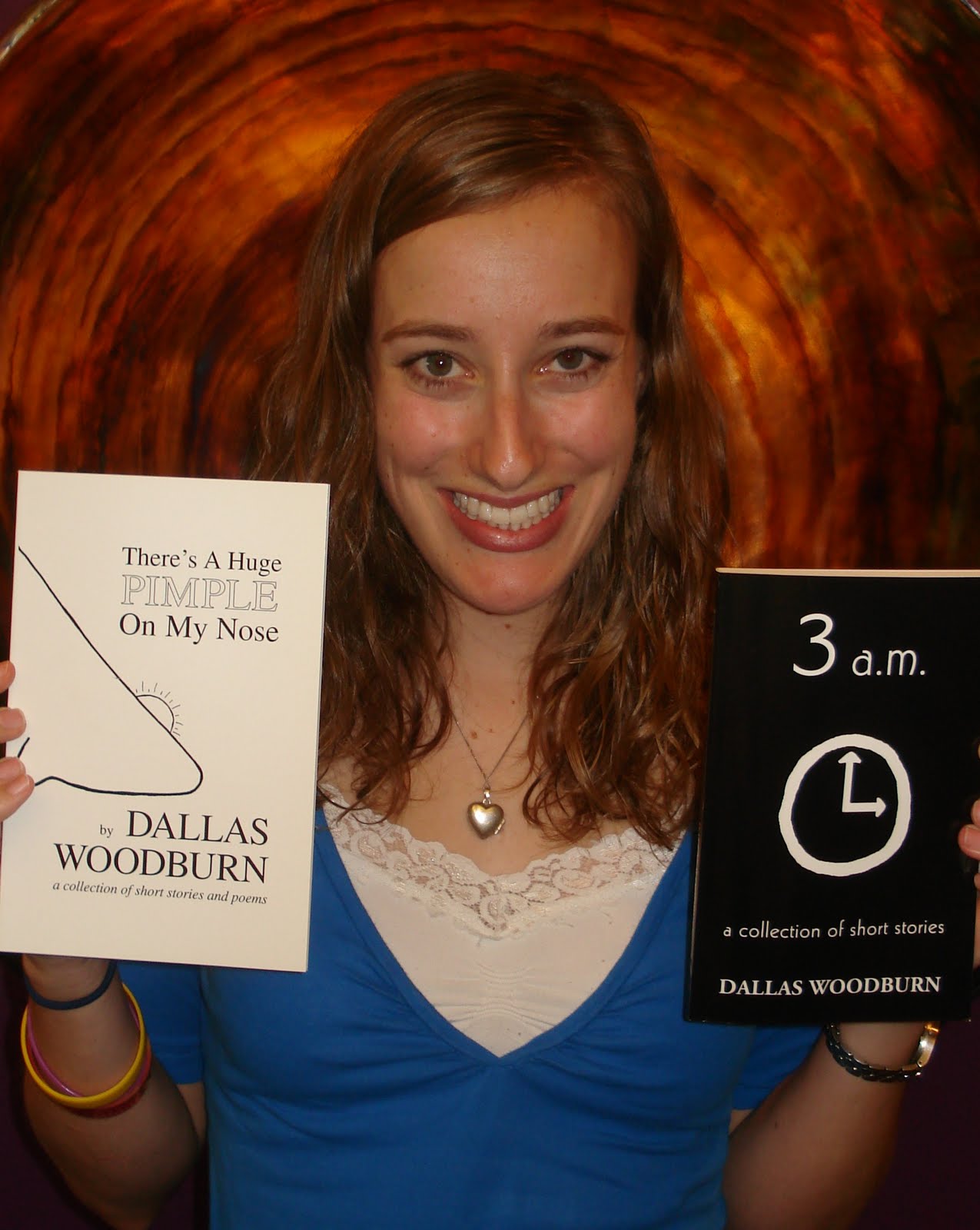
Then, one ordinary day, in one ordinary week, of an ordinary month, I logged into my email account, like I did several times a day, to find an email from a Dallas Woodburn. Dallas Woodburn? That name seemed familiar and I kept repeating it over and over in my head. I decided not to simply sit there and continue to guess like an imbecile so I clicked open the email. To my shock it was a writing contest I had entered several months back and I was thrilled to discover that I had placed honorable mention in this national contest for my poem!

This was the news I needed and had waited so long to hear. Two years spent sending submissions around the country and the world to finally have the gratification of finally knowing that I did something right. My stall ended and I went back into writing full force.

So now, as I recently celebrated my nineteenth birthday, I am proud to say that I have been published in the national youth magazine Teen Ink (which my article made the cover), in several national anthologies of writing (one of which I won first place in the nation and received a congratulatory letter from my state's Senator), and one of my poems is in the final round of submissions to be published in a Chicken Soup for the Soul book, hitting bookstores across the nation July 2011. Looking to the past is bittersweet, seeing that teenage girl furiously typing away at her computer, ignoring the rejection letters stuffed in a pile.

But this story isn’t just about me -- it’s about you, too. This is the message, the mantra, the manifesto of the wanna-be writer: failure isn’t fatal and those who fall are only failures if they stay sitting on the ground. You do not know which unsuccessful attempt is the last one right before your moment of glory, your big break, your time in the spotlight. So keep pressing forward, do what you do, and you just might find out that your dreams can come true.


Korina Chilcoat's poem "What Makes You Happy?" is featured in Dancing With The Pen: a collection of today's best youth writing, the debut anthology from Write On! Books. To contact Korina regarding writing inquires and speaking engagements you can email her at korinachilcoat@yahoo.com. To find out more about her, check out her literary blog “Louder Than Words” at http://korinachilcoat.blogspot.com

Saturday, February 12, 2011

Guest Post by Magdalena Ball

The Zen of Rejection
by Magdalena Ball

It couldn’t have happened at a worse moment. My car had just been hit side-on by a truck, and I was standing amidst the wreckage of glass and metal when the local mail lady pulled up. After ascertaining that I wasn’t hurt, she handed me a package: the obvious thick SASE that went along with my novel’s manuscript. I was being rejected again, and this time by the small local publishing house I thought would definitely take the novel.

I’m not sure which hurt more -- the loss of my lovely vehicle, or the final rejection of the novel. Both hurt, but in the aftermath that followed, I’m sure it was my manuscript I was primarily thinking of. After all, I had won a mentorship for this work, and my mentor, a multi-published novelist, told me that the work was publishable and ready for submission. I’m not naïve about the difficulties of getting a first novel published, but I did begin the submission process in a hopeful state of mind.

It wasn’t all bad news though. Although I did receive a few form letters (“due to the volume of submissions, we regret that we are unable to provide feedback, etc”), many of my rejections, including those from large houses, were very positive, and cited the quality of the writing, the strength of the characterisations, and the powerful nature of the plot, using words like “heart-wrenching,” “complex,” and “rich.” Many also suggested that the sluggish market for fiction, especially literary fiction, meant that to be accepted, a novel had to be perfect, startlingly good, and possess a fairly strong commercial angle.

Mine was apparently good, just not good enough.

The criticism received was very thorough in some cases, and provided specific examples where the work could be strengthened, and once I was over the sting, I began to feel grateful to those professional readers, who had taken such trouble over my manuscript, and who were unwilling to accept a novel which hadn’t reached its complete potential. I am after all, the author, and the books I write set benchmarks which my readers will judge me by. The quality of the work is really all that counts. Everything else is just ego and transition.

I have heard many people, authors and publishers alike, bemoan the state of publishing, and criticise the overtly commercial world which seems to be focused solely on profit. It’s a natural defence mechanism and one which I have been tempted to participate in. After all, it’s so much easier to blame my rejection on "the state of publishing today" than on the work. However, looking back over the novel, and reading through the criticisms, I began to believe that the comments were both generous and valid. I was heartened by the full scale and thoughtful reading which even the most commercial of publishers gave my work, taking it seriously and taking the time to provide real feedback. I rarely encountered the dreaded slush pile, and was taken seriously, without an agent, by almost all the publishers I submitted to.

The process also helped me appreciate, and this is certainly part of the tremendous learning curve that goes along with writing a full length novel, just how much hard work -- not inspiration, just graft -- is involved in taking a novel from sketchy draft to full scale polished work of art. The book was ultimately published, by a picky, high quality traditional publisher, but only after multiple re-writes. I believe strongly that this is the most important part of the writing process – where a piece of work goes from being okay to being really professional. It’s not just painful – it’s also utterly necessary and work that doesn’t get worked on extensively, and with multiple inputs, can’t reach its full potential.

I’ve always loved fiction, even more as a reader than as a writer, but writing my own novel and seeing just how much crafting is involved in the books I love, read and re-read, has made me appreciate even more what a wonderful and powerful art fiction writing is. There’s no point in sobbing, or putting the work away in a drawer forever, shunning further rejection. It’s all part of the game; the very reason why great literature exists. Good novels take time and a tremendous amount of work, and in the end, the speed and ease of publication is the one thing which readers and critics will ignore. This is no easy lesson for an impatient writer used to fairly instant gratification. But it’s a lesson worth learning. Every rejection is another part of the process, and to be welcomed and embraced.

So what can you do if, like me, you receive your 20th rejection and begin to wonder if you’ll just print up an e-book as is and sell it from your website, or leave the work sitting in the dark unread caverns of your computer’s hard disk for the rest of your life? The answer is simple and almost too obvious. Ask for help from a cluey editor, gather in the criticism, and get back to work. At the end of the day, you’ll be grateful that you took the time to make the work shine. And so will your readers. It‘s all part of becoming an overnight success story (and if you don’t believe me, ask JK Rowling or John Grisham – both famous for the number of rejections they got on their early books).


Magdalena Ball runs The Compulsive Reader. She is the author of the poetry books Repulsion Thrust and Quark Soup, the novel Sleep Before Evening, a nonfiction book The Art of Assessment, and, in collaboration with Carolyn Howard-Johnson, Blooming Red, Cherished Pulse, She Wore Emerald Then, and Imagining the Future. She also runs a radio show, The Compulsive Reader Talks. Find out more about Magdalena at http://www.magdalenaball.com.


Tomorrow, February 13, my writing buddy Steven Tremp is being featured on Karen Cioffi's blog -- check it out! http://karenandrobyn.blogspot.com