Hi, everyone! It's hard to believe it is almost the end of January already! Some of you might have a goal to get published in 2017. One of my writing mentees sent me some questions the other day about publishing, and I thought it would be a great topic to explore a little more here on the blog. Here are her questions, and my answers. The main take-away is that there are a variety of options to publish your work -- all it takes is a little exploring and bravery to find them and submit!
And, if you have a flash-fiction story, essay, or poem you are interested in getting published online, please feel free to send it my way! I am currently accepting submissions for this blog and for the WordSmorgasbord online literary journal.

How do I find a publisher that will publish my book?
There are some small publishers that you can submit your work directly to -- here is a website listing many of them: http://www.everywritersresource.com/bookpublishers/taking-submissions/
You will want to read through the publisher's website to get a sense of what they are looking for and if your book might fit. For submitting to traditional publishers -- big publishers like Random House and Scholastic, that you see in bookstores-- you need to have an agent. You can find agents listed in books like Jeff Herman’s Guide to Literary Agents and The Writer’s Market, magazines like The Writer and Writer’s Digest, and websites such as www.agentquery.com. When you find an agent you like, you send a "query" to the agent, which is a short letter about yourself, any publishing credits and writing experience you have, and why this book you have written needs to be published. This is where you sell yourself and make the agent want to read your work. Depending on the agent's submission guidelines, you might also send the first couple chapters and a synopsis of your book. After the agent reads this, they will contact you and ask for the entire manuscript if they are interested. And, if they like the entire book, they will ask you to sign a contract! Then they will work with you to revise the book and make it the best it can be before shopping it around to publishers.
Do you have a preference between self and traditional publishing?
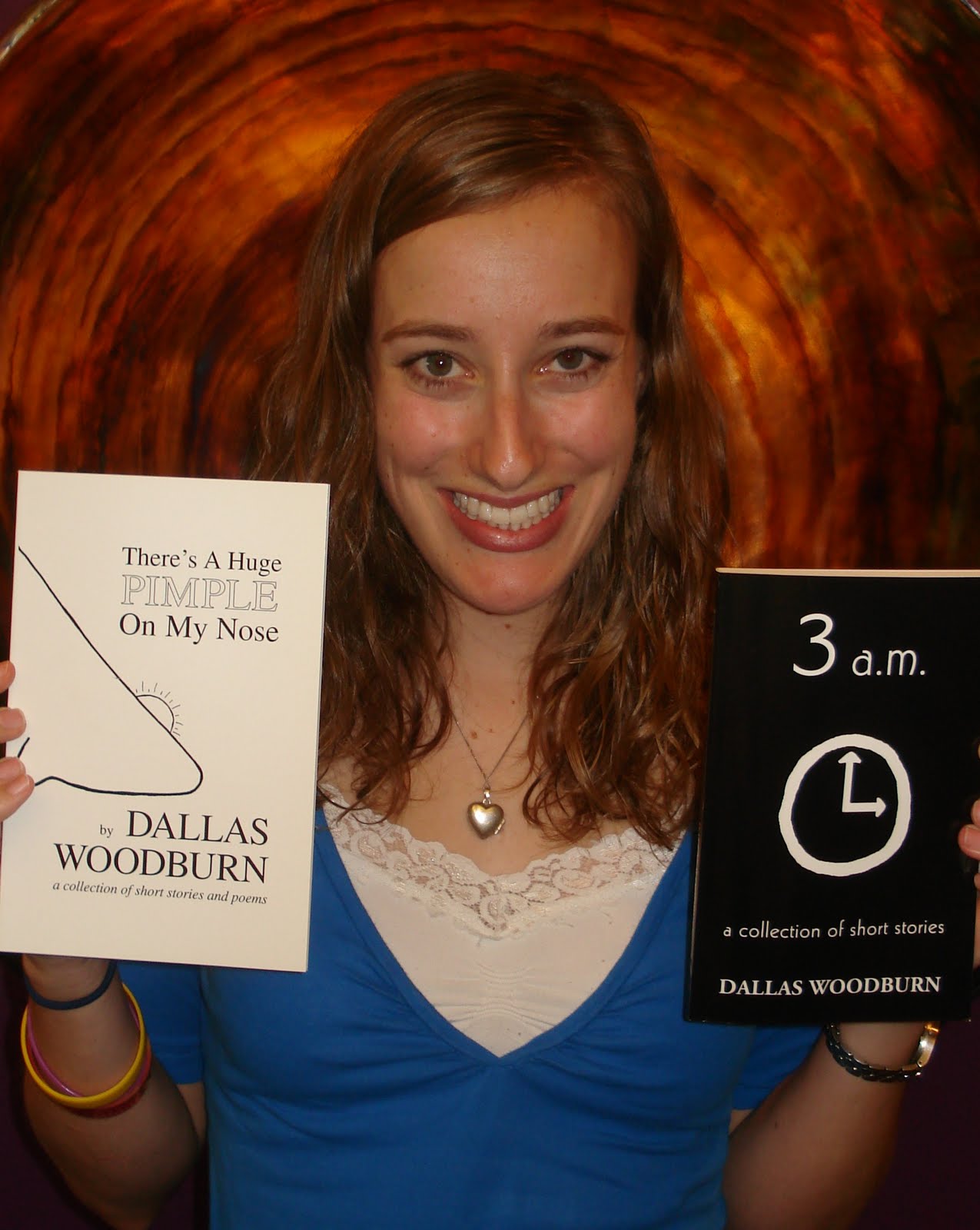
I think both are excellent options -- it just depends on where you are in your writing career and what you are looking for in a publisher. I was very happy to self-publish my first two books, and I learned so much about the industry and self-promotion to have "hands on" experience publishing my own books. Now, I am looking to venture into traditional publishing -- but it is taking quite a long time, for me at least, to break in! I have had two separate agents who believed in my books, but I have yet to get a publishing deal. Of course, some authors get publishing deals much more quickly, but for me at least, the lesson has been that it takes a lot of patience. When it comes to traditional publishing, you can control the quality of your writing, but beyond that it is pretty much out of your control. I think a lot comes down to luck and timing! Here, I have broken things down into lists of "pros" and "cons":
TRADITIONAL PUBLISHING
- Pros: big-name publishers can help market your book, you don’t pay publishing costs, get an advance up-front, can build a relationship with editors
- Cons: can get lost in the shuffle, lose control over book, can take a looong time, still need self-promotion!!
SELF-PUBLISHING
- Pros: relatively fast, you have control over your content and cover design, you can publish what and when you want, platforms like CreateSpace make books available online to a wide audience
- Cons: it's an investment, you bear costs up-front, self-promotion is vital, you might have a smaller audience for your work

Do you think it is necessary to have an agent?
For traditional publishing with big-name publishers, yes, you need to have an agent. Those publishers will not accept work that is not submitted to them by agents. However, there are some smaller publishers that do accept work straight from writers, and then there is self-publishing, where you definitely do not need an agent! An agent is sort of like the connection between a big publishing house and a writer. They have established relationships with editors and, when it comes time to sell your book, they are the ones who are able to negotiate your contract. The standard rate is that an agent takes a small commission when they sell your work. They do not make any money if you do not make any money! Since my agent has not sold any of my books yet, she has not made a single penny from me (even though she has put in a lot of work on my behalf.) This just goes to show that if an agent signs you, they believe in you wholeheartedly! It is a neat relationship because you truly are a team.
***An Important Caution: If an agent asks to read your work or represent you, don’t be blinded by your excitement. You want to make sure this agent is the RIGHT agent for you – an agent that will represent you with honesty and enthusiasm, treat you fairly, and work with you to become a better writer. If an agent ever asks you to pay them money to read your work, they are NOT a legitimate agent. Find out about “scam” agents on the website Predators and Editors: http://anotherealm.com/prededitors/
Do you have experience having an agent?
Yes, I currently have a literary agent, who is actually my second agent -- a different agent signed me for my first book, we spent over a year working on edits, but she never felt it was "ready" to send out, and she didn't like the second novel I wrote. So we ended up parting ways and I found a new agent who I really like. Perseverance is KEY. It took me two long years to find my first agent, and another year to find my second agent. I could paper all four of my bedroom walls with rejection letters! Agents told me my book wouldn’t sell because it was too long, too short, too edgy, not edgy enough, I was too young, etc. etc. etc. But I believed in my writing and I believed in myself. I know there is a place for my novel in the literary world – I just had to find my “soulmate” agent who understood my book and who was as excited to find me as I was to find her! As of right now, I have written three novels, and my agent is currently trying to sell the third one. If this one doesn't sell, I will just work on a new novel and hope that one does! Publishing can be very fickle and confusing, and an editor might not buy your book for so many reasons -- they might be having a bad day, or they really like your writing but they already published a similar book, or the name of the main character brings up a bad memory of someone who was mean to them in elementary school. If you are rejected, it does not AT ALL mean that your writing isn't good enough. I have learned, and keep learning over and over, that the most important thing is to believe in yourself and persevere, and to enjoy the PROCESS of writing -- that is what you have control over.
Have you published without an agent?
Yes, I published my first two books without an agent, and they were both wonderful experiences -- I feel like my books were successful and I learned so much from the process! I also publish the Dancing With The Pen series on my own through CreateSpace. I think it is a wonderful time to be a writer because there are so many avenues available to publish your own beautiful, professional books!

Is it important to read the submission guidelines before submitting to an agent?
Yes! There are so many agents and they all want slightly different things, so it is CRUCIAL to read submission guidelines. You don't want the agent to think that you are sending out submissions to hundreds of different agents -- you want them to know that you chose them specifically because you think they will like your work based on what they have represented before. A great way to find agents is to look in the acknowledgments section or on author websites of books you really like that you think are similar to the book you want to publish. Usually you will be able to find the name of that author's agent, and then you can go on that agent's website and see if they are accepting new clients. Then it is really important to carefully read the submission guidelines and follow them when you send the agent your work! For example, some agents want to see the first three chapters; others want to see the first ten pages; some want you to attach your document; others want you to paste it into an email. The rules may seem silly or small, but if you don't follow them, your submission won't even be read!
Do you think there is an advantage to having someone else look at your writing before publishing?
Yes! Again, I could not agree more with this question! I think having someone else -- and it does not have to be a professional editor, it could also be a parent, teacher, friend, or relative -- look at your writing before you publish it is absolutely crucial. They can help you catch mistakes, fix small spelling or grammar errors that your eye skips over because you have read the pages so many times, and also they can let you know if anything is confusing or might be expanded or explained better. Often as writers WE know what we are trying to say, but sometimes things get lost in translation, so it is important to get someone else's perspective. Before you publish anything, you want to make sure it is the best it can be, and having someone else look at your writing is an important step of that process.


Yes! There are so many agents and they all want slightly different things, so it is CRUCIAL to read submission guidelines. You don't want the agent to think that you are sending out submissions to hundreds of different agents -- you want them to know that you chose them specifically because you think they will like your work based on what they have represented before. A great way to find agents is to look in the acknowledgments section or on author websites of books you really like that you think are similar to the book you want to publish. Usually you will be able to find the name of that author's agent, and then you can go on that agent's website and see if they are accepting new clients. Then it is really important to carefully read the submission guidelines and follow them when you send the agent your work! For example, some agents want to see the first three chapters; others want to see the first ten pages; some want you to attach your document; others want you to paste it into an email. The rules may seem silly or small, but if you don't follow them, your submission won't even be read!
Do you think there is an advantage to having someone else look at your writing before publishing?
Yes! Again, I could not agree more with this question! I think having someone else -- and it does not have to be a professional editor, it could also be a parent, teacher, friend, or relative -- look at your writing before you publish it is absolutely crucial. They can help you catch mistakes, fix small spelling or grammar errors that your eye skips over because you have read the pages so many times, and also they can let you know if anything is confusing or might be expanded or explained better. Often as writers WE know what we are trying to say, but sometimes things get lost in translation, so it is important to get someone else's perspective. Before you publish anything, you want to make sure it is the best it can be, and having someone else look at your writing is an important step of that process.