Showing posts with label David Castro. Show all posts

Friday, June 10, 2016

Reading as a Creative Act

In the introduction to the wonderfully insightful book Genership 1.0, David Castro writes, "The journey of self-discovery involves the possibility of transcendence. The effort to see ourselves changes us. Thomas Mann reminded us that '[n]o one remains quite what he was when he recognizes himself.' We are the sculptor; we are the stone. The strangely transformational search for true human nature belongs not only to myth-makers, poets and philosophers. We experience the quest for our identity as social beings. Through families, organizations, communities and nations, humanity writ large shares the pilgrimage toward the self. Religion, philosophy, art, science and history undertake the same fundamental inquiry: Who are we?"


I love this image of all of humanity in the quest together, asking the same foundational questions, reflecting ourselves in each other. For me, this calls to mind the act of reading: a form of connection, inspiration, newness, delight. I believe that reading itself is an act of creation. The reader brings the writers' words to life uniquely and individually. No two readers experience a book in exactly the same way. Readers create the experience of the book based on their frame of reference, mood, memories, and associations. Words on a page are not static -- they are a conversation between writer and reader.

Malcolm Bradbury observed, "A conventional good read is usually a bad read, a relaxing bath in what we know already. A truly good read is surely an act of innovative creation in which we, the readers, become conspirators." I would add that a truly great read takes what might be viewed as "conventional" and makes it feel innovative. Joseph Campbell famously suggested that only seven basic story plots exist, which we retell again and again; I believe truly great authors are able to retell "what we already know" in ways that are refreshing and newly enlightening.

I recently reread Marilynne Robinson’s luminous novel Gilead, in which she does precisely this. Robinson takes a plot we have all read before—an aged man on his deathbed recounting the experiences of his life—and turns it into a novel that is both profound and original. Further, I was struck by the seamlessness of the narrative voice. Robinson structures the novel as a letter written by Congregationalist minister John Ames to his young son, and after only a few pages I forgot I was reading a novel and began to believe that there really existed an old minister named John Ames, whose own words I was reading. Robinson expertly weaves together memories, insights, and day-to-day observations, capturing not only how John Ames thinks and speaks, but also how he expresses himself in a letter. Ames even addresses this uniqueness of voice in the early pages of the novel: "I don't write the way I speak. … I don't write the way I do for the pulpit either, insofar as I can help it. … I do try to write the way I think. But of course that all changes as soon as I put it into words" (28-29).
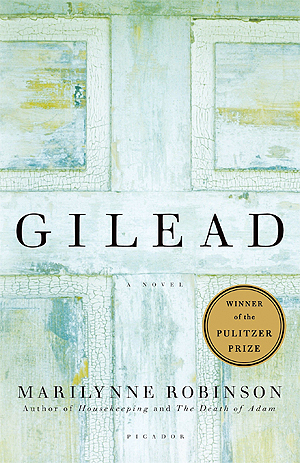


Above all, what impresses me about Gilead is how effortless Robinson makes the written word seem, the same way Fred Astaire made dancing appear simple, Monet made painting seem easy, and Roger Federer turns tennis into ballet. The writing and storytelling dovetail so flawlessly into one man’s stirring and lucid recollections of his life that it is easy to forget that John Ames is not a real man, but the creation of Marilynne Robinson. Furthermore, Ames’ words flow so elegantly that it is difficult to imagine that Robinson toiled over them for years. However, upon deeper consideration, this proves Nathaniel Hawthorne’s oft-quoted words: “Easy reading is damn hard writing.”

Perhaps the book I read this past year that has most influenced me as a writer is one I reread nearly every year: The Catcher in the Rye. Each time I read this novel, it strikes me as a slightly different book. The words on the page are the same, but I have changed and grown; the conversation feels new. I first read J.D. Salinger’s classic novel my junior year in high school. Rarely has another book touched me in such a raw, visceral way. I wanted to climb into the pages of the book and into Holden Caulfield’s life. I realized that it is possible for a character to draw in the reader and carry the entire story on his back.


People hold an endless source of intrigue and inspiration to me. One of my favorite activities is people-watching. I love to imagine lives for the people who pass by, wondering where they came from and where they are going; what they are thinking and who they love; what they worry about and what their futures hold. However, as a storyteller, I used to think that in order to produce something that will stick with a reader, I had to dream up a wholly new and original idea. I fretted over coming up with a labyrinthine plot unique to anything I had ever come across. The Catcher in the Rye opened my mind to a new definition of what "great writing" can be. I came to understand that what makes an idea unique is that it is filtered through my own life experiences and perspective. Rather than building compelling stories through intricate, convoluted plotlines, as a writer I am interested in exploring the intricacies, subtleties, and contradictions of the human psyche.


E. M. Forster wrote, "I suggest that the only books that influence us are those for which we are ready, and which have gone a little further down our particular path than we have gone ourselves." I am grateful to the numerous books and authors who have influenced me, and to those who will influence me in the future, for leading me down my particular path as an ever-growing, ever-changing creative writer -- and reader.

Thursday, February 11, 2016

Unpacking Boxes + Developing Characters

Last month, I moved into a new apartment. Moving made me appreciate many things anew, such as how each room its own unique space with its own special function and purpose -- and yet, the individual rooms meld wonderfully into a whole space. A home. To me, this parallels the way a successful story or novel melds individual elements -- characters, place, theme, tone -- into a wonderfully whole, cohesive piece.


I have been dreaming about this move for a while. It is a big new leap for me, and an exciting step forward in my relationship. I am “living in an atmosphere of growth” -- one of the main keys to happiness that researcher Gretchen Rubin writes about in her book The Happiness Project. Every day when I come home and fit my key into the lock, a tiny thrill passes through me to realize: I live here now.

And then I open my front door. And I remember that, as exciting and beautiful and necessary as moving forward is, it is also messy. Moving is hard work. Moving is boxes and boxes and boxes to unpack and sort through and put away. Changing, growing, building means re-examining every single one of those things we are carrying through this life with us and asking ourselves whether it still serves us. Whether it is worth holding onto. Or whether it is perhaps time to let go. 


Yes, in order to fully embrace all the bright potential of the future, we must loosen our grip on the past. On the way things have always been done. On our preconceived notions and expectations. Change, even positive change, is chaotic and uncomfortable and a little bit scary. The best way to overcome our fears is to embrace them. How do we embrace change? By being creatively open to new ideas.

From one of my many boxes, I unearthed notes I had jotted down during the AWP (Association of Writers & Writing Programs) Conference two years ago. These notes are from a session about developing the emotional lives of our characters.

Character questions: 
- What does this character love more than anything else in the world? 
- What would hurt this character more than anything else in the world? 

You need to believe that the story can surprise you. Think about what you know about the story and go in the opposite direction. If you can surprise yourself, then you can surprise the reader. If you do the work of place and character, then the story can surprise you.

I love this idea of being surprised by the story, and not by a cheap gimmick or trying to play a trick on the reader; rather, being surprised by the story because you have done the real work of developing your characters and walking around spaces with them. In other words, you have unpacked their boxes. And there might be a box or two way over in the corner, or hidden in the back of their closet, that will surprise you in a genuine, authentic way. That is the type of discovery I aim for in my writing.


In his masterful book Genership 1.0: Beyond Leadership Toward Liberation the Creative Soul, author David Castro spends a whole chapter delving into human emotional motivation. Not only is this insightful information for us as people existing in a complex society, it is also very helpful to think about when developing characters:

"Emotion deeply informs motivation; strong emotional intensity provides the energy for action. Weak intensity manifests as low energy, producing ineffective or meaningless responses. Individuals and teams may learn to mask their emotions, expressing feeling only through movement toward what they desire and away from what they detest. In some cultures, direct displays of emotion are not common and may be viewed as wasted opportunities for action. Expressions such as 'Don't get mad, get even' and 'Still waters run deep' exemplify this recognition that powerful emotional responses may remain hidden while they animate action from beneath the surface." -- pgs. 155-156
What great questions to ask yourself -- and to ask of your characters! I'll add them to my jotted-down list from above:

Character questions: 
- What does this character love more than anything else in the world? 
- What would hurt this character more than anything else in the world? 
- What hidden emotions animate or amplify this character's actions?
- On a scale of 1 to 10 (1 being a robot and 10 being dramatic fireworks) what is the baseline emotional intensity of your character?

By asking these questions, we get to know our characters on a deeper level. We have a blueprint for them as individuals that we can carry throughout our journey with them. When we develop the emotional lives of our characters, they become whole, flawed, nuanced, authentic human beings. In short, they become REAL.

Now... time for me to head back to unpacking. Like so many worthwhile activities in life, moving is hard work -- but it is good work, too. The only way for us to deepen and expand as people -- and the only way for us to grow as writers -- is to keep moving forward. To keep unpacking our boxes. To keep using our creative imaginations to explore the rooms in this diverse, lovingly rooted, marvelous world we share together.


Thursday, September 10, 2015

Playful Imagining: My First Time Doing Improv Comedy

Source
“You’re second cousins,” the instructor said, pointing definitively at me and at Kelsey, a young woman I had just met twenty minutes earlier. The rest of the class backed away into an audience, leaving Kelsey and I alone together on our makeshift stage. “And you’re waiting in a loooong line for a roller coaster. Go!”

Kelsey sighed and began tapping her foot, glancing at her imaginary watch. “How much longer is this line?” she whined.

I took her lead and impatiently crossed my arms—and my legs. “I have no idea,” I said. “All I know is, I reaaaaally have to pee.” The rest of the class laughed, and I felt encouraged. I had acted out a character, in a spur-of-the-moment situation, and made them laugh!

I never would have thought I would take part in an Improv Comedy class. I love watching comedy and live theater, and in college my roommates and I would go to Improv shows nearly every Friday night at a coffee-shop on campus. But getting up onstage myself? No, thanks! My stomach knotted up just thinking about it.

Then one day, my boyfriend asked if I would like to attend a beginner’s Improv class with him. I was scared, but it seemed like the kind of scared that begs to be challenged. Plus, with my boyfriend by my side, I feel like Superwoman. I could do anything! Even Improv! I told him it sounded like a fun date night idea and to sign me up.


As the date of the class approached, I grew more and more apprehensive. While I enjoy public speaking, I do not consider myself to be an actress. And while I love writing about characters outside myself, actually personifying other people and characters does not come easily to me. I also like a sense of control. I was especially intimidated by the "not-knowing" aspect of Improv. What if I can't think of any good ideas? What if I have a mind-freeze? What if I ruin the scene and let down my partner?

When we arrived at the studio where the class would be held, I made an intentional decision. You might call it a promise to myself. I consciously pushed these worries aside and focused my energies on having fun and soaking up a new adventure.

In the book Genership 1.0: Beyond Leadership Toward Liberating the Creative Soul (Arch Street Press), David Castro writes: “In normal usage the word playful signifies frolic and humor, and suggests a context of recreation. Genership, however, focuses on a particular definition of the verb to play: to move or function freely within prescribed limits. Within genership and CoVisioning, the word playful conveys commitment to free experimentation and movement, in the sense that someone might play with a control panel or software package to learn how it works and discover its full potential.”

This is Improv at its essence: moving and functioning freely within the prescribed limits of the scene. Only when you allow yourself to be free within the parameters of the situation you have been given, do the ideas begin to flow into your mind.


Castro continues: “To play and be playful in this sense means to explore and exploit a situation’s full potential. … Genership promotes enthusiastic playfulness, whereas the leadership paradigm tends to restrict it. … To play a game is to enter into it and explore everything that can happen within its environment as we move and manipulate its features. The opposite of a playful orientation is one that sees the world as given and something with which we should not interfere. When someone tells us, 'Don't play with that!' what he admonishes is Don’t touch it, don’t manipulate it, let it be only as you find it. A critical part of the creative orientation required for genership is to explore the environment together, testing the application of the will to all parts of it in a playful way—manipulating, risking and examining what happens when we attempt to make changes.”

In class, we learned that the first rule of Improv is never to say, “No.” Instead, when discovering a scene with your partner, you always say, “Yes, and…” This is what allows the scene to grow and expand and gain life, rather than stagnate and die on the vine. Yes, and. Exploring, manipulating, creating. Why is this group co-creation so important?

In Genership, Castro explains, “Playing together in groups expands our ability to explore the potential environment for change. One person playing alone can only apply his personal thinking and activities. A team of people creates the opportunity to apply a spectrum of ideas and abilities to the world, yielding infinitely greater potential for change.”


Improv class ended up being one of the best date nights my boyfriend and I have ever shared. I loved seeing him jump into a new endeavor, just as I could tell he was delighted each time I raised my hand to volunteer and bounded onstage. The wonderful instructor created an environment of energy and creativity in the class, and people were very supportive of each other.

To be sure, I was definitely a little nervous and uncomfortable the entire time… but, you know what? It was exhilarating to get up in front of people and act out a zany scene on the fly. It made me feel proud of myself. Indeed, I ripped off the label I had always put on myself as "someone who could never do Improv." Now that label is gone. In fact, my sweetie and I are already talking about going back to Improv class again soon!

Friday, July 10, 2015

Creating -- and Re-creating -- the Past

One interesting thing about being a writer is that each day sparkles with potential for delightful surprises and wonderful news. At any given time, I have short stories and essays submitted to a dozen different journals; my collection of short stories submitted to two or three book contests or small presses; and queries for my novel manuscript out to a variety of agents. With each submission I send out, my heart leaps with possibility. I carefully choose where I submit individual pieces and projects, and I take the time to read publications and research editors who seem to be a perfect aesthetic fit for my work. When I click the "submit" or "send" button, I always feel excited, dreaming that maybe this will be the one that gets the response of YES.

But, inevitably, most of the submissions I send out are rejected. It's the name of the game; simply part of being a writer. Still, when I get a rejection, it stings. It is disappointing, every time.


Usually, I shake it off and find another journal or editor or agent to submit to. Keep things moving along, keep pushing forward, keep hoping. Every "no" is one step closer to a "yes." Get knocked down seven times; stand up eight.

But sometimes, on low days, or days when the writing isn't going well, or days when something else annoying or upsetting happens, it can be hard not to let one more rejection -- one more disappointment -- steamroll my thoughts towards all the other rejections I have gotten over the years. When you put them all together in a row like that, it can feel overwhelming and hopeless. It's easy to think, Why bother submitting at all? Why go through the trouble of putting my work out there, if it's just going to get rejected again?

Of course, when my thoughts go down this rabbit hole, I'm choosing not to think about all the acceptances and good news I've received over the years: the contests won, the stories and essays published, the nice emails and praise from readers and editors alike. If you could reach back through time and tell my writer self of five years ago where I am now, she would giddily jump for joy at all the excitement I've been fortunate to experience.

In his book Genership 1.0: Beyond Leadership Toward Liberating the Creative Soul, David Castro calls this type of selective remembering "Creating the Past." He writes:
"Those not trained as historians may find it difficult to come to terms with the idea that we create the past. But modern psychological experiments speak powerfully to this concept. Mental models or mind maps exert a palpable, constructive influence on perceptions of the past; we tend to see evidence that conforms to our mental maps while we discount or omit whatever does not. An experiment conducted by Brewer and Treyens (1981), one among many, asked each participant to wait in an office for about 35 seconds for another laboratory room to be prepared. They were then moved to another room and asked to recall everything in the office. Participants showed a strong tendency to recall the presence of objects consistent with a typical office. Nearly everyone remembered a desk and the chair next to it. But only eight of the 30 recalled a skull visible in the office, few recalled a wine bottle or the coffee pot, and only one called up the picnic basket. Some recalled items that had not been there at all: nine remembered specific books not present in the office. These findings, consistent with many others on the subject, show that people tend to project their ideas onto the record of the past, thus creating narratives and imagined incidents consistent with their mental modals and beliefs. We construct the past in this way." (pgs. 138-139)
As a writer, I believe wholeheartedly in the importance of stories. I believe they connect us to one another, expand our empathy and knowledge, and help us understand each other and the world around us.

What I sometimes forget is that the stories we tell ourselves are just as powerful as the stories we tell each other. We choose the past we create for ourselves. We choose what details to emphasize and what to leave out of the telling. Just as the people in the experiment were most likely to see the things they expected to be in the office, we are most likely to see and remember the past events that fit into the narrative we are telling ourselves about our lives.


So: are you telling yourself a positive story, or a negative one?

Are you seeing the skulls and wine bottles and picnic baskets, as well as the chairs and the desks?

Are you sliding some books onto your past bookshelf that were never even there in the first place?

Next time I get a rejection, I am not going to give it more power by adding on all the past rejections I have received. Instead, I will purposely choose to remember all the acceptances and successes I have experienced. In this way, I am creating a past that is empowering for my future. I encourage you to do the same!

Wednesday, June 10, 2015

We Are All "Creative People"


Occasionally when I tell someone that I am a fiction writer, a stunned expression crosses their face -- as if I confessed that my day job is being a Superhero.

"Oh, I could never do that," they say. "I could never make up stories out of thin air. I'm not that creative."

However, if there's one thing I've learned from teaching writing to people of all ages for the past eight years, it's that everyone is indeed creative. Some of us just might have more trouble accessing our creative selves. And others might not recognize their own creativity, even if they use it all the time.

We all possess imagination; we all solve problems; we all daydream. Sure, the problems I solve at work often revolve around fictional characters in made-up situations. But I don't think there is much difference between a fictional character's problem (for example, trying to solve a crime before the murderer strikes again!) and a real-life workplace problem (such as trying to put together a business strategy the client will love, in time for a big meeting with the team.) I think we use the same problem-solving, creative muscles to do both tasks. I guess a main difference is that as a fiction writer, I create both the problems AND the solutions! (And believe me, sometimes I manage to create real doozies for myself and then have to try to wrangle my characters free...) ;)


A real-life problem I am trying to fight is these boxes many people drop down around themselves, labeled as "not creative." It makes my heart ache every time someone tells me they could never be a writer, because they are "not creative enough." It's not true! Don't believe it!

This is a serious matter. Because to accept that limiting, false belief -- to hunker down into that "non-creative" box -- is to turn away from your inherent gifts as a human being.

In his ground-breaking book Genership 1.0: Beyond Leadership Toward Liberating the Creative Soul, leadership guru and business expert David Castro approaches creativity and leadership in an entirely new way. He transforms the way we think of organizations, communities, and "progress" in general. He writes:

"What if our most critical human goal, the most fundamental human activity, is not to know or to understand, but rather to create, to generate? What would it mean if at the heart of human nature we discovered not reason, not rationality, not the capacity to grasp the world in the mind, but rather the capacity to imagine and invent that world?"
(pg. 3)


In Genership 1.0, David Castro explores exciting, freeing new definitions of leadership in the 21st Century. He coins a new term -- "genership" -- defined as: "The capacity to create with others; the community practice of creating." What would this approach mean for our businesses? Our schools? Our politics? He guides the reader into a new way of thinking about leadership that transcends limitations.

To me, this book is not only about being a leader in a business sense; it applies to our personal lives too. It inspires you to reflect on how you see yourself and how you live your everyday life. Here are some questions I jotted down:

  • What world do I want to create and invent? 
  • How can I take the steps to get there?
  • What does it mean to come together and lead as a team?
  • What can I generate, for myself and for others? 


I want to close with a poem that Castro quotes in his Preface, from Letters to a Young Poet by Rainer Maria Rilke:

Be patient toward all that is unsolved in your heart and
try to love the questions themselves like locked rooms
and like books that are written in a very foreign tongue.
Do not now seek the answers, which cannot be given you
because you would not be able to live them. And the
point is, to live everything. Live the questions now.
Perhaps you will find them gradually, without noticing it,
and live along some distant day into the answer.

Maybe leadership -- or knowledge, or adulthood, or teaching -- is not about "having all the answers" but rather about helping others to learn to embrace life's uncertainties. Maybe true wisdom means cultivating an insatiable curiosity.

Here's to living the questions.