Showing posts with label stories. Show all posts

Wednesday, June 7, 2017

Write On! Youth Fiction and Poetry Prizes


Ten years ago, I held the first Write On! Summer Writing Camp for young writers. In the years since: 

Many of my students have gone on to publish their work and win writing contests; many have become editors for their high school newspapers and literary magazines; some have even gone on to study Creative Writing and Journalism in college! I am so proud of every single one of the young writers I have had the privilege to meet and teach in the past decade. All these years, one thing has remained the same: my belief in the magic of unleashing your creativity through writing.

Exciting news! In celebration of the 10th Annual Summer Writing Camp—held this year in Ventura, California, on August 15, 16, 19, and 20—I am holding the first ever Write On! Youth Fiction and Poetry Prizes for young writers ages 18 and under!

You can win prize money, books, a free coaching call with me… and you might even become a published writer! Read below for the rules and submission procedures. I can’t wait to read your work!

Prizes in all categories are: 
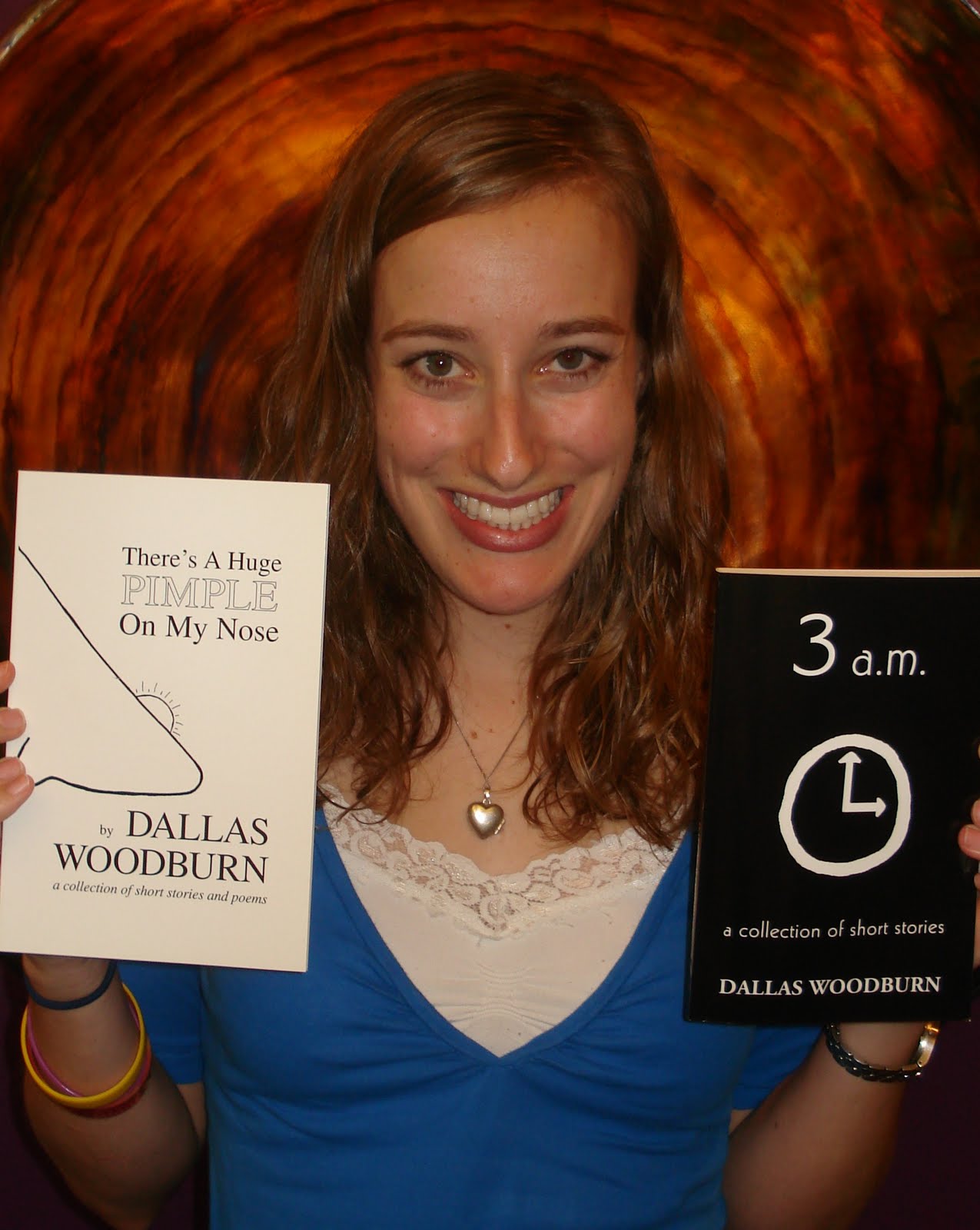
  • First place: $50, a free 30-minute coaching call with me, a signed copy of my book of short stories 3 a.m., and publication of your work on Word Smorgasbord online literary magazine
  • Second place: $25, a signed copy of 3 a.m., and publication of your work 
  • Third place: a signed copy of 3 a.m. and publication of your work 
  • Finalists: publication of your work 

Contest Rules: 
  1. This contest is judged BLIND, which means no identifying information should be on your entry. You will submit your name, age and contact information through the submission form. If your name is included on your entry, it will be disqualified. 
  2. Word limit: fiction should be 1,000 words or less. Poetry should be 2 pages or less. 
  3. There is a $10 entry fee for each piece, or you can submit 3 entries for $25. This helps fund the prizes and the administration costs of Submittable. You also have the option to purchase a copy of Dancing With The Pen II: a collection of today’s best youth writing at the special discounted price of $15, rather than its cover price of $25. 
  4. You may submit as many entries as you would like, as long as you pay the entry fee for each piece you submit. 
  5. The contest deadline is midnight Pacific Standard Time on Sunday, August 20, 2017 (the final day of this year’s Summer Writing Camp). 


 –> Click here to submit your work now! <–


I can't wait to read your wonderful, beautiful, amazing, brilliant, scary, funny, thrilling, heart-wrenching, goosebump-inducing, magical, lovely stories and poems! :)

Wednesday, August 10, 2016

Savoring the Anticipation

One of the most striking and moving aspects, for me, when reading the beautiful book a picture is worth... (Arch Street Press) is getting to hear the unfiltered voices and perspectives of these young adults, smack in the middle of growing up. They write with insightful reflection about their pasts, and their words ache with excitement for the future when they share their goals and dreams -- graduating high school, attending college, having a family and home of their own.


In her essay, Betania Robles writes:

"I would like to say that at the moment I am at the awkward stages of being a teenage girl. Some days I'm happy and some days I'm extremely sad and depressed, and sometimes both at the same time. I don't know if that's normal but I am pretty sure those weird feelings will pass by as I grow up. I'm pretty goofy. I love boy bands and random things like that, and the Internet has to be one of the best inventions ever. It has caused me much happiness and provides me with things that the outside can't. I also love reading; it is like I enter a stranger's world and I learn and feel their feelings. That is truly amazing. Call me ridiculous, but I'd rather read than go outside sometimes, and because of books I believe in true love."
Reading Betania's essay took me back to my own teenage days -- the newness of adventures, the excitement of the wide-open world, the daily dramas and jokes and loves. In all of the narratives in the book, glittering details about these teens' present lives stuck out like treasure: close-knit friends at school; chaotic dinner tables with their parents and stepparents and siblings; favorite teachers and subjects; the neighborhood and community they have always known. I wanted to reach in through the book and tell the young authors: this time of your life is beautiful, too! Savor it. It will fly by faster than you can imagine.

* * *


In three and a half weeks, I am getting married. Life is a whirlwind of tasks, questions, and to-do lists. I wake up in the middle of the night to scribble notes to myself that are only sometimes legible in the morning: song for recessional? cupcake labels? check with minister about kiss timing. My brain is flooded with details and planning and more details. I feel constantly abuzz with nervous energy, my stomach a flurry of butterflies.

And at the same time, I have never felt more ready for anything in my life.

I cannot wait to marry my sweetheart and officially join our lives together. Yet I am savoring this anticipatory time, too. In the midst of the chaos and craziness, I stand in the middle of our one-bedroom apartment, crammed with wedding gifts and decorations and half-completed craft projects, and smile with giddy contentment to be here, now, in this glorious mess and in this perfectly imperfect moment. There is something delicate and beautiful in these final days before we hold hands and leap together into the unknown.

* * *

When I was in college, I lived in an apartment with three of my best friends. Every year, we threw a big holiday party the weekend before winter break. Our anticipation was born right after Thanksgiving. We spent hours planning the party: sending out invitations, shopping for refreshments, deciding on party favors and music. We cut out paper snowflakes and hung them from our ceiling; we strung up twinkle-lights; one year we even managed to get a “Charlie Brown” Christmas tree on super discount at a tree lot, and we decorated it until it was more tinsel than tree. I would be so excited for our party that time seemed to drag on as I tracked its glacier-slow approach on my calendar.

And then, suddenly, it was the day of the party. There was always a flurry of last-minute preparations: baking cookies, making peppermint hot chocolate, wrapping presents. Every year, the party itself passed in a blur of friends and laughter, dancing and singing, photos and hugs. Within three or four hours—the blink of an eye, it seemed—our party was over. We’d wave goodbye as our last guests headed out the door, and then my three best friends and I would be left standing in our empty apartment with a mess to clean up.


It’s hard not to feel a little sad in those moments, when all the anticipation is over, and life resumes to normal. It can feel like the magic is gone. But, looking back, my favorite memories from those holiday parties are not the parties themselves, or even all the anticipation and preparation. The memories I cherish the most are from the mornings after the parties, when my roommates and I would eat scrambled eggs—ignoring the dirty dishes and overflowing trash can for a little while longer—and talk all about the amazingly fun event we had just hosted.

Because, yes, there is joy in the anticipation. There is joy in the savoring. But there is also joy in the telling, the retelling, and the remembering.

"The world is shaped by two things: stories told and the memories they leave behind." — Vera Nazarian

Tuesday, May 10, 2016

None of Us Will Have Enough Time

“I need a whole other life not to let this one go to waste.” 
Lera Auerbach, Excess of Being

                                                                  _____________

In a recent interview with the poetry magazine jubliat, poet Lynn Xu was asked, "Why do poets want to publish? What part of the process or practice is publishing?" I love her response:

I don't know. I can't speak for everyone, but I think a lot of us publish because we want to be part of the history of reading, which is often a deeply private thing. 

[...] The book is at once made (the publishing model being one example, which includes the writer) and not made (it seems, so much of its life comes from the spontaneity of discovery, which is streamlined with one's life, where you happen to be, what you are doing, thinking, feeling, etc.)... As a child, it never occurred to me that books were made. They simply existed. And they belonged to everyone, no one. Their peculiar magic was that they seemed to exist at all times. 

To publish, maybe, is to borrow from this spontaneity of being. 


_____________

For the past few months, I've been thinking a lot about the place of publishing in our creative lives -- specifically, in my creative life. I've slowly come to realize that, without meaning to, for a long time -- since graduate school, it seems -- I've been living with this deeply held pressure to justify my creative work somehow, to make it fit into society's structure of money, business, productivity.

But art, by definition, does not fit into neat little boxes.

Maybe that is why it has been such a struggle for me at times to sit down at the computer and put in the writing time: I was trying too hard to cram my creative work into neat little boxes that could be packaged, commodified, sold. I've noticed that, for the past few years, I've muddled through long stretches of time when it feels like I am fighting my writing routine, thrashing against it, moaning to myself about how hard it is, and putting all sorts of pressure on myself. Sort of like a child who hates playing piano but his parents make him practice every day, so he practices for the exact amount of time he's supposed to -- not a minute more. In some slowly building way, writing has become something I have to do, and I lost sight of why I even want to do it in the first place.

Lynn Xu might say I lost my spontaneity of being. I lost track of that peculiar magic that links me to books, to communities, to other writers across time and space.

I found it again in the unlikeliest of places: Facebook.

_____________

I know, I know: Facebook is to a writer's productivity like sugar-and-caffeine-soaked soda is to a toddler's naptime. Not the most conducive. However, I was scrolling through my Facebook newsfeed the other day when I spotted a post by a writer acquaintance of mine. I met her at a conference years ago and, though we have not seen each other face-to-face since then, I have read and admired her work ever since. I especially remember how she treated me with such respect, even though I was the youngest faculty member by decades at this particular conference. She treated me like a peer, and I loved her for that. 

Her Facebook post was short and easy to scroll past, in the blur of cat snapshots and food snapshots and baby snapshots and election-related news articles. But something about it made me pause. What is she up to these days? I wondered, thinking perhaps this would be about a new piece being published somewhere, or one of her books winning another award. 

But no. In this post, just a few sentences long, she was saying goodbye. 

She explained that she had cancer and the tumors were steadily growing, outpacing her chemotherapy treatments, and that she was heading into hospice care soon. She stated, without a trace of self-pity, that she had enjoyed a rich and wonderful life and was grateful for all of the people and all of the love. She even apologized, writing that she knew everyone was hoping for better news.

I sat there, staring at my computer, utterly stunned and speechless and devastated.

This writer has published many beautiful and touching and important works during her time here. And yet, I am sure that she still has many more stories left inside her. Stories she won't have time to tell before her time runs out.

And in that moment, it struck me with force, like a punch in my gut: none of us will have enough time before our time runs out. 

photo credit: Dineshraj Goomany

I could live for a thousand years, and I know I would still die with stories left inside me, ideas germinating in my head, tales left to tell. 

For now, all I have is this day. This moment, here at my computer, translating the scattered thoughts in my head into words on this screen. This moment is all that I have guaranteed to me.

How valuable! How important! 

Why waste a single writing day? Why grumble and groan about how hard writing is? It doesn't matter if it's hard -- it is still a singular and precious gift. And I do not want to squander an hour that I could be writing with excuses and interruptions and chores. No longer. Not anymore.

It is a fact that I am going to die with stories left inside me. So until that comes to pass, it is my task, my journey, my calling, to let as many of the important stories out of me as possible. To share them with the world. To access the magical spontaneity of being that I am lucky to be a part of.

_____________

Lately, I have been feeling so much freer in my writing. I am trying to distance myself from publishing and worrying about readers or the future. Instead, I am sinking all of my energy into the process. For me, I am learning, the work itself is what is sustaining. The work itself is what matters. 

Rather than "clocking in" at my writing desk each day, now I sit down at my computer because I want to hang out with my characters for a bit. I want to listen to what they have to tell me, to discover what they have to share with me -- and to unpack the beatings of my own heart, too. 

I write for myself, and also for all the other writers who are no longer able to write. 

I write because I am part of a creative tradition, and that is a truly glorious gift. 

I write because these words, words that I wring out of my soul and onto the page one by one, slowly and steadily and joyfully and angrily and fiercely and rapidly and tiredly and passionately... these words are my legacy. 


Saturday, October 10, 2015

Our Collective Humanity in the Individual Details of Our Lives


A couple of weeks ago, I received an email from a friend. We email back and forth frequently, to stay in touch and up-to-date on each other’s lives. This friend was trekking through a problem at work, and wrote a very insightful explanation of the issue: what he was struggling with, why this was difficult for him, and the potential solutions he planned to employ.

In my email response, I mentioned how impressed I was with the way he put his feelings and motives into words. I think many people would be able to relate to this, I wrote.

I was surprised when he dismissed my compliment. Oh, he replied, it wasn’t meant for other people. I was just writing about myself. He seemed to think that, because he was telling a story about his own life, his thoughts, feelings, ideas and insights would not be resonant or relatable for other people.

To me, this could not be further from the truth! Details from our own individual lives are, I believe, where we find our collective humanity. However, I think many, many of us fall into the same trap of self-dismissal as my friend did, at one time or another.


As a fiction writer, I have learned a counterintuitive principle: if you want readers to care about your characters, you might think to make your characters “everyone”—more vague, and less clearly defined, so that everyone can relate to them. But instead, the exact opposite holds true. The more detailed you are about specific, unique experiences, the more readers see themselves reflected in your characters. It is the stories that connect us; stories that make us care. As Joseph Campbell writes in his book The Power of Myth, stories have the unique purpose of passing down myths through the generations. There are common themes found in stories, from all societies, races, religions, time periods—threads that link us together as human beings.
 
In Lera Auerbach’s luminous book Excess of Being, published by Arch Street Press, this idea of details connecting us and getting to the heart of our common humanity is illuminated beautifully through her finely wrought prose. A Russian-American artist, this is Auerbach's first book in English, and she uses aphorisms to tell her story and examine her life. I found myself wanting to underline nearly every line on each page; this is a book bursting at the seams with honest beauty and wisdom. I found hope even in Auerbach's moments of darkness and irony, because I saw myself and my own experiences--my doubts, my fears, my frustrations--reflected in hers.

Not a single word is wasted. This is a book that begs to be read slowly, savored, and read again.


Here are some of my favorite aphorisms from Excess of Being:

"If you have a flaw -- make it part of your legacy."

"Music happens within. A performer allows others to hear what is already sounding."

"Finally
I listen to the other silence--
the one that wells up
from within.
Finally, I'm listening."


Back to my friend. Oh, he had written, it wasn’t meant for other people. I was just writing about myself.

I replied to him that writing about yourself, and for yourself, is the best kind of writing. Writing about something that matters to you or helps you in some way ensures that it will matter to someone else and help someone else.

Friday, July 10, 2015

Creating -- and Re-creating -- the Past

One interesting thing about being a writer is that each day sparkles with potential for delightful surprises and wonderful news. At any given time, I have short stories and essays submitted to a dozen different journals; my collection of short stories submitted to two or three book contests or small presses; and queries for my novel manuscript out to a variety of agents. With each submission I send out, my heart leaps with possibility. I carefully choose where I submit individual pieces and projects, and I take the time to read publications and research editors who seem to be a perfect aesthetic fit for my work. When I click the "submit" or "send" button, I always feel excited, dreaming that maybe this will be the one that gets the response of YES.

But, inevitably, most of the submissions I send out are rejected. It's the name of the game; simply part of being a writer. Still, when I get a rejection, it stings. It is disappointing, every time.


Usually, I shake it off and find another journal or editor or agent to submit to. Keep things moving along, keep pushing forward, keep hoping. Every "no" is one step closer to a "yes." Get knocked down seven times; stand up eight.

But sometimes, on low days, or days when the writing isn't going well, or days when something else annoying or upsetting happens, it can be hard not to let one more rejection -- one more disappointment -- steamroll my thoughts towards all the other rejections I have gotten over the years. When you put them all together in a row like that, it can feel overwhelming and hopeless. It's easy to think, Why bother submitting at all? Why go through the trouble of putting my work out there, if it's just going to get rejected again?

Of course, when my thoughts go down this rabbit hole, I'm choosing not to think about all the acceptances and good news I've received over the years: the contests won, the stories and essays published, the nice emails and praise from readers and editors alike. If you could reach back through time and tell my writer self of five years ago where I am now, she would giddily jump for joy at all the excitement I've been fortunate to experience.

In his book Genership 1.0: Beyond Leadership Toward Liberating the Creative Soul, David Castro calls this type of selective remembering "Creating the Past." He writes:
"Those not trained as historians may find it difficult to come to terms with the idea that we create the past. But modern psychological experiments speak powerfully to this concept. Mental models or mind maps exert a palpable, constructive influence on perceptions of the past; we tend to see evidence that conforms to our mental maps while we discount or omit whatever does not. An experiment conducted by Brewer and Treyens (1981), one among many, asked each participant to wait in an office for about 35 seconds for another laboratory room to be prepared. They were then moved to another room and asked to recall everything in the office. Participants showed a strong tendency to recall the presence of objects consistent with a typical office. Nearly everyone remembered a desk and the chair next to it. But only eight of the 30 recalled a skull visible in the office, few recalled a wine bottle or the coffee pot, and only one called up the picnic basket. Some recalled items that had not been there at all: nine remembered specific books not present in the office. These findings, consistent with many others on the subject, show that people tend to project their ideas onto the record of the past, thus creating narratives and imagined incidents consistent with their mental modals and beliefs. We construct the past in this way." (pgs. 138-139)
As a writer, I believe wholeheartedly in the importance of stories. I believe they connect us to one another, expand our empathy and knowledge, and help us understand each other and the world around us.

What I sometimes forget is that the stories we tell ourselves are just as powerful as the stories we tell each other. We choose the past we create for ourselves. We choose what details to emphasize and what to leave out of the telling. Just as the people in the experiment were most likely to see the things they expected to be in the office, we are most likely to see and remember the past events that fit into the narrative we are telling ourselves about our lives.


So: are you telling yourself a positive story, or a negative one?

Are you seeing the skulls and wine bottles and picnic baskets, as well as the chairs and the desks?

Are you sliding some books onto your past bookshelf that were never even there in the first place?

Next time I get a rejection, I am not going to give it more power by adding on all the past rejections I have received. Instead, I will purposely choose to remember all the acceptances and successes I have experienced. In this way, I am creating a past that is empowering for my future. I encourage you to do the same!

Monday, May 27, 2013

Interview with author & playwright Mark Rigney


Mark Rigney is the author of numerous plays, including Ten Red Kings and Acts of God (both available from Playscripts, Inc.), as well as Bears, winner of the 2012 Panowski Playwriting Competition; during its March, 2013, off-Broadway run, Theatre Mania called Bears “the best play of the year.” His short fiction appears in Witness, Black Gate, The Best of the Bellevue Literary Review, The Long Story, Lady Churchill’s Rosebud Wristlet and Black Static, among many others. “The Skates,” a comic (and ghostly) novella, will be released shortly from Samhain Publishing; in non-fiction, Deaf Side Story: Deaf Sharks, Hearing Jets and a Classic American Musical (Gallaudet University Press) remains happily in print one decade on. Two collections of his stories are available through Amazon: Flights of Fantasy and Reality Checks. His website is www.markrigney.net. 

Tell us about your play "End of the Rainy Season," which recently won The Seven playwriting competition. What was your inspiration/motivation behind this piece?


My cousin Madeleine F. is finishing up her doctorate, studying land use and corporate land ownership in third world countries. I loved her stories of traveling through Mozambique, and somehow extrapolated that to the opening scenario of "End of the Rainy Season," where a very bedraggled western woman, traveling alone, begs for a room at a hovel of a hotel. I re-set the piece in Togo, largely because of my father-in-law, who worked in Togo with the Peace Corps in the early sixties. Thanks to him, I have a lovely hardback Ewe phrasebook, so I felt comfortable plucking at least hints of the local language. Of course, with the internet, I could have dealt with Mozambique almost as easily, but I do prefer the feel (and scent) of a scruffy old hardback when it comes to research. Why the piece went where it went after that launch point is anyone’s guess. Frankly, I had no faith in this play at all, and sent it to The Seven contest only as a lark. It now stands as further proof (as if I needed any) that I have no ability whatsoever to judge my own work.

I really admire how you write in all different genres, from playwriting to fiction to nonfiction. How do these different types of writing complement each other? 

Tackling different forms of writing allows my moods, on any given day, the full run of any given blank page. To wit, if I’m working on an idea that feels most like a prose piece but the prose, for whatever reason, isn’t flowing, I can do a u-turn and leap into a play. If the two-act family drama isn’t chugging along, I can tackle something short, "End of the Rainy Season," perhaps. (It probably needs re-writing. Plays always need re-writing.) If I’ve got an opinion that nobody wants to hear, that’s a signal it’s time for some non-fiction. And so on. Different written forms are the key to forever disarming the demon of writer’s block. For what it’s worth, I offend everyone, from my agent to my readers, by constantly crossing (or tangling) the line between commercial and literary fiction. The sword-and-sorcery stories I’ve published with Black Gate are light years from the experimental tropes of my Birkensnake offering, or the highbrow work now available (online and in print) at Witness. Artificial barriers, generally imposed by well-meaning critics, simply cry out to be breached. I do my best to oblige. All of which is to say that really, I’m a creature of caprice. Like Toucan Sam: follow your nose! Who knows (pun) what will turn up?

How did you get started writing?


I wrote an age-appropriate and completely juvenile play with several friends in second grade. The structure was good, I think: two rival street gangs taunt each other into entering the local haunted house. In they go, one by one, and get eaten by the resident monster, until the last kid barges in (said kid was played by Robert Gaucho, who was enormous), and then the monster gets pounded to mincemeat. One line survives in memory from the now-missing script: “Look at those turkeys, those eels!” I know, I know––but please don’t judge too harshly. This was the seventies, y’know? We were trying to be cool. Groovy, even. Anyway, I didn’t write anything else play-wise until seventh grade, at least, and not again until senior year of college. But one thing I learned along the educational way, and that was that I could generate material (essays and book reports and so on) faster than anyone else I knew. That doesn’t mean it was necessarily good, and my grasp of grammar was generally lousy, and I had no ability to spot a tpyo, but: at least I was a quick draw. Since math and science continually frustrated me (although I love involving both in my writing), it made sense, of a sort, to pursue writing full-time. It didn’t make financial sense, as I know now, but I suppose one cannot have everything.

What is your writing process like? Do you write on a computer? In a spiral notebook? Do you write at the same time every day? 

I’ve been known to write on napkins, coupons, and on my palms. No kidding: when an idea hits, I may only need a keyword or two to hold it for future use, but ideas often arrive at awkward or otherwise inopportune moments, so I get those words written on whatever’s handy. Most of the time, however, I type on a wireless keyboard rigged up to a mid-level Mac. Can’t afford the top-of-the-line stuff, you know. Not until I sell a screenplay to Dreamworks. I don’t use spiral notebooks except when attending play readings or rehearsals. Then I take oodles of scrawled notes, and transcribe what changes I need from these to the computer later on, as time and geography permit. As for writing at the same time every day, that’s a trap. Write when you can, or when you must, or both. My workday is typically the six-hour span during which my children are in school. The rest of the time, I’m Susie Homemaker. You want to talk laundry, or how to bake the perfect lasagna? In the words of the mighty Leonard Cohen, I’m your man.

How do you get ideas for what you write?


People frequently ask this, and it’s the only question I’d love to dodge, because I’m not entirely clear about this. I don’t want to fall back on, “It’s magic,” or, “The universe enters my mind and I become one with the cosmos, an astral being; I come back to my body blessed with a workable idea.” I don’t want to fall back on any of that because…well, because it’s not true. The problem is, it’s not untrue, either. What I can say with some surety is I write to entertain myself (Benjamin Disraeli: “When I want to read a book, I write one”), and the longer the piece, the more likely it is to be founded on some subject that bothers me, a problem to which I have no answer. I’m sure I’m not the only writer who needs spurs kicking my flanks in order to get from “Once upon a time” to “The End,” and the best way I know of completing a project (besides trusting myself) is to have, as my subject, a Gordian knot.

What is your biggest advice for other writers, particularly young writers or playwrights just starting out? 

Begin in the right place. It can be helpful to rely on “the Passover Question,” that being, “Why is today different from all other days?” If you can answer that, the second stumper worth considering is how late in any give scene or event can you begin. Of course, some stories do begin with description, and deservedly so, but the shorter the work, the more likely it is you need to open with action. Do so with alacrity. Don’t bother with “setting the scene” so much as entering the scene. Jump in at a moment where the stakes are already high, and your characters in flux. That way, the rest of the writing is a sort of downhill race; an avalanche, built-in, nips at your heroes’ heels. Most beginning writers try to do everything all at once: describe each person, provide an annotated list of their clothes and what’s in the room and who knew Aunt Dottie back in 1968. You can’t do it all at once. Provide what will hook a reader, and then “backfill” as you go, penciling in whatever else is needed.

What are some of your favorite books and/or plays? 

Among the best contemporary plays are Itamar Moses’s Bach at Leipzig, Sara Ruhl’s Eurydice, August Wilson’s Joe Turner’s Come and Gone, and Gina Gionfriddo’s Becky Shaw. Read those four and you’ll have a pretty fair idea of what the stage can offer. Then read Tom Stoppard’s Arcadia.

For short stories, I come back again and again to Shirley Jackon’s “The Lottery,” and Alice Sheldon’s “The Screwfly Solution,” also Z.Z. Packer’s “Brownies.” But of course there are literally millions of short stories to wade through, and once in a while, you turn up a gem no one’s ever heard of, one you more or less by default get to keep for yourself.

My favorite novel bar none is T.H. White’s The Once and Future King, which, in its proper form, would also contain its addendum, The Book of Merlyn. Recent favorites include John Crowley’s hugely emotional magnum opus Little, Big, and I am about to start Edith Wharton’s Custom of the Country. I find it helpful to alternate contemporary work with the classics––or possibly this is simply my own alarming sense of elitism making unhappy demands on my time.

What links can readers visit to learn more about you and your work?

Please come visit my website, which contains links to many of my stories and plays. That way you can judge for yourself if I’m a total fraud. (A fear or fraudulence is, by the by, very healthy; it keeps you sharp. As Neil Young put it, “You’re only as good as your last note.”) http://www.markrigney.net/Rigney/Home.html 

Also, I collect very old beer cans––got any? In fact, pretty much any beer-related item made before about 1970 is of interest to me. Check out my “Cans” page: http://www.markrigney.net/Rigney/Cans.html

And if you’d like to delve farther (also further) into the literary vs. genre fiction debate, may I suggest beginning here:
http://www.blackgate.com/2012/09/17/genre-2012-the-ghetto-remains-the-same/

Monday, January 30, 2012

Where Elizabeth Berg Finds Inspiration

I just finished reading Elizabeth Berg's captivating collection of short stories, Ordinary Life. I was drawn in immediately her portrayals of everyday men and women, struggling with the ups and downs of ordinary living and loving. The Boston Globe raved, "Elizabeth Berg's gift as a storyteller lies most powerfully in her ability to find the extraordinary in the ordinary, the remarkable in the everyday."

I think that could be a challenge for all of us writers: how can we imbue the ordinary with a sense of extraordinary in our work?

About ten years ago I was fortunate enough to get the chance to meet Elizabeth Berg when she gave a talk at the Santa Barbara Writers Conference. I went up and introduced myself to her afterwards, and after she had signed my book -- her terrific novel Durable Goods -- I asked if she had any advice for a young writer like me. She gave me some of my most cherished writing advice, words I find myself turning to again and again: "First, please yourself." The older I get and the more I write, the deeper this advice rings true to me.

In an interview at the end of her story collection Ordinary Life, Berg discusses where she finds inspiration for her stories and novels:

Ideas come from life: what happens in mine, what I see happening in others', mixed with a great deal of imagination. I might see a person in a grocery store and build a whole character and life out of what's in her basket. I might read a newspaper story about a guy on a bus and build a family for him. I might get a phone call from an old boyfriend and it might raise a lot of "what if" questions that become material. I might watch people in a bar, overhear a piece of a conversation. material is all around, all the time. Pots are boiling on all four burners. The only thing I have to do is feel in the mood to cook, which I usually do. Once I get a vague idea, I let the story write itself. When I write, I operate as a writer and a reader both -- I never know what's going to happen.

Do you write this way, too -- as a "writer and reader both"? Or are you more of the outlining type? I'd love to hear your thoughts in the comments section!

I'll close with a final passage from Elizabeth Berg's "Author's Note" at the end of Ordinary Life:

I love these stories the way I love my novels, which is rather how I love my children. My children are not perfect, but they are perfect. These stories are not perfect either, but they are the best I could do to portray certain life events, to illuminate certain ways of thinking, to illustrate the way we can get from here to there, or document some interesting insights. More than anything, they are meant to celebrate the extraordinary moments and events that make up ordinary life.

Wednesday, January 18, 2012

Dan Choan on Sharing "Common Ground" With Your Reader

I recently finished reading Dan Chaon's superb collection of short stories Among the Missing, which I would highly recommend. The stories are thought-provoking, funny, heart-wrenching, and beautiful. Nathaniel Hawthorne famously said, "Easy reading is damn hard writing," and Choan's stories manage to seem both effortless in their reading and masterfully complex in their execution. My favorite stories tend to be those that leave me with a sense of inevitable surprise. Choan's stories certainly evoked that feeling within me.

I was delighted to find an interview with the author in the back of the book, and I really liked what he had to say about his process and intent:

I think one of my main interests as a writer are those moments that are unpackagable, and, conversely, trying to remystify the stuff that's been already packaged. I feel like we already live in a society that is too constantly encapsulating and explaining and summarizing itself, and that we're often too quick to find easy insights, themes, and messages. I'm not particularly interested in the idea of Truth, or even of "epiphany" in fiction. Instead, I think the thing I value most is the stuff that shakes us up and makes us question our solid ground. I don't feel like I can stand up on a stage and preach anything convincingly; I'd prefer if the reader and I were standing together on common ground, both of us puzzling and wondering in the face of these moments that can't be explained. (Among the Missing, 267.)

What do you puzzle over in your everyday life? What are you obsessed with, curious about, interested in? Maybe you can take inspiration from Dan Choan and write about what puzzles you. It's okay if you don't have all the answers -- in fact, maybe that's a good thing!

I'll leave you with a quote from Dan Choan to give you hope and inspiration whenever criticism
or rejection knocks you down:

Many of the stories in the collection that went on to win prizes were flat-out rejected by any number of magazines, and even when I personally feel confident that something I've written is the best that I can do, I can't hold on to more than a hope that someone else is going to like it. It's always a shock when a story gets attention or wins a prize, and it doesn't seem like it will be less of a shock as time goes on, because it always feels to me like I'm starting over every time I start new work. (271.)

So, onward and upward, and remember -- you're in good company!

Wednesday, August 3, 2011

Interview with Lucia Chen


Today we continue our Dancing With The Pen blog tour with an interview with young writer Lucia Chen, whose story "Take My Hand" is featured in the book. Order your copy of Dancing With The Pen: a collection of today's youth writing on Amazon here.

What would you like readers to know about you as an introduction?

My name is Lucia (pronounced Lu-See-Ah…the Spanish way, not the Italian way!) and I’m a 17-year-old girl from Beijing. Now I live in the suburbs of Detroit, where I run cross country, watch soccer matches religiously, and read way too many historical romances. (They’re my guilty pleasure!)

Describe your story that were published in Dancing With The Pen. How did you get your idea for the piece? Take us through your writing process.

More often than not, I write what I read. When I wrote my short story Take My Hand, I had been going through a medieval phase, devouring novels about knights and battles and grisly conflicts between the English and the Scots. One day I asked myself, “What if an Englishman and a Scotman became friends…and then were pitted against each other?” The idea just lodged in my brain and refused to leave until it became a full-fledged story.

Have you been writing for a long time? What do you like about writing?

My writing career “officially” began with a memorable 6th grade assignment – a pourquoi story about how the pig got its curly tail. Since then, my pencil (and now, keyboard) has been an extension of my hand. What I love most about writing is that wonderful moment after you sit and stare at a awkward sentence for ages, and then – from out of the blue – you find a word that fits perfectly.

What does it mean to you to have your piece included in this book?

I am ecstatic! Deliriously happy! Eternally grateful! It just means so much to me that people across the nation – perhaps even across the world – are reading and enjoying what I wrote.

Do you have any advice for other writers, or for other young people going after their dreams?

To steal the words of Henry David Thoreau: “Go confidently in the direction of your dreams.” A writer’s life may be rife with rejection and disappointment, but it is also bursting with satisfaction and success. And if you truly enjoy the act of putting pen to paper, then that is a victory in itself.

Can you share a few of your favorite books or authors?

An absolute favorite of mine (as in, I reread it every few months or so) is Ella Enchanted by Gail Carlson Levine…which says something, because I’m not even a fantasy fan. Just a snapshot of my other favorites: The Juliet Club by Suzanne Harper, The Truth about Forever by Sarah Dessen, The Hunger Games by Suzanne Collins, and Pride and Prejudice (Mr. Darcy!!! Enough said) by the incomparable Jane Austen.

What inspires you?

The World Cup. No, seriously! As K’naan sang in the 2010 World Cup anthem, it’s a time when “every nation is around us,” when souls from every corner of the world “sing forever young…sing songs underneath the sun.” When you think about it, every one of those souls has his or her own story to tell. A world of stories coming together under one sun…there is nothing more inspiring to me than that.

What are you working on now? What’s next for you?

Other than really bad poetry and cheesy stories? My first novel, actually! To put it concisely, it’s a time-travel romance set in Napoleonic Europe…complete with villainous French agents and hot British spies. ☺ The manuscript is complete and in the editing stages, and I hope to one day publish it.

Anything else you’d like to add?

How about two truths and a lie?
1. I am an excellent seamstress.
2. When I was little, I was allergic to sand.
3. I have a passionate hatred of cheese.

(Just for the record, I can’t sew to save my life).

Links:
  • Order Dancing With The Pen on Amazon. (It rose to a #2 ranking on Amazon.com in the "literature anthologies" category in its first week of release!
  • Please take a few seconds to "like" our Amazon page!
  • And, if you have a few minutes and could write a review on Amazon, that would be fantastic! 
  • You can also follow Dancing With The Pen on Facebook and Twitter. We're now featured on Goodreads, too!
  • Discounted bulk orders are available at the Write On! website: www.writeonbooks.org

Monday, August 1, 2011

Summer Writing Camp a Great Success!

The first weekend of Summer Writing Camp was a huge success! I feel so privileged to work with such amazing, talented, imaginative young writers. They inspire me to no end with their creativity and, even more important, their respect and kindness to each other. Here are some pictures:

The wonderful morning session
The delightful afternoon session.

Camp will be held next weekend as well -- there are still spots available if any young writers in the Ventura County area would like to join us! Learn more at www.writeonbooks.org/festivalofwriting.aspx.

Thursday, March 10, 2011

UNFEAR: A guest post by Karlin Sloan

Today I am pleased to be part of a virtual blog tour for a new book titled UNFEAR: Facing Change In an Era of Uncertainty by Karlin Sloan. This book investigates individual, team, and organizational strategies to reduce fear and inspire performance in the face of change, introducing powerful techniques to unlock the fear and begin to make decisions out of hope and purpose, rather than out of fear.

Karlin was kind enough to offer us an excerpt from UNFEAR. Enjoy!


UNFEAR: Facing Change In an Era of Uncertainty By Karlin Sloan

The Beautiful Truth 

The amazing possibility that lies in this incredible time of turmoil is inside each one of us. It is the possibility for true, pure transformation. When we are confronted with chaos and the push to change, we have the option of seeing our world with new eyes. We have the option of asking ourselves questions that can move us to new realities: Who am I? What am I a part of? What are my gifts and talents? How can I contribute to bringing about the future that I want, rather than passively accepting a future that is handed to me? What kind of leader can I be? What is within me, waiting to be unleashed, that would come forward if I had no fear?

This is a time for leaders in organizations of all types to ask challenging questions: How will we be viable now and in the future? How can we build anew, and build the kind of culture, the kind of impact that we want to have? How will our organization contribute to a better world? What is my role in all of this, and what do I need to stand for, to fight for? What are my opportunities to use my strengths and talents to contribute? 
 
When we stop our own mental churn, when we can tolerate ambiguity and assume that there is learning and opportunity inherent in all of our experiences, we can turn the lead of present circumstance into the gold of the future. We are starting to see the opportunity to make our work meaningful and rewarding on a level beyond our paychecks.

The beautiful truth is that organizations worldwide are changing and becoming more focused on the long term, on how they impact the environment and the community of people that buy their products, populate their offices, and live near their factories. The beautiful truth is that every day people are waking up to the idea that we can each make a difference, and when we organize ourselves into communities of contribution, we can change the world for the better. We are beginning to align the needs of humanity with the work of our organizations.

Why Do You Need This Book?

You may be looking to develop your own ability to practice Unfear, you could be leading a team in turmoil, or it may be that you’re looking for a few examples of leaders who have survived and even broken through to great new thinking, through challenging circumstances. You may be going through change—asking yourself questions about who you are and what you want for the future of your work, your company, and your life. You’ve come to the right place.

We all go through changes at work; from the moment we’re hired into a new role to the first time we have to give someone else performance feedback, we’re constantly changing and developing. We also all face normal human challenges like juggling work and family, getting laid off, or even coping with illness and reinventing ourselves. We may survive a crisis on our team, be acquired, restructured, downsized, or outsourced.

In this book, we’ll explore both organizational and individual Unfear, and how you can proactively engage your own capacity to let go of what is blocking you from your best work. We’ll look at how to move beyond fear-based behaviors and activate confidence in yourself, your work team, and your organization no matter what the circumstance. We’ll share stories, practical exercises, and inspiration.

______________________

Learn more about how to overcome fear-based reactions through the practices outlined in in Karlin Sloan’s new book, UNFEAR: Facing Change In an Era of Uncertainty. Tomorrow’s blog stop will be at the Writers In The Sky Podcast. See the tour schedule at http://bit.ly/unfearvirtualtour

Tuesday, December 22, 2009

Jack London Writing Contest for High School Students

Here is a great contest for high school students! I encourage you all to enter! Here is the website for more information: http://jacklondonfdn.org/contest.html

January 31, 2010, marks the deadline for entries in the 21th annual Jack London Writing Contest. The Jack London Foundation encourages high school students to explore the spirit of Jack London through reading and participation in the Writing Contest.

The writing contest is open to all students in grades 9 through 12. The essays, or stories can be on any subject. The number of entries are limited to 10 from each teacher. The entries are judged on content and form, with an emphasis on creativity.

The writing contest concludes with the first place winner receiving $2000.00, the second place winner receiving $1000.00, and the third place winner receiving $500.00. It is the expectation of the Jack London Foundation that the cash awards be used by the winners to assist in the advancement of their educational goals. The first place winner, along with his/her parents, will also be invited to the annual Jack London Birthday Banquet as special guests. The first place award will be presented during the banquet ceremony. All of the winning entries will be published in the quarterly "Jack London Foundation Newsletter".

English teachers can obtain all necessary forms, rules and publicity posters by contacting:

Jack London Foundation
P.O. Box 337
Glen Ellen, CA. 95442

jlondon@vom.com

Saturday, August 8, 2009

What makes a "good" story?

Dear Dallas,
For a long time, I've thought a story has to have a bunch of conflict to be interesting, but in the past couple days I've been reading in this old book of my mom's, and a lot of the stories in it are really interesting and fun even though they're hardly at all tense or full of conflict. So, now I've sort of been trying to figure out what it is that makes someone want to keep reading a story. Do you think, as long as you have good characters with interesting things happening to them, even if their adventures aren't full of all sorts of problems popping up, it can be a good story?

* * *

You ask a very good question, and something that I think every writer thinks about. When I first started writing, I thought that in order to have a good story, I had to come up with a wholly original, action-packed plot. But as I read more and grew more as a writer, I realized that most of the books I enjoyed reading didn't have crazy action-filled plotlines. It was more the characters that drew me into the story. For example, one of my all-time favorite books is Catcher in the Rye, and not much happens plot-wise -- the main character wanders around New York, running into people he knows, musing about his life and the world around him. But I found it utterly compelling. That book also made me realize that it is okay that I sometimes feel like I don't have as much life experience to draw upon as older writers. I can write vividly and compellingly and honestly about the things I have experienced -- childhood, high school, college, first relationships, new friendships, traveling abroad for the first time, etc -- and I can make very interesting characters and stories out of these raw materials. And the same goes for you and the things you've experienced in your life!

In short, I think a "good" story is subjective -- every reader will be different! To me, a good story is simply a story that moves the reader in some way. Maybe that movement is literal and plot-driven -- as you put it, problems that keep popping up -- or the movement could be more internal and character-based. Personally, the quieter, character-driven stories are the ones I find most lasting.