In the introduction to the wonderfully insightful book Genership 1.0, David Castro writes, "The journey of self-discovery involves the possibility of transcendence. The effort to see ourselves changes us. Thomas Mann reminded us that '[n]o one remains quite what he was when he recognizes himself.' We are the sculptor; we are the stone. The strangely transformational search for true human nature belongs not only to myth-makers, poets and philosophers. We experience the quest for our identity as social beings. Through families, organizations, communities and nations, humanity writ large shares the pilgrimage toward the self. Religion, philosophy, art, science and history undertake the same fundamental inquiry: Who are we?"
I love this image of all of humanity in the quest together, asking the same foundational questions, reflecting ourselves in each other. For me, this calls to mind the act of reading: a form of connection, inspiration, newness, delight. I believe that reading itself is an act of creation. The reader brings the writers' words to life uniquely and individually. No two readers experience a book in exactly the same way. Readers create the experience of the book based on their frame of reference, mood, memories, and associations. Words on a page are not static -- they are a conversation between writer and reader.
Malcolm Bradbury observed, "A conventional good read is usually a bad read, a relaxing bath in what we know already. A truly good read is surely an act of innovative creation in which we, the readers, become conspirators." I would add that a truly great read takes what might be viewed as "conventional" and makes it feel innovative. Joseph Campbell famously suggested that only seven basic story plots exist, which we retell again and again; I believe truly great authors are able to retell "what we already know" in ways that are refreshing and newly enlightening.
I recently reread Marilynne Robinson’s luminous novel Gilead, in which she does precisely this. Robinson takes a plot we have all read before—an aged man on his deathbed recounting the experiences of his life—and turns it into a novel that is both profound and original. Further, I was struck by the seamlessness of the narrative voice. Robinson structures the novel as a letter written by Congregationalist minister John Ames to his young son, and after only a few pages I forgot I was reading a novel and began to believe that there really existed an old minister named John Ames, whose own words I was reading. Robinson expertly weaves together memories, insights, and day-to-day observations, capturing not only how John Ames thinks and speaks, but also how he expresses himself in a letter. Ames even addresses this uniqueness of voice in the early pages of the novel: "I don't write the way I speak. … I don't write the way I do for the pulpit either, insofar as I can help it. … I do try to write the way I think. But of course that all changes as soon as I put it into words" (28-29).
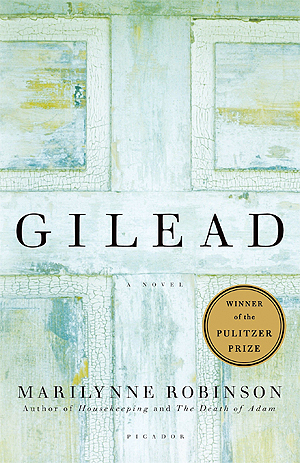
Above all, what impresses me about Gilead is how effortless Robinson makes the written word seem, the same way Fred Astaire made dancing appear simple, Monet made painting seem easy, and Roger Federer turns tennis into ballet. The writing and storytelling dovetail so flawlessly into one man’s stirring and lucid recollections of his life that it is easy to forget that John Ames is not a real man, but the creation of Marilynne Robinson. Furthermore, Ames’ words flow so elegantly that it is difficult to imagine that Robinson toiled over them for years. However, upon deeper consideration, this proves Nathaniel Hawthorne’s oft-quoted words: “Easy reading is damn hard writing.”
Perhaps the book I read this past year that has most influenced me as a writer is one I reread nearly every year: The Catcher in the Rye. Each time I read this novel, it strikes me as a slightly different book. The words on the page are the same, but I have changed and grown; the conversation feels new. I first read J.D. Salinger’s classic novel my junior year in high school. Rarely has another book touched me in such a raw, visceral way. I wanted to climb into the pages of the book and into Holden Caulfield’s life. I realized that it is possible for a character to draw in the reader and carry the entire story on his back.
People hold an endless source of intrigue and inspiration to me. One of my favorite activities is people-watching. I love to imagine lives for the people who pass by, wondering where they came from and where they are going; what they are thinking and who they love; what they worry about and what their futures hold. However, as a storyteller, I used to think that in order to produce something that will stick with a reader, I had to dream up a wholly new and original idea. I fretted over coming up with a labyrinthine plot unique to anything I had ever come across. The Catcher in the Rye opened my mind to a new definition of what "great writing" can be. I came to understand that what makes an idea unique is that it is filtered through my own life experiences and perspective. Rather than building compelling stories through intricate, convoluted plotlines, as a writer I am interested in exploring the intricacies, subtleties, and contradictions of the human psyche.
E. M. Forster wrote, "I suggest that the only books that influence us are those for which we are ready, and which have gone a little further down our particular path than we have gone ourselves." I am grateful to the numerous books and authors who have influenced me, and to those who will influence me in the future, for leading me down my particular path as an ever-growing, ever-changing creative writer -- and reader.
Showing posts with label creative. Show all posts
Friday, June 10, 2016
Tuesday, February 28, 2012
Kenyon Review Young Writers Workshop: Deadline March 1

For young writers in high school who live in Ohio or the surrounding area, this could be a really neat opportunity for this summer!
The Kenyon Review will accept applications through March 1st for its Young Writers Workshop, a creative writing adventure for 16-18 year olds held in Gambier, Ohio. Two sessions will be offered this summer: June 24-July 7 and July 15-28, 2012. Young Writers Workshop is an intensive two-week workshop for intellectually curious high school students who value writing. KR’s goal is to help students develop their creative and critical abilities with language—to become better writers and more insightful thinkers.
Learn more here: http://www.kenyonreview.org/workshops/young-writers/?utm_source=newsletter&utm_medium=email&utm_campaign=mar2012
For those of you in southern California, I'll be holding my Fifth Annual Summer Writing Camp again this summer -- stay tuned for more info! :)
Wednesday, November 23, 2011
Winter Writing Camp -- You Are Invited!
Due to some very sweet emails from parents and young writers, I am excited to share with you that I will be holding a special one-day Winter Writing Camp when I am home for winter break this year!
- Who: Young writers ages 7-18.
- When: Saturday, December 17 from 10am to noon
- Where: Jensen Design & Survey at 1672 Donlon Street in Ventura, California.
Hope to see you then! Happy holidays!
Tuesday, August 9, 2011
Part II: Interview with Alan Sitomer, award-winning author of NERD GIRLS
Today I am delighted to continue our Write On! interview with award-winning author and California 2007 Teacher of the Year Alan Sitomer. His latest book, Nerd Girls, is available on Amazon here.
Besides being an author, you are an award-winning teacher. How does teaching influence your writing and the creation of your material?
I show all of my books to real kids first. My students, former students, fans I have gotten to know from around the country, they all get to check out my books hot off the press before anyone else gets a chance to see them. That means before my literary agent. That means before my editor. That means before anyone in the adult world who works in “the publishing industry.” Real kids are my readers and if they don’t like something – if they don’t laugh, if they don’t cry, if they don’t approve – then it doesn’t really matter what the adults think.
Kids are my best, and toughest audience. If my books flies with them, then I know I am good and I’ll go ahead and take it to the next level and begin to show it to the people in the publishing industry. But if I do not get their seal of approval, I stop, listen to their feedback and go back into the piece to go make it work. It’s probably why my fans are so loyal; they know that I respect them and I listen to them and I like them.
Kids who read my books can know that other kids have read them first and given the “Thumbs Up!” sign. I really think that is an important element to my work.
You often talk about “puttin’ the fun” in reading, writing and school. Why?
Let’s be honest: sometimes school can get SO BORING! And there’s no reason for it. But still, grumpy adults sometimes send the message to kids that life is to be serious, serious, serious and humorless, humorless, humorless.
To them I say BLAAAAHHH!
Students are at their best when they are enjoying what they are doing. Students will read more books when they like what they are reading. Students will learn more about a subject when they like what they are learning. Students will try harder to do a good job on the work they are being asked to do if they like the work that they are doing.
That’s my belief and I am sticking with it. (Besides, I was named California Teacher of the Year so ya might think I know just a wee little bit about this stuff, huh?)
Of course, there is a time to be serious. But being serious does not mean that you can’t enjoy yourself. Of course kids have to realize that there are some things in life you just have to do - and do well - even if they are not “fun.” I get that. It’s called reality and the bigger point of school is not to be entertaining. But for the most part I’ve found it’s actually quite satisfying to work really, really hard on something that challenges you deeply. Finding the joy in the challenge is what brings out the best in us.
However, sad to say, it seems as if some schools have forgotten this. Not all – and if you have a teacher that tries hard to make learning fun and meaningful and exciting and interesting – consider yourself lucky. Why? Because I’d venture to say that teachers like this eventually end up teaching you a great deal. School is not a comedy club, but it’s not a funeral home, either, and I believe that a classroom without laughter is a classroom that is not operating at its highest possible potential. Before kids are students, they are people and people need to laugh much like they need to eat and breathe and love.
Just to be clear, I believe that working hard is important. In my classroom, I have little patience for goof-offs but I have a lotta love for kids who put good ol’ fashioned positive energy into their efforts. My belief is that you are not enjoying the work, you probably aren’t going to learn as much as you would if you were enjoying the work. Plus, you are much more likely to try harder when you care about and enjoy what you are doing. Making reading enjoyable and making writing enjoyable makes better readers and writers.
Fun is my secret sauce. It works!
What else can we expect from Nerds Girls beyond this first book?
There is all kinds of crazy, fun stuff right now. I’ve built a game. I’ve created some author videos. There’s a Nerd Girls comic.
All free for anyone who wants them.
Of course, there’s already Hollywood talk of a movie and a TV show and clothes and merchandise and blah, blah, blah. (www.TheNerdGirlsWorld.com is the home base for information about all of this stuff.)
But for me, it’s all about the core material right now. Nerd Girls Book II is on its way and beyond that there are a few more surprises in the works.
All in all, I guess it’s just about making sure to have fun, work hard and continue enjoying all the great kids I get to meet who have become fans of my writing. Of course, the teachers and the librarians are great, too, but it’s all about the kids. Their approval means the most to me.
And really, how ridiculously lucky am I to have it? As I tell folks all the time, it’s quite healthy to channel your inner nerd. That’s all I am doing right now. It’s good for the soul.
If you missed Part I of my interview with Alan, check it out here.
Links:
Besides being an author, you are an award-winning teacher. How does teaching influence your writing and the creation of your material?
I show all of my books to real kids first. My students, former students, fans I have gotten to know from around the country, they all get to check out my books hot off the press before anyone else gets a chance to see them. That means before my literary agent. That means before my editor. That means before anyone in the adult world who works in “the publishing industry.” Real kids are my readers and if they don’t like something – if they don’t laugh, if they don’t cry, if they don’t approve – then it doesn’t really matter what the adults think.
Kids are my best, and toughest audience. If my books flies with them, then I know I am good and I’ll go ahead and take it to the next level and begin to show it to the people in the publishing industry. But if I do not get their seal of approval, I stop, listen to their feedback and go back into the piece to go make it work. It’s probably why my fans are so loyal; they know that I respect them and I listen to them and I like them.
Kids who read my books can know that other kids have read them first and given the “Thumbs Up!” sign. I really think that is an important element to my work.
You often talk about “puttin’ the fun” in reading, writing and school. Why?
Let’s be honest: sometimes school can get SO BORING! And there’s no reason for it. But still, grumpy adults sometimes send the message to kids that life is to be serious, serious, serious and humorless, humorless, humorless.
To them I say BLAAAAHHH!
Students are at their best when they are enjoying what they are doing. Students will read more books when they like what they are reading. Students will learn more about a subject when they like what they are learning. Students will try harder to do a good job on the work they are being asked to do if they like the work that they are doing.
That’s my belief and I am sticking with it. (Besides, I was named California Teacher of the Year so ya might think I know just a wee little bit about this stuff, huh?)
Of course, there is a time to be serious. But being serious does not mean that you can’t enjoy yourself. Of course kids have to realize that there are some things in life you just have to do - and do well - even if they are not “fun.” I get that. It’s called reality and the bigger point of school is not to be entertaining. But for the most part I’ve found it’s actually quite satisfying to work really, really hard on something that challenges you deeply. Finding the joy in the challenge is what brings out the best in us.
However, sad to say, it seems as if some schools have forgotten this. Not all – and if you have a teacher that tries hard to make learning fun and meaningful and exciting and interesting – consider yourself lucky. Why? Because I’d venture to say that teachers like this eventually end up teaching you a great deal. School is not a comedy club, but it’s not a funeral home, either, and I believe that a classroom without laughter is a classroom that is not operating at its highest possible potential. Before kids are students, they are people and people need to laugh much like they need to eat and breathe and love.
Just to be clear, I believe that working hard is important. In my classroom, I have little patience for goof-offs but I have a lotta love for kids who put good ol’ fashioned positive energy into their efforts. My belief is that you are not enjoying the work, you probably aren’t going to learn as much as you would if you were enjoying the work. Plus, you are much more likely to try harder when you care about and enjoy what you are doing. Making reading enjoyable and making writing enjoyable makes better readers and writers.
Fun is my secret sauce. It works!
What else can we expect from Nerds Girls beyond this first book?
There is all kinds of crazy, fun stuff right now. I’ve built a game. I’ve created some author videos. There’s a Nerd Girls comic.
All free for anyone who wants them.
Of course, there’s already Hollywood talk of a movie and a TV show and clothes and merchandise and blah, blah, blah. (www.TheNerdGirlsWorld.com is the home base for information about all of this stuff.)
But for me, it’s all about the core material right now. Nerd Girls Book II is on its way and beyond that there are a few more surprises in the works.
All in all, I guess it’s just about making sure to have fun, work hard and continue enjoying all the great kids I get to meet who have become fans of my writing. Of course, the teachers and the librarians are great, too, but it’s all about the kids. Their approval means the most to me.
And really, how ridiculously lucky am I to have it? As I tell folks all the time, it’s quite healthy to channel your inner nerd. That’s all I am doing right now. It’s good for the soul.
If you missed Part I of my interview with Alan, check it out here.
Links:
- Alan's official website: www.AlanSitomer.com
- Nerd Girls books: www.TheNerdGirlsWorld.com
Monday, August 1, 2011
Summer Writing Camp a Great Success!
The first weekend of Summer Writing Camp was a huge success! I feel so privileged to work with such amazing, talented, imaginative young writers. They inspire me to no end with their creativity and, even more important, their respect and kindness to each other. Here are some pictures:
Camp will be held next weekend as well -- there are still spots available if any young writers in the Ventura County area would like to join us! Learn more at www.writeonbooks.org/festivalofwriting.aspx.
| The wonderful morning session |
| The delightful afternoon session. |
Camp will be held next weekend as well -- there are still spots available if any young writers in the Ventura County area would like to join us! Learn more at www.writeonbooks.org/festivalofwriting.aspx.
Labels:
creative,
essays,
imagination,
inspire,
kids,
plays,
poems,
stories,
success,
summer,
teens,
writing camp,
young writers
Monday, June 20, 2011
Interview with Ninad Mahajan
Ninad Mahajan is a 12-year-old sixth grader who lives in Morrisville, Pennsylvania. His essay "The Fantastic Trip" is featured in the Write On! Books debut anthology, Dancing With The Pen: a collection of today's best youth writing, which is available on Amazon here. In addition to writing, Ninad likes to play football and cricket, swim, and create games like "Who Wants to be a Millionaire?" in PowerPoint. He has also been playing the piano for 6½ years. Read on for Ninad's thoughts and advice about writing, reading, the creative process, and more!
Describe your piece or pieces that were published in Dancing with the Pen. How did you get your idea for the piece? Take us through your writing process.
My piece is called "The Fantastic Trip" and is about my trip to India in the summer of 2009. I got the idea when I realized that I could write about a wonderful memory. I wrote a long, 14-page rough draft, shortened it and revised/edited the piece, and then typed it up.
Have you been writing for a long time? What do you like about writing?
Yes. I actually was selected to read an essay about veterans of America in 4th grade. What I like about writing is that you can express what you’re thinking about and change it as you go along. You can’t change what you say out loud.
What does it mean to you to have your piece included in this book?
It means so much to have my piece published in this book. It was great to get the news that I won this contest. We went out to eat that weekend. I was really happy to get the news, but I especially want to thank my mom and dad for motivating me.
Do you have any advice for other writers, or for other young people going after their dreams?
Be patient with your writing! Never give up if your writing is missing something. A good tip to use if you are stuck on what to write about is to list down all the important or interesting things you can think of in 2-5 minutes.
Can you share a few of your favorite books or authors?
I am an absolute die-hard fan of Harry Potter! I also like any realistic fiction books.
What inspires you?
It is mostly the support and motivation that I get from my family. Also, any books I read give me inspiration as well.
What are you working on now? What’s next for you?
I recently won 1st place in the VFW Patriot’s Pen contest for a post in my nearby area, and then got 3rd place in the district. I also just finished writing a poem for the Barnes & Noble "Favorite Teacher Contest." I look forward to participating in many more essay and poem contests.
Anything else you’d like to add?
I would like to thank Dallas and also let everyone know that Write On! For Literacy is a great project. Everyone should keep reading and writing as often as they can!
Links:
- Order Dancing With The Pen on Amazon. (It rose to a #2 ranking on Amazon.com in the "literature anthologies" category in its first week of release!
- Please take a few seconds to "like" our Amazon page!
- And, if you have a few minutes and could write a review on Amazon, that would be fantastic!
- You can also follow Dancing With The Pen on Facebook and Twitter. We're now featured on Goodreads, too!
- Discounted bulk orders are available at the Write On! website: www.writeonbooks.org.
Tuesday, December 14, 2010
Guest post by Edward Stern
The Write Stuff: 8 Reasons You Should Have a Writing Journal
To be a writer, one needs to write. Bringing a laptop everywhere is not always feasible, especially for jotting down quick thoughts on the go. Many writers prefer to write consistently at designated writing times, but with a busy schedule, this can be hard to squeeze in.
The solution? Keep a writing journal. You'll be amazed at how helpful it will be for getting your creative juices flowing and capturing inspiration when it strikes. Here are eight reasons why you should have a writing journal.
1. Take it anywhere: A writing journal is a great companion for travel, whether it be by car, bus, train, plane, whatever moves. Make the most of your time commuting to work or traveling for business by taking those often wasted hours and making them productive writing time spent in your journal.
2. Capture inspiration when it strikes: You never know where you'll be when that one little phrase, plot twist, sentence fragment, anything strikes you. Be prepared, and don't lose the moment. Bring your writing journal and a pen or pencil with you everywhere to make your genius turn of phrase does not escape you.
3. Play around with your words: With a writing journal, you can bring past work with you. Oftentimes, it's important to take a step back from your work to be able to evaluate it objectively and to hone your prose. Play with your phrasing until you get it perfect while on your lunch break or whenever it hits you.
4. Record observations: As a good writing exercise, go for a walk downtown or through a park and record observations. Jot down notes on the people you see and the events taking place. Later, sit down and imagine back stories for what you saw. You never know when these could turn into a key character or the plot for your next piece.
5. Make yourself write: To be a better writer, you need to write, obviously. Having a designated journal time keeps you writing even if it's not while working on a specific poem, novel, or other project. Keep your skills sharp by keeping a journal.
6. Keep it informal: If you are writing for a living or investing your heart and soul in a passion project, write in a journal informally about the process of writing, your personal happenings, or just silly fun side efforts. Keep your writing journal a fun place, one where you can relieve stress and where writing is always fun. It will keep you fresh and determined for your other work.
7. Play games: Give yourself prompts, write from other perspectives, write letters you'll never send -- play quick, casual writing games to keep your skills sharp and to try out new things. A little intellectual stimulation will help make you a better, more versatile writer, and may also inspire new directions for your more formal work.
8. Good writers write frequently: To be good at anything, you have to practice, and practice consistently. Keeping a writing journal forces you to do so, especially around a busy schedule.
Edward Stern is a guest blogger for Pounding the Pavement and a writer on online career training for the Guide to Career Education.
Subscribe to:
Posts (Atom)