Showing posts with label creativity. Show all posts

Thursday, November 9, 2017

Guest Post: Boost Your Mood and Creativity with Travel

Boost Your Mood & Creativity With Travel

by Henry Moore

Your job performance requires you to think creatively, but lately, you’ve been finding that harder and harder. It’s not that you cannot do your job, but the stress is sapping your creativity and making things more difficult.

Rather than start searching for a new job, consider planning some travel. Heading out for even just a few days can recharge your spirit, boost your creativity, and improve your mental health. It can even help you stay healthy. Read on to learn why vacations can be so helpful.


(Image Source: Pixabay)

Mental Health Benefits Of Travel

Home is comfortable, and while that’s a great thing, it can also leave you feeling bored uninspired. That’s why people’s mood and creativity can decrease when you haven’t traveled in a long time.

The Chopra Center lists six reasons why travel is good for you:
1.     You tend to get exercise while traveling, and that’s great for your physical health. And when your body is healthy, your mood is better.
2.     Stimulation from traveling somewhere improves memory and concentration.
3.     Engaging new people and cultures boosts your creativity.
4.     A relaxing trip reduces your stress and decreases depression.
5.     Traveling broadens your perspectives, allowing you to find solutions you never thought about before.
6.     You can build relationships with the people that travel with you.

Another reason why taking a trip improves your mood and creativity is that you test your comfort zone. It’s easy to stick with repetitive routines at home. That’s fine, but in the long-run, you get stuck in a rut. Breaking that up by traveling pushes you into new territory (literally and figuratively)

Keeping Your Trip Relaxing


However, not all travel is equally beneficial. You’ve probably been on one that ended up stressful and taxing rather than relaxing and fun. That’s why you need to follow these tips for a good vacation:
      Instead of saving your vacation days for one big trip, space them out through the year so you have more to look forward to.
      Don’t create a complex plan. Explore your options, but be sure to schedule some downtime in your itinerary.
      If you’re traveling with family or friends, talk beforehand about guidelines and expectations so no one gets upset because they expected something different.
      Pick an underrated destination. Crowds and tourist traps can make your trip stressful, so pick a destination that doesn’t get the attention it deserves.

If you are in addiction recovery, you also need to worry about temptation and relapses when traveling. That said, you can definitely find a relaxing trip. Focus on places not known for alcohol or drugs (avoid spring break towns, for example) and go where there are fun but sober activities to explore.

Improve Your Creativity

A relaxing trip will definitely improve your mental health, but you also need to recharge your creativity on this trip. That’s part of why you’re heading out somewhere new. Inc.com has a great page explaining how you can beat a creative block by traveling, such as:
      Bring along a few games, as playing can improve your memory and problem-solving abilities.
      Explore options to create something, even if it’s just sketching some cool place you find on your trip.
      Talk to people at your destination. You can boost your creativity by learning new perspectives.
      In those scheduled downtimes, take a moment to just daydream. Creativity can improve when you let your mind wander on its own.

Recharge With A Fun Trip


Traveling can do wonders for both your mood and your creativity. If you feel stuck in a rut, take a few days and travel somewhere new. After meeting new places, activities, and people, you’ll be surprised how you’ll be happier and able to think more creatively.


Henry is the co-creator of FitWellTraveler. The site blends two of his favorite subjects (travel and wellness) to provide readers with information about how to get the most out of both. He believes travel can change you, and good health preserves you.

Friday, May 19, 2017

How Far Will Your Ripples Go?

Last week, I went with my friend Marjie to UC Berkeley to see the Scottish Ballet's stunning performance of Tennessee Williams' famous play "A Streetcar Named Desire." It was my first time going to a professional ballet performance---my only previous ballet experience was attending community performances of "The Nutcracker." I always enjoyed "The Nutcracker" and was always impressed by the talent of the ballerinas. Still, I was not expecting to feel so emotionally moved and enraptured as I watched the performance last night.

The dancers conveyed so much with their bodies and expressions; I forgot they were not speaking in words. Because they were speaking in movement. Even without dialogue, they were able to capture the aching hope and despair of Williams' play, and bring his story to life in a new way. What's more, this performance imagined and fleshed out a vivid backstory for Blanche's character, inspired by the original title Tennessee Williams considered for the play: "The Moth." The ballet closed with a vulnerable portrayal of Blanche as a moth, struggling to get close to the light. Illuminated in a spotlight centerstage, one of her hands fluttered skyward like a moth's delicate wings. A hush descended over the audience and some people even gasped, viscerally moved by the image, and then the curtain fell to thunderous applause.

I wish Tennessee Williams could have been there to see this interpretation of his play as a ballet. I think he would have been pleased to see his story brought to life in this new way, filled with the tension and drama of music and dance.


I have felt a connection to Tennessee Williams ever since last Thanksgiving, when my family and I traveled to New Orleans and tracked down the apartment that he had lived in during his New Orleans days at the end of his life. Serendipitously, while we were outside, taking photos and reading the small plaque affixed to the front wall, a man who lived there just happened to be returning home. He introduced himself as Brobson and invited us inside for a drink; he had lived there for many years and had known Tennessee Williams. He kindly welcomed us inside and shared many stories, even taking us around to the backyard to see the pool where Tennessee used to relax in the afternoons. (My dad wrote a terrific two-part column about our visit with Brobson, which you can read here on his website.)

Before that day, Tennessee Williams had been larger-than-life to me; a name in a list of Great Writers I Admire; a photo on a Wikipedia page. But seeing where he had lived and meeting someone who had known him turned him into a real person. There were surely days he struggled to write, as I sometimes do. Days when he doubted himself. Days when he wanted to give up. "A Streetcar Named Desire" was once merely a glimmer of an idea on the edge of his consciousness.

Thankfully, he wrote the idea down, and he kept writing until the play was finished. Even when it was hard. Even when there were a million other things he could have been doing, or would have rather been doing. Even when he wondered if the words he was painstakingly stacking up, one after the next after the next, would amount to anything at all.

Tennessee Williams had no way of knowing how much his plays would impact people and how far the ripples of his creativity would extend. He had no way of knowing that on a Thursday evening in Berkeley thirty-seven years after his death, hundreds of people would be moved to tears from a new portrayal of the characters he had dreamed up.

None of us know how far our own ripples will go. The gifts we create. The lives we touch. The kind words we share. All of these are stones dropped into water. What was once still is now in motion. 

You have no idea how your daily actions might inspire others. What you do and make today might affect someone tomorrow, or next week, or ten years from now. Others in the future might learn from you and build upon what you have done, creating something of their own that is entirely new and wonderful, something else that will launch more ripples out into the world.


{source}


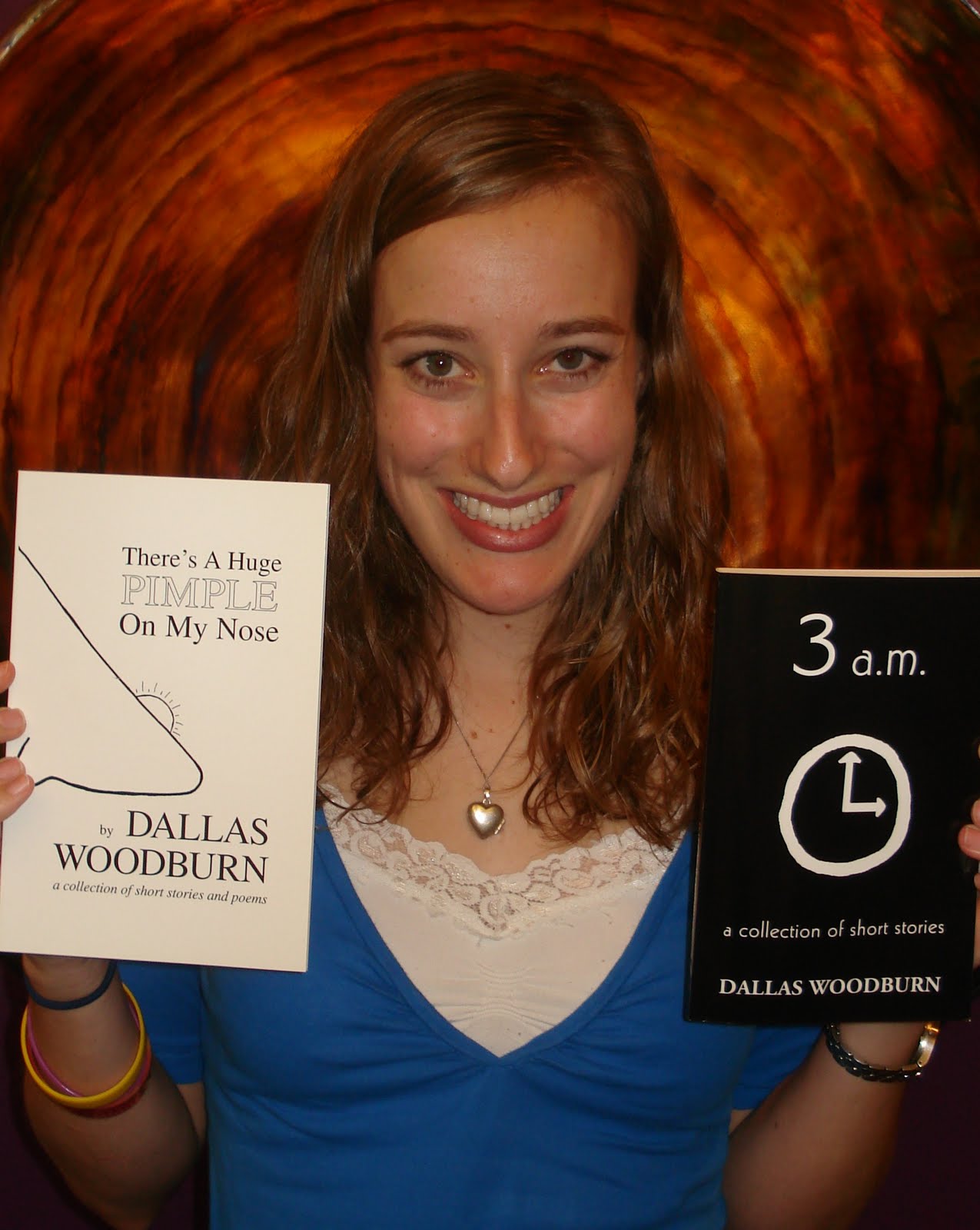
Back when I was in elementary school, I wrote and self-published a small book of stories and poems. Nearly two decades later, I received an email from a composer named Alex Marthaler at Carnegie Mellon University. He was creating a song-cycle around the theme of childhood and adulthood, and he had somehow discovered my little book. Would it be okay if he used some of my poems as lyrics for the songs he wanted to compose?

Yes! I quickly responded. Yes, that would be amazing! 

Would I be willing to write a few companion poems, responding to the themes of the poems I had written as a child, now from an adult perspective? 

Yes, yes! What a fun project! 

And it was an extremely fun project, unlike anything else I had done before or since. I looked at the poems my child-self had written with fresh eyes and new appreciation, and I wrote new poems that were in conversation with them. It was like talking to the girl I had once been, and listening to her replies. She helped me remember why I first fell in love with writing to begin with. The magic of setting your thoughts down onto paper, and then releasing those words into the universe. Like launching hundreds of miniature paper airplanes into the sky. 

I sent him the new poems, and a few months later, Alex sent me the recordings of the songs. Listening to them, I was blown away with wonder. Who would have imagined that a few little poems I wrote in pencil on lined notebook paper at my kitchen table when I was nine years old, would one day be turned into beautiful songs performed at Carnegie Mellon?

 
{Me in fifth grade with copies of my first little self-published book}

I love this quote from Brene Brown: "Creativity is the way I share my soul with the world." 

How will you share your soul with the world? What ripples will come from what you share? One thing I do know is that our world will be so much richer for it.

P.S. You can listen to Alex's song rendition of my fifth-grade poem "Peanut Butter Surprise" on my website, and if you'd like a copy of my first little book, it's available here. And here is a free download of my childhood poems with their adult counterparts, in case you'd like to read them.


Sunday, July 10, 2016

Sustaining Your Inner Child

“I have inflammation of the imagination.”
Lera Auerbach, Excess of Being


Nervous energy and excitement filled the room. Kids sat at tables with their parents, siblings and family friends. They were all dressed in nice clothes, and while their parents chatted, the kids were laser-focused on reading the bright-covered books they had just received. Soon pizza was served, and everyone filled their plates with slices of pepperoni and cheese, along with rainbow-sprinkled homemade cupcakes. And then it was Showtime.

"Hi, everyone!" I exclaimed from the front of the room. "I am so pleased to welcome you to our celebration of these amazing young writers who have just been published in our new book, Dancing With The Pen II!"

Everyone applauded, the young writers blushed, and then it was time for them to strut their stuff. One by one, I called them to the front of the room to read from their pieces that were published in the book. One by one, they shyly made their way to the front of the audience, and read their pieces out loud. As they soaked in the audience's enraptured attention, each young writer seemed to visibly grow in size: postures became straighter, voices became louder and more expressive. When they finished, after the audience cheered and I presented each one with a certificate and the parents became paparazzi taking a barrage of flashing photographs, I watched as each young writer walked proudly back to their seat -- walking a little taller, with much more confidence and joy. So different from the nervous, uncertain people who had walked up to the front of the room minutes before.


That is why I work so hard to publish young writers. That is why I believe it is so crucial to help young people discover their own unique voices, and to give them avenues to share their voices with others. That is why I founded my organization Write On! For Literacy fifteen years ago, and why the work grows even more important to me with each year that passes. Because I have seen firsthand the effect that reading and writing and sharing and growing has on young people. On all of us.

In her article "When Writing is Not a Career" Linda Wilson writes:

A woman I once interviewed for an article told me that astute observers can identify a child's interests and talents as early as four years old. At four, asking people questions came naturally to her son. So she went out and bought him a toy microphone. Unleashed was a blossoming reporter, who carried his microphone with him everywhere, asking people, "What do you do?" and, "Do you have a favorite pet?" When it came time for college she offered to help pay for it, but she struck out. He wasn't interested. What he did do was put himself through broadcasting school and upon completion, got a job as a disc jockey. Later, he went on to become a popular sportscaster. He told her he loved his career so much that he wanted to be buried with his microphone (a real one this time). She concluded the interview by saying, all this because I recognized his interest early-on, and directed him toward it during his early, most informative years.

I'm not saying that all of the young people I work with will make careers as writers. (Although I am proud that many of my students and mentees have gone on to study Journalism or Creative Writing in college!) But I do hope that all of them will continue writing throughout their lives. I hope they keep writing to express their own ideas, to share their thoughts with others -- or even just to share their innermost thoughts and feelings with themselves.


Many of the young writers I am honored to work with do have dreams of forging writing careers. I hope to help them build unshakeable confidence in themselves and their unique gifts, confidence that cannot be torn down by the inevitable rejection letters and criticism and disappointments that will come along the way. With all the writers I work with, of all ages, my utmost goal as a teacher is to do for them what the best teachers in my life have down for me: to help them locate that spark of passion they feel deep inside themselves, and to fan it into a roaring flame that will never die out. As Lera Auerbach writers in Excess of Being, "You can only master something by loving it."

In truth, our pizza launch party for Dancing With The Pen II was not just a celebration of a new book being published. It was more than that: more than just a single day, a single book. It was a celebration of a love affair with writing that each of these young writers has embarked upon, and that hopefully will continue throughout their lives -- sustaining their inner children, nurturing their joy in creating, and keeping their imaginations inflamed and vibrantly alive.

Monday, January 11, 2016

Opening Your Eyes to the Newness in the Familiar

"Hey, can we go for a walk now? I'm ready!"
 

One thing I love about going home for the holidays to visit my parents is that it feels, in a way, like I get to briefly remove myself from time. Many things about my usual routine are shaken up in the best way possible. Instead of feeling pressured by my typical to-do list and errands, I woke up in my childhood bedroom, surrounded by cozy and comforting knick-knacks. Instead of driving around town to tutor students in the afternoons, I lounged on the couch with a thick novel, chatted with my parents, and visited my grandfather who lives down the street. I helped my mother cook dinner, played board games with my brother, went out to the downtown Irish pub with my dad, and met up with old friends at the local coffee shop we used to frequent in high school. I spent time reflecting on the year that had passed, and dreaming about the year to come.

Perhaps my favorite “vacation routine” when I am home visiting my parents is taking our boxer dog Murray for his morning and evening walks around the neighborhood. Every day we would walk the same loop, yet every day I would notice new, startling details:
  • A small bird strutting jauntily across the street, like a band leader in a parade.
  • Sprinklers watering a front yard of dead grass.
  • A toddler shrieking with glee, running in circles in a driveway as her mother watched with a tired smile, raising a hand to us in greeting as we walked by.
  • Bushes laden with bright red berries.
  • A father and son playing catch in the park.

So many rich and beautiful details that it would be so easy to miss, if you were not paying attention and looking for them. And indeed, we would pass many other morning walkers on their phones or listening to music, rushing ahead with a glazed look in their eyes.

Meanwhile, every single day, Murray exuberantly sniffed at plants and lampposts and studied the sidewalk like it was a brand-new territory to explore -- even though it was the exact same path he had taken the day before, and the month before that, and the year before that. Perhaps he is on to what it means to be a writer: mining the same inner territory, day after day after day, for new sparks of joy and wonder.

Now, when I feel creatively blocked or when I am out of ideas or when the writing just doesn't seem to be going anywhere fruitful, I think of Murray's excited daily exploration. He is a reminder for me that being a writer is not so much about coming up with some totally new, never-before-seen-or-done IDEA. Rather, I like to follow acclaimed author Pam Houston's advice (from a wonderful talk I was fortunate to attend at a writers conference) and think of myself more as an observer, seeking out the extraordinary in the ordinary.


As Lera Auerbach writes in her wise, magical book of aphorisms and musings Excess of Being: "These thoughts have occurred to many people and for a very long time. I just happened to write them down."

Here's to a sparkling new year filled with open eyes, even -- perhaps most importantly -- in our familiar, everyday surroundings and routines. Here's to being world-class observers. Here's to writing it down.

And, Murray would like to add: here's to lots and lots and walks.

All tuckered out after a long walk.

Wednesday, December 9, 2015

Unlock Creative Potential by Asking, "What If...?"


Last month, the new Broadway musical If/Then came to San Francisco, and one Sunday afternoon my boyfriend and I took the BART train into the city to see it. Legendary vocal powerhouse Idina Menzel is the star of the show, which in itself was enough to convince us to buy tickets—but I was also intrigued by the premise of the story.

The central question that winds its way throughout the entirety of If/Then is “What if…?” The musical explores the two divergent paths a woman’s life might take based on a single decision made at the show’s beginning: whether she goes to a concert with one friend, or to a political demonstration with a different friend. It might seem like a small decision, and yet the two paths veering off from this one everyday, spur-of-the-moment choice lead her in altogether different life directions.

In real life, of course, we have of way of knowing “what if…?” We make our choices, and life takes us where it will. We deal with the consequences of our actions, large and small, the good and the bad.


However, this question of “what if…?” is something that drives me as a writer. Numerous story ideas have been sparked to life when I observe something in the world around me and ask myself, “What if..?” Another version of this question is, “What would it be like to be that person, to go through that experience, to feel those emotions, to live that life?” Asking the question, “What if…?” unlocks our imaginations, and thus also fuels our empathy and understanding for others. And that, I believe, is the central purpose of reading, writing, and creating art: fostering empathy and connection among human beings past, present and future.

By asking, “What if…?” you can also spur your creativity by challenging yourself to stretch as a writer and try something new. For example, asking myself, “What if I tried telling a story in reverse chronology, from the end to the beginning?” sparked an idea for the unique braided-narrative structure of my latest novel.


In the beautiful and thought-provoking book a picture is worth... (Arch Street Press) young people tell their own stories in their own words. Woven into their narratives is the implicit question, "What if...?" Their futures are wide-open roads brimming with possibility. You can feel the energy behind this "What if?" question when reading this book. As the young writers reflect insightfully and powerfully on their past experiences, we can't help but wonder -- with hope and excitement -- what is next for each of these brave, strong young people.


I loved this chapter epigraph midway through the book, a quote by Paulo Freire:

"For apart from inquiry, apart from the praxis, individuals cannot be truly human. Knowledge emerges only through invention and re-invention, through the restless, impatient, continuing, hopeful inquiry human beings pursue in the world, with the world, and with each other." 
In other words: "What if...?" Let us all continue to ask and dream and create with this question guiding us through our imaginative lives.

Thursday, September 10, 2015

Playful Imagining: My First Time Doing Improv Comedy

Source
“You’re second cousins,” the instructor said, pointing definitively at me and at Kelsey, a young woman I had just met twenty minutes earlier. The rest of the class backed away into an audience, leaving Kelsey and I alone together on our makeshift stage. “And you’re waiting in a loooong line for a roller coaster. Go!”

Kelsey sighed and began tapping her foot, glancing at her imaginary watch. “How much longer is this line?” she whined.

I took her lead and impatiently crossed my arms—and my legs. “I have no idea,” I said. “All I know is, I reaaaaally have to pee.” The rest of the class laughed, and I felt encouraged. I had acted out a character, in a spur-of-the-moment situation, and made them laugh!

I never would have thought I would take part in an Improv Comedy class. I love watching comedy and live theater, and in college my roommates and I would go to Improv shows nearly every Friday night at a coffee-shop on campus. But getting up onstage myself? No, thanks! My stomach knotted up just thinking about it.

Then one day, my boyfriend asked if I would like to attend a beginner’s Improv class with him. I was scared, but it seemed like the kind of scared that begs to be challenged. Plus, with my boyfriend by my side, I feel like Superwoman. I could do anything! Even Improv! I told him it sounded like a fun date night idea and to sign me up.


As the date of the class approached, I grew more and more apprehensive. While I enjoy public speaking, I do not consider myself to be an actress. And while I love writing about characters outside myself, actually personifying other people and characters does not come easily to me. I also like a sense of control. I was especially intimidated by the "not-knowing" aspect of Improv. What if I can't think of any good ideas? What if I have a mind-freeze? What if I ruin the scene and let down my partner?

When we arrived at the studio where the class would be held, I made an intentional decision. You might call it a promise to myself. I consciously pushed these worries aside and focused my energies on having fun and soaking up a new adventure.

In the book Genership 1.0: Beyond Leadership Toward Liberating the Creative Soul (Arch Street Press), David Castro writes: “In normal usage the word playful signifies frolic and humor, and suggests a context of recreation. Genership, however, focuses on a particular definition of the verb to play: to move or function freely within prescribed limits. Within genership and CoVisioning, the word playful conveys commitment to free experimentation and movement, in the sense that someone might play with a control panel or software package to learn how it works and discover its full potential.”

This is Improv at its essence: moving and functioning freely within the prescribed limits of the scene. Only when you allow yourself to be free within the parameters of the situation you have been given, do the ideas begin to flow into your mind.


Castro continues: “To play and be playful in this sense means to explore and exploit a situation’s full potential. … Genership promotes enthusiastic playfulness, whereas the leadership paradigm tends to restrict it. … To play a game is to enter into it and explore everything that can happen within its environment as we move and manipulate its features. The opposite of a playful orientation is one that sees the world as given and something with which we should not interfere. When someone tells us, 'Don't play with that!' what he admonishes is Don’t touch it, don’t manipulate it, let it be only as you find it. A critical part of the creative orientation required for genership is to explore the environment together, testing the application of the will to all parts of it in a playful way—manipulating, risking and examining what happens when we attempt to make changes.”

In class, we learned that the first rule of Improv is never to say, “No.” Instead, when discovering a scene with your partner, you always say, “Yes, and…” This is what allows the scene to grow and expand and gain life, rather than stagnate and die on the vine. Yes, and. Exploring, manipulating, creating. Why is this group co-creation so important?

In Genership, Castro explains, “Playing together in groups expands our ability to explore the potential environment for change. One person playing alone can only apply his personal thinking and activities. A team of people creates the opportunity to apply a spectrum of ideas and abilities to the world, yielding infinitely greater potential for change.”


Improv class ended up being one of the best date nights my boyfriend and I have ever shared. I loved seeing him jump into a new endeavor, just as I could tell he was delighted each time I raised my hand to volunteer and bounded onstage. The wonderful instructor created an environment of energy and creativity in the class, and people were very supportive of each other.

To be sure, I was definitely a little nervous and uncomfortable the entire time… but, you know what? It was exhilarating to get up in front of people and act out a zany scene on the fly. It made me feel proud of myself. Indeed, I ripped off the label I had always put on myself as "someone who could never do Improv." Now that label is gone. In fact, my sweetie and I are already talking about going back to Improv class again soon!

Wednesday, June 10, 2015

We Are All "Creative People"


Occasionally when I tell someone that I am a fiction writer, a stunned expression crosses their face -- as if I confessed that my day job is being a Superhero.

"Oh, I could never do that," they say. "I could never make up stories out of thin air. I'm not that creative."

However, if there's one thing I've learned from teaching writing to people of all ages for the past eight years, it's that everyone is indeed creative. Some of us just might have more trouble accessing our creative selves. And others might not recognize their own creativity, even if they use it all the time.

We all possess imagination; we all solve problems; we all daydream. Sure, the problems I solve at work often revolve around fictional characters in made-up situations. But I don't think there is much difference between a fictional character's problem (for example, trying to solve a crime before the murderer strikes again!) and a real-life workplace problem (such as trying to put together a business strategy the client will love, in time for a big meeting with the team.) I think we use the same problem-solving, creative muscles to do both tasks. I guess a main difference is that as a fiction writer, I create both the problems AND the solutions! (And believe me, sometimes I manage to create real doozies for myself and then have to try to wrangle my characters free...) ;)


A real-life problem I am trying to fight is these boxes many people drop down around themselves, labeled as "not creative." It makes my heart ache every time someone tells me they could never be a writer, because they are "not creative enough." It's not true! Don't believe it!

This is a serious matter. Because to accept that limiting, false belief -- to hunker down into that "non-creative" box -- is to turn away from your inherent gifts as a human being.

In his ground-breaking book Genership 1.0: Beyond Leadership Toward Liberating the Creative Soul, leadership guru and business expert David Castro approaches creativity and leadership in an entirely new way. He transforms the way we think of organizations, communities, and "progress" in general. He writes:

"What if our most critical human goal, the most fundamental human activity, is not to know or to understand, but rather to create, to generate? What would it mean if at the heart of human nature we discovered not reason, not rationality, not the capacity to grasp the world in the mind, but rather the capacity to imagine and invent that world?"
(pg. 3)


In Genership 1.0, David Castro explores exciting, freeing new definitions of leadership in the 21st Century. He coins a new term -- "genership" -- defined as: "The capacity to create with others; the community practice of creating." What would this approach mean for our businesses? Our schools? Our politics? He guides the reader into a new way of thinking about leadership that transcends limitations.

To me, this book is not only about being a leader in a business sense; it applies to our personal lives too. It inspires you to reflect on how you see yourself and how you live your everyday life. Here are some questions I jotted down:

  • What world do I want to create and invent? 
  • How can I take the steps to get there?
  • What does it mean to come together and lead as a team?
  • What can I generate, for myself and for others? 


I want to close with a poem that Castro quotes in his Preface, from Letters to a Young Poet by Rainer Maria Rilke:

Be patient toward all that is unsolved in your heart and
try to love the questions themselves like locked rooms
and like books that are written in a very foreign tongue.
Do not now seek the answers, which cannot be given you
because you would not be able to live them. And the
point is, to live everything. Live the questions now.
Perhaps you will find them gradually, without noticing it,
and live along some distant day into the answer.

Maybe leadership -- or knowledge, or adulthood, or teaching -- is not about "having all the answers" but rather about helping others to learn to embrace life's uncertainties. Maybe true wisdom means cultivating an insatiable curiosity.

Here's to living the questions.

Monday, August 11, 2014

Wisdom from Anna Deveare Smith: on acting and writing

In an interview about her groundbreaking play Twilight: Los Angeles, 1992, playwright and actress Anna Deveare Smith says, "You're not the character, and you're not yourself. You're in the 'not not' -- which is a positive. I think this is the most we can hope for. I don't think we can really 'be' anybody else. The actor is a vehicle of consciousness, projected through a fictional character, and the fiction displays great truth."

I think this sentiment applies to writing as well as to acting -- actually, I think it apples to any creative art. When I write a piece of fiction, I am simultaneously myself and the characters I create. I give pieces of myself to my characters, but as the story progresses something magical happens: they become their own individual selves, with their own identities and desires.

Often when I set out to write a story, I have a specific ending in mind, but sometimes the main character will decide to take the action in a different direction, or a minor character will pop up and demand attention. It's as if I am merely the vehicle for expressing these various voices.

Here's a writing prompt that you might try: When I'm stuck or the writing becomes stagnant, I place two characters in a situation and let them talk to each other on the page. Often the story takes form in ways I never would have guessed before I began writing.

I also love something that Anna Deveare Smith says about the actor: he or she has "a deep desire to connect and people come to the theater because they too want to connect. The actor does not produce the connection alone, the audience has to push forward also; the two have to meet in the middle." This is true for all types of art.

One of my favorite things about the medium of writing is that once a piece is published and unleashed upon the world, it is open for interpretation from all different perspectives. The meaning of a piece of writing can shift and morph as the times change and society's needs for sustenance and meaning through literature changes.

What do you think? I'd love to hear your thoughts in the comments section!

Friday, March 16, 2012

Guest Post by Lauren Bailey

Something Borrowed:
A Few Words on Originality in Creative Writing


by Lauren Bailey

Even the Bible, written over 2,000 years ago, proclaims it: there is nothing new under the sun. As writers one of the greatest challenges we face is the fear that we are unoriginal. A library that contained all the projects abandoned when its author feels derivative of another work would be the largest on Earth, larger even than the historical library at Alexandria.

The fear is not an irrational one, especially when critics praise new literature for its novelty — and given that post-modern literature tends to become stylistically inventive and at times even obscure, there seems to be a lot of pressure to bring constant innovation not only to the content but also to the form of literature.

Still, too many new authors are too easily discouraged by this originality "requirement," which is mostly imaginary and almost always misinterpreted.

Granted, writing any work of literature, be it poetry, short stories, novels, biographies, or anything in between, does demand some degree of creativity — you can't write anything if you don't have an idea. But the "requirement" ends there, at least in terms of sweeping innovation.

If you have an idea, you are already innovated enough to be original.

Anything you write will ultimately be influenced by other sources you've encountered throughout your life. It's inescapable. But that doesn't make your work unoriginal. And that's what authors need to remember at all times.

How many romance or fantasy novels do you think have been published? More than you could keep in your house, or even all the houses on your block, probably. Wuthering Heights was a romance novel, among many others dating even farther back in time. Yet new romance novels are written and published every day.

Are each of these works totally inspired and absolutely new? Absolutely not.

Take a more "sophisticated" example: Jonathan Franzen's The Corrections. Stripped of characterization and specific plot lines, The Corrections is a coming-of-age novel about families in the era of technology. Family plots and coming-of-age stories are as numerous as the stars.
The fact that someone else in history had written a story about families didn't stop Franzen, though, and critics are still praising it as one of the major works of American fiction in the last decade.

What distinguishes Franzen's novel from any other coming-of-age story? The answer is simple: Franzen. Ultimately the difference comes from the fact that Franzen and no one else wrote The Corrections. Only he could bring his particular insights, turns of phrase, dialects, plot twists, characters to the book in the way he did.

You aren't Jonathan Franzen, but when you write, you bring your own set of experiences to the table and tell stories differently than anyone else. Give the same writing prompt to 20 people and all of them will write a different story.

So the next time you are worried about your story being unoriginal or derivative, try to subdue the voice in your head that's saying that, and just write the story. You'll never know if it is original or not if you don't write it.

Bio: This guest post is contributed by Lauren Bailey, who regularly writes for accredited online colleges. She welcomes your comments via email: blauren99 @gmail.com.

Monday, August 9, 2010

Elizabeth Gilbert on Creativity & Success

Elizabeth Gilbert, author of the international best-seller Eat, Pray, Love, speaks about how her writing life has changed since her phenomenally popular memoir rocked the book world. She is funny, insightful, refreshingly honest, and her advice speaks to all writers, artists, and creative spirits, whether your audience is one million readers, or just yourself. 


Visit Elizabeth Gilbert's website at http://www.elizabethgilbert.com/

Read more of her wonderful thoughts on writing at http://www.elizabethgilbert.com/writing.htm

Tuesday, December 22, 2009

Jack London Writing Contest for High School Students

Here is a great contest for high school students! I encourage you all to enter! Here is the website for more information: http://jacklondonfdn.org/contest.html

January 31, 2010, marks the deadline for entries in the 21th annual Jack London Writing Contest. The Jack London Foundation encourages high school students to explore the spirit of Jack London through reading and participation in the Writing Contest.

The writing contest is open to all students in grades 9 through 12. The essays, or stories can be on any subject. The number of entries are limited to 10 from each teacher. The entries are judged on content and form, with an emphasis on creativity.

The writing contest concludes with the first place winner receiving $2000.00, the second place winner receiving $1000.00, and the third place winner receiving $500.00. It is the expectation of the Jack London Foundation that the cash awards be used by the winners to assist in the advancement of their educational goals. The first place winner, along with his/her parents, will also be invited to the annual Jack London Birthday Banquet as special guests. The first place award will be presented during the banquet ceremony. All of the winning entries will be published in the quarterly "Jack London Foundation Newsletter".

English teachers can obtain all necessary forms, rules and publicity posters by contacting:

Jack London Foundation
P.O. Box 337
Glen Ellen, CA. 95442

jlondon@vom.com

Tuesday, October 20, 2009

Write Every Day!

One of my favorite activities is visiting schools and talking about reading and writing. Last week I had the pleasure of visiting Junipero Serra Elementary School in Ventura, California to talk to all the third and fourth grade students. They were so creative, respectful, energized and, to use one of their favorite words, awesome! :)

Often kids will ask me what advice I have for becoming a writer. My biggest advice is simple: Write every single day. Even if only for fifteen or twenty minutes. Make writing a priority; make it part of your daily routine, as essential as eating dinner or brushing your teeth. Writing a whole book may seem like a daunting endeavor, but if you write just one page every day, at the end of a year you'll have 365 pages!

Recently, my own life has gotten incredibly busy. In between applying for graduate school and international fellowships, doing radio and online interviews, working on articles for magazines and websites, and the endless everyday tasks of daily life, my fiction writing time gradually slipped away. I began to feel drained and overwhelmed. At the end of the day, I would look back at all I had accomplished and still feel like something was missing.

Then I realized: I needed to listen to my own advice! I needed to make my fiction writing -- writing that is dearly important to me -- a priority again. I have set a new goal for myself of writing 1,000 words on my new novel manuscript every single day. It's been almost two weeks, and many days I have gotten on a roll and written 2,000 or 3,000 words at a time! For me, an important thing to remember when working on a first draft is not to censor or edit myself too much, but simply to let my creativity flow. Editing comes later. I often write longhand and then transfer my writing to the computer. I find I am more open-minded and free-flowing when I write by hand.

Since I've been recommitted to writing every single day, I have felt more purposeful, happy, and inspired. And my new novel is coming along great!

Tuesday, August 25, 2009

Boost Your Creativity! New Online Column

I am thrilled to be a new columnist for Women's Online Magazine Los Angeles! I will be writing bi-weekly articles about boosting creativity in your daily life. Whether you are a writer, artist, businessperson, teacher, doctor, mother, husband, pet-owner, restauranteer -- whatever your career and life roles may be, you can find release and reduce stress through expressing yourself creatively! My column will feature short activities you can squeeze into even the busiest of weeks to nurture your inner self.

Read my first column here: http://www.womensonlinemagazine.com/losangeles/life/unlock-your-creative-spirit-play-with-playdough/

Looking forward to hearing your thoughts! And if you have any ideas for creativity-inducing exercises, please send them my way!

Thursday, August 13, 2009

Tips for Busting Through Writer's Block

Is your story in a rut? Are you feeling stuck? Writer's block is definitely a problem that most every writer has to deal with. It can be so frustrating! Here are some ideas that might help you get through it:

* Set your story aside for a couple of weeks and work on something else. Sometimes, like a watched pot that never boils, a story idea never comes when we are fretting over it. In my experience, the best ideas for my stories often arrive when I am thinking about something else -- walking my dog, cooking dinner, browsing a farmer's market.

* Is there a later part of the story you want to write or know what's going to happen, but the middle is tripping you up? Sometimes writers know the beginning and the end, but not the middle. If this is the case for your story, my advice would be to skip forward and write the ending. Then, you can go back and write the middle -- ideas might come to you once the ending is in place.

* Sometimes I get blocked when I am at a "fork in the road" in my story: there are multiple routes my story could take, and I'm not sure which one is the "right" one. If you suspect this is the case for your subconscious, I would try just picking one route -- one way the story could go, one thing that could happen next -- and write that. Just see what happens! If it doesn't feel right, you can always go back and change it. But maybe it will be the thing to get you through the block!

* Try putting yourself in your character's head. Let her or him take the reins of the story. Close your eyes and really get inside that character. What are they thinking/feeling/worrying/wondering/fearing? What would they do next in this situation they are in? Try to "freewrite" without thinking too much or editing yourself. Write for eight or ten minutes without stopping. Then, see what you have. Maybe it will be enough to re-start the story again.

Hope these ideas help! I'd also love to hear any of your tips for busting through writer's block!

Monday, August 3, 2009

Writing Camp a Great Success!

I had a fantastic weekend.

August 1 & 2 were the first two days of the Second Annual Write On! Summer Writing Camp, and I cannot imagine a better experience. Twenty-four creative, energetic, compassionate young writers showed up eager to write and share their writing with each other. They dove into each activity with enthusiasm and openness -- and I was blown away by the writing they bravely shared with me and the class! Also importantly, everyone was respectful and positive with each other, creating a camp environment of creative risk-taking, kindness, and love.

To all the young writers I was fortunate enough to spend some time with this weekend: Thank you, thank you, thank you, and I can't wait to see you on Saturday! :)

If you didn't make it to camp this past weekend but it sounds like fun, you should come join us this upcoming weekend (Aug. 8 & 9)! Both morning and afternoon sessions are still available. Find more information at the Write On! website or zip me an e-mail: dallaswoodburn@aol.com.

Here are a couple pictures -- more coming soon on my website.

Tuesday, July 1, 2008

De-Cluttering your Space = Unlocking your Creativity

I returned home from England a few days ago, and was overjoyed to be greeted by my family, friends, and familiar comfy bed. I was not too happy, however, to be reunited with the stacks of papers, towers of books, and cluttered piles of stuff filling my room. Just stepping inside, I instantly felt burdened and stressed. Not good.

So, I took a few days and slowly sifted through it all -- donating most of it to charity. My time abroad taught me how much I enjoy a simpler lifestyle, how having an excess of material things can be overbearing rather than freeing. I mean, I traveled for three weeks around Europe with only a backpack of possessions! Do I really need to keep my term papers from sophomore year of high school, or those pair of jeans that I just might fit back into someday?

The time I spent cleaning my room has already paid major dividends in my creative life. When I wake up I feel refreshed and rarin' to go, instead of anxious and burdened. I know where things are now, and don't have to waste time finding that folder with sources for an article I'm working on -- much less sift through stacks of papers covering my desk to simply find a pen.

My challenge to you is to take a few days this summer and de-clutter your own space -- whether it be your bedroom, your office, your workshop, your studio. You've grown and your creative life has evolved -- your space should reflect that maturation. A little de-cluttering can bring huge boosts in your creative energy!