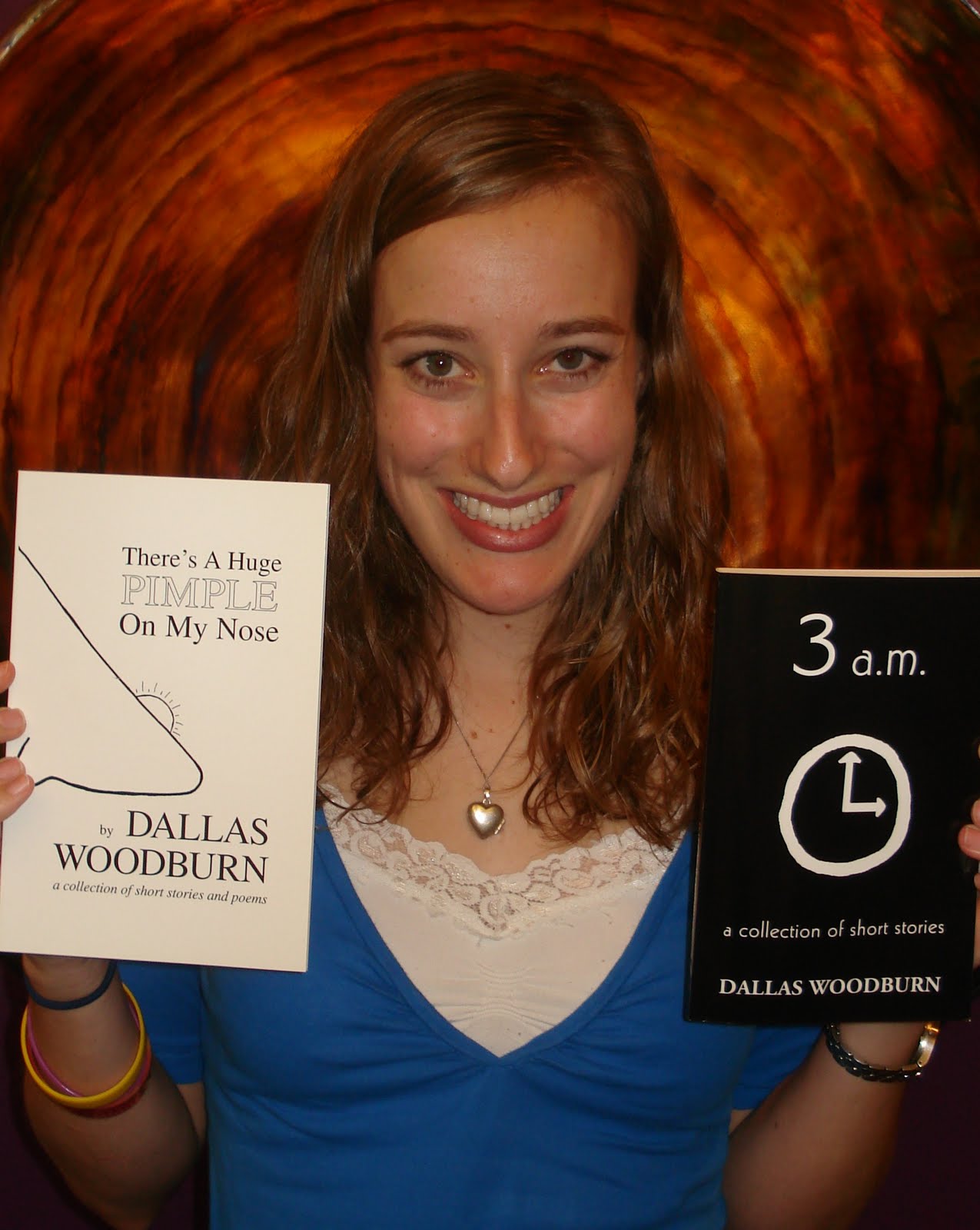
In an interview about her groundbreaking play Twilight: Los Angeles, 1992, playwright and actress Anna Deveare Smith says, "You're not the character, and you're not yourself. You're in the 'not not' -- which is a positive. I think this is the most we can hope for. I don't think we can really 'be' anybody else. The actor is a vehicle of consciousness, projected through a fictional character, and the fiction displays great truth."
I think this sentiment applies to writing as well as to acting -- actually, I think it apples to any creative art. When I write a piece of fiction, I am simultaneously myself and the characters I create. I give pieces of myself to my characters, but as the story progresses something magical happens: they become their own individual selves, with their own identities and desires.
Often when I set out to write a story, I have a specific ending in mind, but sometimes the main character will decide to take the action in a different direction, or a minor character will pop up and demand attention. It's as if I am merely the vehicle for expressing these various voices.
Here's a writing prompt that you might try: When I'm stuck or the writing becomes stagnant, I place two characters in a situation and let them talk to each other on the page. Often the story takes form in ways I never would have guessed before I began writing.
I also love something that Anna Deveare Smith says about the actor: he or she has "a deep desire to connect and people come to the theater because they too want to connect. The actor does not produce the connection alone, the audience has to push forward also; the two have to meet in the middle." This is true for all types of art.
One of my favorite things about the medium of writing is that once a piece is published and unleashed upon the world, it is open for interpretation from all different perspectives. The meaning of a piece of writing can shift and morph as the times change and society's needs for sustenance and meaning through literature changes.
What do you think? I'd love to hear your thoughts in the comments section!
Showing posts with label character. Show all posts
Showing posts with label character. Show all posts
Monday, August 11, 2014


Saturday, August 8, 2009
What makes a "good" story?
Dear Dallas,
For a long time, I've thought a story has to have a bunch of conflict to be interesting, but in the past couple days I've been reading in this old book of my mom's, and a lot of the stories in it are really interesting and fun even though they're hardly at all tense or full of conflict. So, now I've sort of been trying to figure out what it is that makes someone want to keep reading a story. Do you think, as long as you have good characters with interesting things happening to them, even if their adventures aren't full of all sorts of problems popping up, it can be a good story?
* * *
You ask a very good question, and something that I think every writer thinks about. When I first started writing, I thought that in order to have a good story, I had to come up with a wholly original, action-packed plot. But as I read more and grew more as a writer, I realized that most of the books I enjoyed reading didn't have crazy action-filled plotlines. It was more the characters that drew me into the story. For example, one of my all-time favorite books is Catcher in the Rye, and not much happens plot-wise -- the main character wanders around New York, running into people he knows, musing about his life and the world around him. But I found it utterly compelling. That book also made me realize that it is okay that I sometimes feel like I don't have as much life experience to draw upon as older writers. I can write vividly and compellingly and honestly about the things I have experienced -- childhood, high school, college, first relationships, new friendships, traveling abroad for the first time, etc -- and I can make very interesting characters and stories out of these raw materials. And the same goes for you and the things you've experienced in your life!
In short, I think a "good" story is subjective -- every reader will be different! To me, a good story is simply a story that moves the reader in some way. Maybe that movement is literal and plot-driven -- as you put it, problems that keep popping up -- or the movement could be more internal and character-based. Personally, the quieter, character-driven stories are the ones I find most lasting.
For a long time, I've thought a story has to have a bunch of conflict to be interesting, but in the past couple days I've been reading in this old book of my mom's, and a lot of the stories in it are really interesting and fun even though they're hardly at all tense or full of conflict. So, now I've sort of been trying to figure out what it is that makes someone want to keep reading a story. Do you think, as long as you have good characters with interesting things happening to them, even if their adventures aren't full of all sorts of problems popping up, it can be a good story?
* * *
You ask a very good question, and something that I think every writer thinks about. When I first started writing, I thought that in order to have a good story, I had to come up with a wholly original, action-packed plot. But as I read more and grew more as a writer, I realized that most of the books I enjoyed reading didn't have crazy action-filled plotlines. It was more the characters that drew me into the story. For example, one of my all-time favorite books is Catcher in the Rye, and not much happens plot-wise -- the main character wanders around New York, running into people he knows, musing about his life and the world around him. But I found it utterly compelling. That book also made me realize that it is okay that I sometimes feel like I don't have as much life experience to draw upon as older writers. I can write vividly and compellingly and honestly about the things I have experienced -- childhood, high school, college, first relationships, new friendships, traveling abroad for the first time, etc -- and I can make very interesting characters and stories out of these raw materials. And the same goes for you and the things you've experienced in your life!
In short, I think a "good" story is subjective -- every reader will be different! To me, a good story is simply a story that moves the reader in some way. Maybe that movement is literal and plot-driven -- as you put it, problems that keep popping up -- or the movement could be more internal and character-based. Personally, the quieter, character-driven stories are the ones I find most lasting.
Subscribe to:
Posts (Atom)