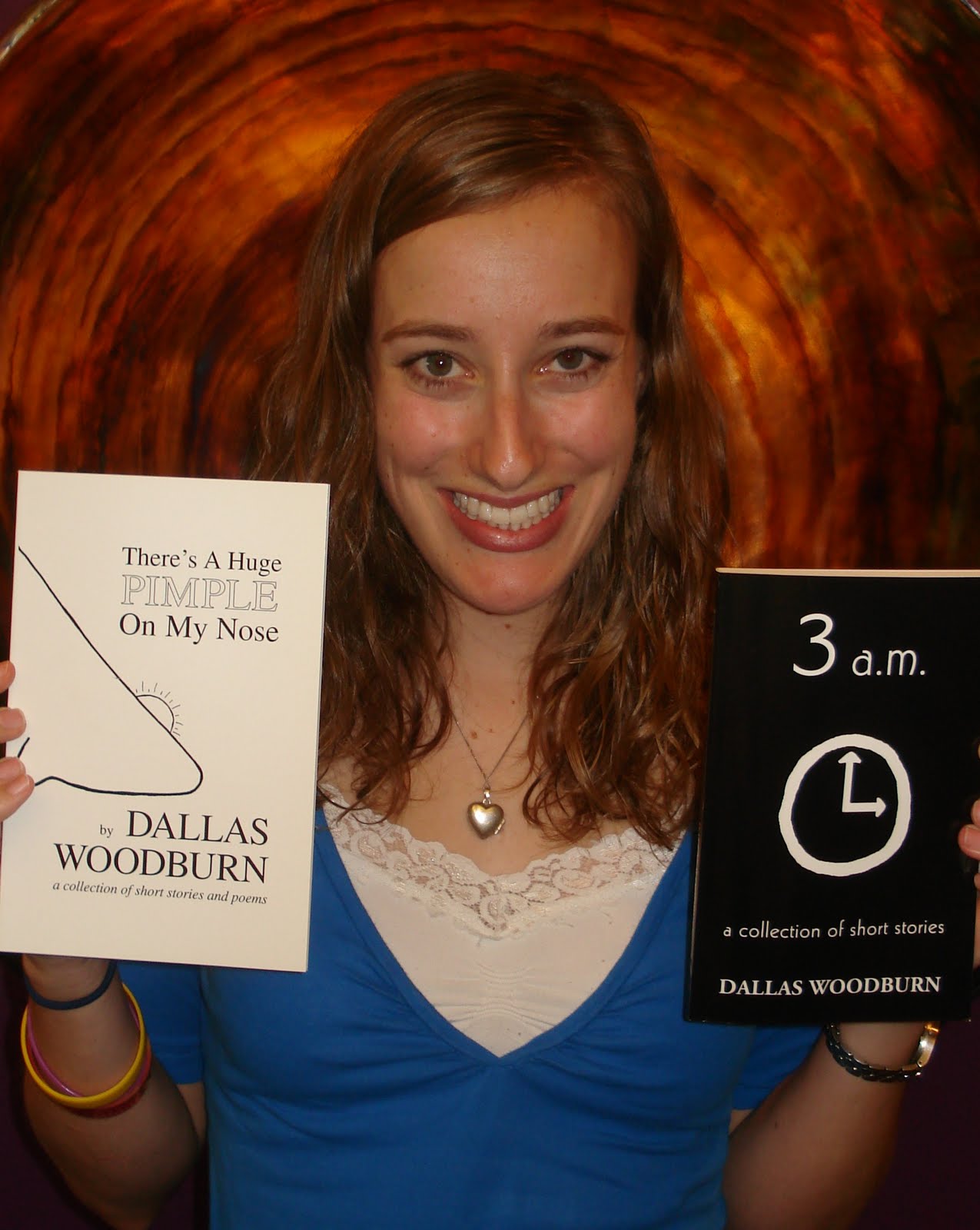
Rosalie Chiang is a talented young writer with two stories featured in Dancing With The Pen II. On top of that, she has recently published her own book, A is for Albatross: Birds A to Z. This beautifully written and illustrated collection of poetry is as fun as it is informative. Children of all ages -- and adults, too! -- will love this book. You can order it on Amazon here. Read on for Rosalie's thoughts about reading, finding inspiration, and the writing process!
Can you tell us a bit about yourself?
My name is Rosalie Chiang. I am ten years old, in sixth grade, and I live in Fremont, California.
I love reading, gardening, cooking, and of course writing poetry. I am homeschooled and have won 2nd place once and 3rd place twice in two national level poetry contests for homeschoolers.
Describe your book and how you got the idea to create it. Take us through your writing process.
Last year, I got an idea of finding birds for each letter of the alphabet. I wrote a quatrain with a rhyme scheme of AABB for each bird, plus a short paragraph about it. Then my dad drew each bird and I painted them. Finally we put them all together and published it on Amazon.com. The whole process took about a year.
Have you been writing for a long time? What do you like about writing?
I have been writing since I was five. I especially enjoy writing poetry that rhymes! I also like writing stories because it lets your imagination flow.
Do you have any advice for other writers, or for other young people going after their dreams?
Write about what you enjoy.
Can you share a few of your favorite books or authors?
I generally like classics. Some of my favorite books are C.S. Lewis’ The Lion, the Witch, and the Wardrobe and Roald Dahl’s The BFG. My favorite poets are Shel Silverstein and Jack Prelutsky. They are fun to read and listen to. I also like Shakespeare.
What inspires you?
I love animals and nature. I enjoy doing things with my hands like cooking, planting and science experiments. My parents give me many opportunities to try anything I desire.
What are you working on now?
I am working on an A to Z book of freshwater fish.
Thank you so much, Rosalie, for taking the time to be with us today!
Links:
- Order A is for Albatross: Birds A to Z on Amazon here.
- Read Rosalie's award-winning poems here and her honorable mention essay here.
- Order Dancing With The Pen II on Amazon here; personalized copies are available here.
Showing posts with label writer. Show all posts
Friday, November 4, 2016
Friday, June 10, 2016
Reading as a Creative Act
In the introduction to the wonderfully insightful book Genership 1.0, David Castro writes, "The journey of self-discovery involves the possibility of transcendence. The effort to see ourselves changes us. Thomas Mann reminded us that '[n]o one remains quite what he was when he recognizes himself.' We are the sculptor; we are the stone. The strangely transformational search for true human nature belongs not only to myth-makers, poets and philosophers. We experience the quest for our identity as social beings. Through families, organizations, communities and nations, humanity writ large shares the pilgrimage toward the self. Religion, philosophy, art, science and history undertake the same fundamental inquiry: Who are we?"
I love this image of all of humanity in the quest together, asking the same foundational questions, reflecting ourselves in each other. For me, this calls to mind the act of reading: a form of connection, inspiration, newness, delight. I believe that reading itself is an act of creation. The reader brings the writers' words to life uniquely and individually. No two readers experience a book in exactly the same way. Readers create the experience of the book based on their frame of reference, mood, memories, and associations. Words on a page are not static -- they are a conversation between writer and reader.
Malcolm Bradbury observed, "A conventional good read is usually a bad read, a relaxing bath in what we know already. A truly good read is surely an act of innovative creation in which we, the readers, become conspirators." I would add that a truly great read takes what might be viewed as "conventional" and makes it feel innovative. Joseph Campbell famously suggested that only seven basic story plots exist, which we retell again and again; I believe truly great authors are able to retell "what we already know" in ways that are refreshing and newly enlightening.
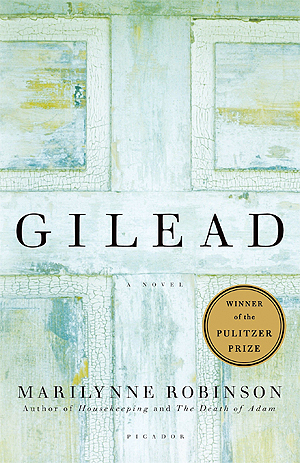
I recently reread Marilynne Robinson’s luminous novel Gilead, in which she does precisely this. Robinson takes a plot we have all read before—an aged man on his deathbed recounting the experiences of his life—and turns it into a novel that is both profound and original. Further, I was struck by the seamlessness of the narrative voice. Robinson structures the novel as a letter written by Congregationalist minister John Ames to his young son, and after only a few pages I forgot I was reading a novel and began to believe that there really existed an old minister named John Ames, whose own words I was reading. Robinson expertly weaves together memories, insights, and day-to-day observations, capturing not only how John Ames thinks and speaks, but also how he expresses himself in a letter. Ames even addresses this uniqueness of voice in the early pages of the novel: "I don't write the way I speak. … I don't write the way I do for the pulpit either, insofar as I can help it. … I do try to write the way I think. But of course that all changes as soon as I put it into words" (28-29).
Above all, what impresses me about Gilead is how effortless Robinson makes the written word seem, the same way Fred Astaire made dancing appear simple, Monet made painting seem easy, and Roger Federer turns tennis into ballet. The writing and storytelling dovetail so flawlessly into one man’s stirring and lucid recollections of his life that it is easy to forget that John Ames is not a real man, but the creation of Marilynne Robinson. Furthermore, Ames’ words flow so elegantly that it is difficult to imagine that Robinson toiled over them for years. However, upon deeper consideration, this proves Nathaniel Hawthorne’s oft-quoted words: “Easy reading is damn hard writing.”
Perhaps the book I read this past year that has most influenced me as a writer is one I reread nearly every year: The Catcher in the Rye. Each time I read this novel, it strikes me as a slightly different book. The words on the page are the same, but I have changed and grown; the conversation feels new. I first read J.D. Salinger’s classic novel my junior year in high school. Rarely has another book touched me in such a raw, visceral way. I wanted to climb into the pages of the book and into Holden Caulfield’s life. I realized that it is possible for a character to draw in the reader and carry the entire story on his back.
People hold an endless source of intrigue and inspiration to me. One of my favorite activities is people-watching. I love to imagine lives for the people who pass by, wondering where they came from and where they are going; what they are thinking and who they love; what they worry about and what their futures hold. However, as a storyteller, I used to think that in order to produce something that will stick with a reader, I had to dream up a wholly new and original idea. I fretted over coming up with a labyrinthine plot unique to anything I had ever come across. The Catcher in the Rye opened my mind to a new definition of what "great writing" can be. I came to understand that what makes an idea unique is that it is filtered through my own life experiences and perspective. Rather than building compelling stories through intricate, convoluted plotlines, as a writer I am interested in exploring the intricacies, subtleties, and contradictions of the human psyche.
E. M. Forster wrote, "I suggest that the only books that influence us are those for which we are ready, and which have gone a little further down our particular path than we have gone ourselves." I am grateful to the numerous books and authors who have influenced me, and to those who will influence me in the future, for leading me down my particular path as an ever-growing, ever-changing creative writer -- and reader.
I love this image of all of humanity in the quest together, asking the same foundational questions, reflecting ourselves in each other. For me, this calls to mind the act of reading: a form of connection, inspiration, newness, delight. I believe that reading itself is an act of creation. The reader brings the writers' words to life uniquely and individually. No two readers experience a book in exactly the same way. Readers create the experience of the book based on their frame of reference, mood, memories, and associations. Words on a page are not static -- they are a conversation between writer and reader.
Malcolm Bradbury observed, "A conventional good read is usually a bad read, a relaxing bath in what we know already. A truly good read is surely an act of innovative creation in which we, the readers, become conspirators." I would add that a truly great read takes what might be viewed as "conventional" and makes it feel innovative. Joseph Campbell famously suggested that only seven basic story plots exist, which we retell again and again; I believe truly great authors are able to retell "what we already know" in ways that are refreshing and newly enlightening.
I recently reread Marilynne Robinson’s luminous novel Gilead, in which she does precisely this. Robinson takes a plot we have all read before—an aged man on his deathbed recounting the experiences of his life—and turns it into a novel that is both profound and original. Further, I was struck by the seamlessness of the narrative voice. Robinson structures the novel as a letter written by Congregationalist minister John Ames to his young son, and after only a few pages I forgot I was reading a novel and began to believe that there really existed an old minister named John Ames, whose own words I was reading. Robinson expertly weaves together memories, insights, and day-to-day observations, capturing not only how John Ames thinks and speaks, but also how he expresses himself in a letter. Ames even addresses this uniqueness of voice in the early pages of the novel: "I don't write the way I speak. … I don't write the way I do for the pulpit either, insofar as I can help it. … I do try to write the way I think. But of course that all changes as soon as I put it into words" (28-29).
Above all, what impresses me about Gilead is how effortless Robinson makes the written word seem, the same way Fred Astaire made dancing appear simple, Monet made painting seem easy, and Roger Federer turns tennis into ballet. The writing and storytelling dovetail so flawlessly into one man’s stirring and lucid recollections of his life that it is easy to forget that John Ames is not a real man, but the creation of Marilynne Robinson. Furthermore, Ames’ words flow so elegantly that it is difficult to imagine that Robinson toiled over them for years. However, upon deeper consideration, this proves Nathaniel Hawthorne’s oft-quoted words: “Easy reading is damn hard writing.”
Perhaps the book I read this past year that has most influenced me as a writer is one I reread nearly every year: The Catcher in the Rye. Each time I read this novel, it strikes me as a slightly different book. The words on the page are the same, but I have changed and grown; the conversation feels new. I first read J.D. Salinger’s classic novel my junior year in high school. Rarely has another book touched me in such a raw, visceral way. I wanted to climb into the pages of the book and into Holden Caulfield’s life. I realized that it is possible for a character to draw in the reader and carry the entire story on his back.
People hold an endless source of intrigue and inspiration to me. One of my favorite activities is people-watching. I love to imagine lives for the people who pass by, wondering where they came from and where they are going; what they are thinking and who they love; what they worry about and what their futures hold. However, as a storyteller, I used to think that in order to produce something that will stick with a reader, I had to dream up a wholly new and original idea. I fretted over coming up with a labyrinthine plot unique to anything I had ever come across. The Catcher in the Rye opened my mind to a new definition of what "great writing" can be. I came to understand that what makes an idea unique is that it is filtered through my own life experiences and perspective. Rather than building compelling stories through intricate, convoluted plotlines, as a writer I am interested in exploring the intricacies, subtleties, and contradictions of the human psyche.
E. M. Forster wrote, "I suggest that the only books that influence us are those for which we are ready, and which have gone a little further down our particular path than we have gone ourselves." I am grateful to the numerous books and authors who have influenced me, and to those who will influence me in the future, for leading me down my particular path as an ever-growing, ever-changing creative writer -- and reader.
Friday, January 29, 2016
My Thoughts About Writing, Revising, and Finding Your Genre
One of my guided writing mentees recently sent me a list of terrific interview questions, and she gave me permission to share them, and my answers, with you! I hope these thoughts might be useful or motivating. I would love to hear your comments and answers to these questions below!
You can also read my thoughts on teaching creative writing here.
When you are writing, do you think about the age differences of your readers? If so, do you have to change anything to make it more age appropriate?
Usually, I do not think about the age differences of my readers when I am writing the first draft of my story. I prefer to let the story flow out of me as it feels most natural, and not to think too much about ANYBODY reading it -- that sometimes causes me to worry and freeze up and get writers' block. Revising is when I think about my intended audience and the possible ages of my readers. Since I do not write horror or crime novels, I have never really had to worry about inappropriate violence or anything like that. In my latest novel, I did go back through and scale back some of the adult language and sexuality, since the book is intended for a teenage audience.
Was there a teacher in the past that inspired/pushed you to write, or did writing just come naturally?
I have been fortunate to have many wonderful teachers who have been SO supportive of my writing over the years! I would say my answer to your question is both -- I was inspired by teachers, AND writing came naturally to me. It’s funny, but looking back it’s difficult for me to remember a time before I loved to write! I learned to read when I was four years old, and I gobbled up books. Like many kids, I made up stories; I was compelled to write my stories down. I think this was largely due to my dad being a writer. Every night, my parents would read me bedtime stories, and every morning I would come downstairs and see my dad writing. As a result, I was very aware that someone had written the books I so loved to read. And I decided that I wanted to be someone who writes books for other people to enjoy.
My dad remains the first person who reads my work. His feedback and encouragement are invaluable. I remember when I was little, he would let me type out stories on his computer once he had filed his column for the day -- how special that was! Also, when I was in the first and second grade I was lucky to have an amazing teacher, Diane Sather, who encouraged my love for writing. I remember she had me read one of my stories to the class. I got such a burst of joy from sharing what I had written with others. It never crossed my mind to just write for myself.
How long does it usually take for you to revise your writing or do you just write it and send it off?
I ALWAYS revise my writing! I think writing without revising would be like trying to play a sport with your shoes untied. You should use every tool in your writers toolbox to make your writing the best it can be! I like to set aside my rough drafts for a few weeks or even a month, so then I can come back and read it with "fresh eyes" and an open perspective. Often I immediately find changes I wish to make, on the word level and on the bigger plot level -- phrasing that sounds awkward, scenes that need to be further developed, actions that don't make much sense. And just one round of revision is never enough. For example, with my most recent novel, I revised it at least seven or eight times -- all 300 pages! -- and it morphed into a whole new book compared to the rough draft. I spent about one year writing the first draft and two years revising it. Sometimes writers start off not liking the revision process very much, but revising has become something I truly enjoy! It is your chance to make your work better and better, to see the world and characters really come alive. I think rough drafts are when you (or, I should say, when I, because all writers are different and I am just drawing from my own experience) sketch out my ideas with rough lines, and the revising process is when everything gets filled in and becomes real.
Do you write in more than one genre?
Yes, I write both fiction and nonfiction. I would say my "home genre" (where I feel most comfortable and gravitate to most often) is realistic fiction, and more specifically YA realistic fiction. I write short stories for adults as well, and sometimes my fiction crosses over into the magical/fantastical realm. For nonfiction, I most often write short essays about personal experiences I have had, and I also write journalistic articles for magazines and websites. This might entail interviewing people and doing research, which can be a fun break from exploring my own mind and thoughts. When I was younger, I used to write poetry, but I do not write in that genre much anymore.
How did you discover what genre you are best at writing?
Hmmm... good question! I'm not exactly sure how I knew what I was "best" at writing; I think I simply focused on what genre I enjoyed the most and felt most natural to me. I wrote in that genre the most, and the more you write, the better you become! I also think each idea you have or project you embark on has its own form and genre that feels most natural to the idea itself. For example, sometimes I do not realize I am writing a fantasy story until something magical enters the page -- and it feels like a surprise to me as much as to the reader, but it also feels RIGHT, like it just fits, and I realize that story wants to be magical/fantasy. I just need to listen to the genre of each project instead of trying to force it into a box of my own design. One final thing I would say about this is not to worry about forcing YOURSELF into a "genre box" either -- you are free to write in all different genres and all varieties of projects! Write what you feel excited and passionate about. That is the most important thing.
Do you enjoy teaching other people how to write?
Oh, yes! It is one of my favorite things. I especially enjoy teaching writing camp and working with talented young writers like you who have a passion for writing and really love writing to begin with. That is my favorite environment to teach in. I have also taught writing to students (for example, as a guest speaker/teacher, a private tutor, and a college writing instructor at Purdue University) who don't really care about writing or want to write. In that arena, my goal as a teacher is to help them see the profound importance of writing and how becoming a better communicator will help them in any field they choose to go into. With all my students, my ultimate aim is to increase their confidence and joy as writers. Teaching writing helps me remember the magic and wonder of the creative process, and my students often inspire me with their enthusiasm and hard work! Also, teaching keeps me honest with my own writing practices. If I am telling students to find at least fifteen minutes to write every day, then I had better be practicing the same advice myself and writing every day, too! :)
You can also read my thoughts on teaching creative writing here.
![]() |
| My writing desk |
When you are writing, do you think about the age differences of your readers? If so, do you have to change anything to make it more age appropriate?
Usually, I do not think about the age differences of my readers when I am writing the first draft of my story. I prefer to let the story flow out of me as it feels most natural, and not to think too much about ANYBODY reading it -- that sometimes causes me to worry and freeze up and get writers' block. Revising is when I think about my intended audience and the possible ages of my readers. Since I do not write horror or crime novels, I have never really had to worry about inappropriate violence or anything like that. In my latest novel, I did go back through and scale back some of the adult language and sexuality, since the book is intended for a teenage audience.
Was there a teacher in the past that inspired/pushed you to write, or did writing just come naturally?
I have been fortunate to have many wonderful teachers who have been SO supportive of my writing over the years! I would say my answer to your question is both -- I was inspired by teachers, AND writing came naturally to me. It’s funny, but looking back it’s difficult for me to remember a time before I loved to write! I learned to read when I was four years old, and I gobbled up books. Like many kids, I made up stories; I was compelled to write my stories down. I think this was largely due to my dad being a writer. Every night, my parents would read me bedtime stories, and every morning I would come downstairs and see my dad writing. As a result, I was very aware that someone had written the books I so loved to read. And I decided that I wanted to be someone who writes books for other people to enjoy.
My dad remains the first person who reads my work. His feedback and encouragement are invaluable. I remember when I was little, he would let me type out stories on his computer once he had filed his column for the day -- how special that was! Also, when I was in the first and second grade I was lucky to have an amazing teacher, Diane Sather, who encouraged my love for writing. I remember she had me read one of my stories to the class. I got such a burst of joy from sharing what I had written with others. It never crossed my mind to just write for myself.
How long does it usually take for you to revise your writing or do you just write it and send it off?
I ALWAYS revise my writing! I think writing without revising would be like trying to play a sport with your shoes untied. You should use every tool in your writers toolbox to make your writing the best it can be! I like to set aside my rough drafts for a few weeks or even a month, so then I can come back and read it with "fresh eyes" and an open perspective. Often I immediately find changes I wish to make, on the word level and on the bigger plot level -- phrasing that sounds awkward, scenes that need to be further developed, actions that don't make much sense. And just one round of revision is never enough. For example, with my most recent novel, I revised it at least seven or eight times -- all 300 pages! -- and it morphed into a whole new book compared to the rough draft. I spent about one year writing the first draft and two years revising it. Sometimes writers start off not liking the revision process very much, but revising has become something I truly enjoy! It is your chance to make your work better and better, to see the world and characters really come alive. I think rough drafts are when you (or, I should say, when I, because all writers are different and I am just drawing from my own experience) sketch out my ideas with rough lines, and the revising process is when everything gets filled in and becomes real.
Do you write in more than one genre?
Yes, I write both fiction and nonfiction. I would say my "home genre" (where I feel most comfortable and gravitate to most often) is realistic fiction, and more specifically YA realistic fiction. I write short stories for adults as well, and sometimes my fiction crosses over into the magical/fantastical realm. For nonfiction, I most often write short essays about personal experiences I have had, and I also write journalistic articles for magazines and websites. This might entail interviewing people and doing research, which can be a fun break from exploring my own mind and thoughts. When I was younger, I used to write poetry, but I do not write in that genre much anymore.
How did you discover what genre you are best at writing?
Hmmm... good question! I'm not exactly sure how I knew what I was "best" at writing; I think I simply focused on what genre I enjoyed the most and felt most natural to me. I wrote in that genre the most, and the more you write, the better you become! I also think each idea you have or project you embark on has its own form and genre that feels most natural to the idea itself. For example, sometimes I do not realize I am writing a fantasy story until something magical enters the page -- and it feels like a surprise to me as much as to the reader, but it also feels RIGHT, like it just fits, and I realize that story wants to be magical/fantasy. I just need to listen to the genre of each project instead of trying to force it into a box of my own design. One final thing I would say about this is not to worry about forcing YOURSELF into a "genre box" either -- you are free to write in all different genres and all varieties of projects! Write what you feel excited and passionate about. That is the most important thing.
Do you enjoy teaching other people how to write?
Oh, yes! It is one of my favorite things. I especially enjoy teaching writing camp and working with talented young writers like you who have a passion for writing and really love writing to begin with. That is my favorite environment to teach in. I have also taught writing to students (for example, as a guest speaker/teacher, a private tutor, and a college writing instructor at Purdue University) who don't really care about writing or want to write. In that arena, my goal as a teacher is to help them see the profound importance of writing and how becoming a better communicator will help them in any field they choose to go into. With all my students, my ultimate aim is to increase their confidence and joy as writers. Teaching writing helps me remember the magic and wonder of the creative process, and my students often inspire me with their enthusiasm and hard work! Also, teaching keeps me honest with my own writing practices. If I am telling students to find at least fifteen minutes to write every day, then I had better be practicing the same advice myself and writing every day, too! :)
Tuesday, May 26, 2015
Interview with Writer & Filmmaker Marjory E. Leposky
Tell us about your various writing projects. What inspires you?
To date I have written two feature films: Reasons? and Getting To The Game; two TV pilots, Gables and Who's Jared; one short film, La Fuente (The Fountain); and one animation script/children's book about a cat named Mr. Grumbles. Reasons?, Getting To The Game, and Gables -- the first three -- were written from anger over what was going on in my life and my world at the time. Who's Jared, La Fuente (The Fountain), and Mr. Grumbles were written a few years later, inspired by ideas that came to me and events that happened to me. For me personally, it is a lot easier to research and write from anger than from inspiration.
What made you want to become a writer?
My parents are non-fiction writers. I never really had plans to become a writer, too. I'm really a filmmaker. I've been told that if I want to move up in my career, I should write my own projects -- but no one explained what went into getting them made: finding an agent or publisher, and raising the necessary funds. So I have had to learn all that myself.
Can you give us a peek into your writing schedule?
I have not written a script in the past five years. I have spent this time grant-writing and fund-raising, looking for an agent and publisher, and trying to decide if I want to self-publish Mr. Grumbles, which would lead to more grant-writing and fund-raising.
When I am in a writing mode. I just sit down with good music on, and I write in Finaldraft. I do not write the old-school way with cards and strips. I might write an outline. Most of my characters just talk to me, and I write. I find that most of the time I have to do research on the subject I am writing about. I do interviews and "hang out" with the subject.
What is your biggest advice for people who want to write films?
Don't waste your time and money on those $1,000-dollar writing programs. With screenwriting you need to know the rules before you start to change or break the rules of screenwriting. Do take a screenwriting class at either a community college or university.
What are your favorite children's books?
The Giving Tree and other poem books by Shel Silverstein; and Tikki Tikki Tembo by Arlene Mosel and Blair Lent.
Is there anything else you would like to add?
Start with writing from the heart. Then you need to do re-writes, which no one wants to do. Also, always have a good proofreader.
Connect with Marjory at the links below:
- Chatterbox Productions Web Site: http://www.ampersandcom.com/chatterbox/
- La Fuente (The Fountain) Funding: http://www.ampersandcom.com/chatterbox/FundingFountain.html
- Funding for Mr. Grumbles: http://www.ampersandcom.com/chatterbox/FundingGrumbles.html
- Facebook Page for Mr. Grumbles: https://www.facebook.com/pages/Mr-Grumbles/744246918938363
Friday, May 15, 2015
Q&A Friday: How to manage class time as a writing teacher
Hi, everyone! I have something new that I am excited to debut on the blog today.
Often I get emailed questions about writing, teaching, editing, book recommendations, and general questions about the literary life, and I was thinking that other people might be interested in these questions, too! So I had an idea to start a new feature on the blog called "Q&A Friday" where I will answer one of these questions every week or so. I hope you find it to be helpful and inspiring!
If you have a question, please feel free to email it to me at dallaswoodburn <AT> gmail <DOT> com with "Q&A Friday" in the subject line. Also, if you have thoughts to add to my answers, I would LOVE if you would share your ideas in the comments section below! My aim for this blog is for it to be a positive resource and community-builder for readers, writers, teachers, and book-lovers of all ages!
Question: When teaching a creative writing class, how do you manage the class time?
My answer: It depends on how long the class is, but I like to mix things up every 20 minutes or so. Usually we do a short "freewrite" prompt at the beginning to get kids in the "writing zone" -- for example, at my Summer Writing Camp, I have a prompt written on the board when kids come in. When everyone has arrived and has written for 5-10 minutes, I give time to share if anyone wants to read what they've written.
Then, we spend another 15-20 minutes or so going over the topic/lesson of that day -- maybe it's a class discussion about favorite literary characters and how we think the writer created such a memorable character, or talking about ways to re-start the story's plot if you're feeling stuck, or a compilation of descriptive-writing prompts to really delve into the setting. It's great to do class brainstorming where you write down what students say on the board so you have a wonderful list at the end full of ideas.
For the remainder of class, I usually use one or two writing activities/prompts that relate to that topic -- for example, dialogue activities or character-creating activities, with time in between for students to share their writing if they wish. A lot of the younger kids REALLY enjoy sharing and it is a big motivation for them, so if you can it's great to build in that time.
Of course, during sharing it is important to only encourage positive comments and positive feedback. As a teacher, you can set this environment by asking, "What did you like about xxx's story/poem/etc?" and have the class raise their hands to share compliments. It's a great way to build each other up. And of course you the teacher should give them compliments, too! It means a lot to them, believe me. They will be looking up to you!
Often I get emailed questions about writing, teaching, editing, book recommendations, and general questions about the literary life, and I was thinking that other people might be interested in these questions, too! So I had an idea to start a new feature on the blog called "Q&A Friday" where I will answer one of these questions every week or so. I hope you find it to be helpful and inspiring!
If you have a question, please feel free to email it to me at dallaswoodburn <AT> gmail <DOT> com with "Q&A Friday" in the subject line. Also, if you have thoughts to add to my answers, I would LOVE if you would share your ideas in the comments section below! My aim for this blog is for it to be a positive resource and community-builder for readers, writers, teachers, and book-lovers of all ages!
Question: When teaching a creative writing class, how do you manage the class time?
My answer: It depends on how long the class is, but I like to mix things up every 20 minutes or so. Usually we do a short "freewrite" prompt at the beginning to get kids in the "writing zone" -- for example, at my Summer Writing Camp, I have a prompt written on the board when kids come in. When everyone has arrived and has written for 5-10 minutes, I give time to share if anyone wants to read what they've written.
Then, we spend another 15-20 minutes or so going over the topic/lesson of that day -- maybe it's a class discussion about favorite literary characters and how we think the writer created such a memorable character, or talking about ways to re-start the story's plot if you're feeling stuck, or a compilation of descriptive-writing prompts to really delve into the setting. It's great to do class brainstorming where you write down what students say on the board so you have a wonderful list at the end full of ideas.
For the remainder of class, I usually use one or two writing activities/prompts that relate to that topic -- for example, dialogue activities or character-creating activities, with time in between for students to share their writing if they wish. A lot of the younger kids REALLY enjoy sharing and it is a big motivation for them, so if you can it's great to build in that time.
Of course, during sharing it is important to only encourage positive comments and positive feedback. As a teacher, you can set this environment by asking, "What did you like about xxx's story/poem/etc?" and have the class raise their hands to share compliments. It's a great way to build each other up. And of course you the teacher should give them compliments, too! It means a lot to them, believe me. They will be looking up to you!
Labels:
activities,
ask,
freewrite,
Friday,
kids,
prompts,
q&a,
questions,
teacher,
teaching,
writer
Friday, February 6, 2015
Guest Post: Top 10 Editing Tools
Top 10 Editing
Tools for Freelance Writers
A Guest Post
by Robert Morris
Believe it or not, even professional editors rely on technology in
order to come up with a polished piece of content. Since not all freelance
writers can hire their own editors to clean after the mistakes they make, they
can start using the same tools for ultimate effectiveness.
Although some of the tools in the following list take some time
getting used to, they are still easy to incorporate into your daily working
practice. The end result will be improved content, which is something everyone
appreciates.
This efficient website helps you check definitions, spelling, and word
breaks. The online version works perfectly fine, but you can increase the
effectiveness of the tool if you download the app available for iPad and
Android. The difference is that the app has a voice look-up feature.
No matter how many automated editing tools you use, they cannot
replace a real editor who checks every single aspect of the content while
preserving your writer’s voice. Hiring a real editor can cost a lot of money,
but not when you’re dealing with NinjaEssays – an essay writing service that
enables you to rely on the assistance of professional editors for a really
affordable price. Plus, you can hire writers to help you when you get stuck
with an overwhelming piece.
Although some editors prefer using Adobe Acrobat Pro, the PDF XChangeViewer and Adobe Reader XI are effective as
well. The PDF markup tool for proofreading the text before you print it will
help you identify and fix the minor mistakes in your content.
Editing your own work is not only about fixing the flaws; the process
also involves making sure that it’s free of plagiarism. Copyscape is one of the
most efficient plagiarism checkers you could possibly use.
Not many freelance writers bother with proper referencing. However, if
you are writing serious content, you have to be aware of the citation standards
before publishing it. With the help of this tool, you can check if the
references in your writing are cited correctly.
If you have no idea how to format the references, then you should
start using Bibme – an automated tool that helps you create citations in
Turabian, APA, MLA, and Chicago style. This tool works best if you are working
on lengthier content, such as an eBook for example.
This accurate editing software will help you identify errors and typos
in a Microsoft Word document. All mistakes that went unnoticed under the word
processor’s radar will be identified with PerfectIt. These are the aspects you
can improve with this tool: abbreviation definitions, consistent hyphenation
and capitalization, international spelling variations, list/bullet
capitalization and punctuation, and capitalization of headings.
This tool will clean up every formatting mishap in your content.
Freelance writers usually write a lot of content on a daily basis, so it’s easy
to miss some extra spaces between words, sentences and paragraphs, and leave
other minor mistakes that could spoil the experience of a reader. The tool will
clean unnecessary tabs, multiple returns, and other mistakes that contribute
towards a messy-looking document.
With so many tools available today, it’s easy to underestimate the
value of the good Word. Your usual word processor can be a reliable editing
tool if you use its entire potential through the following built-in tools:
dictionary and spell check, reference tool, find and replace, table to text
tool, reorder list function, track changes and comments, and more.
This tool will help you make sure that all internal and external links
and cross-references in your document are valid. Link Checker enables you to
look only for suspicious links, see all links in a tree view, and edit/remove
links in a couple of clicks.
Now that you have the list of top 10 editing tools for freelancers,
aren’t you inspired to start delivering better content? Start using them today!
BIO: Robert Morris is a freelance writer from NYC. Homeschools his son, writes about science and love. Circle Robert on Google+.
Monday, January 5, 2015
Guest post: Tips for Writing a Story
8 Tips to Start to Write a Short Story
a guest post
by Julie Ellis
So, you want to be a writer, and the short story is your chosen genre. Actually, you are probably in a good spot, because it is often easier to get a short story published than a novel. Why? Because people still read magazines, either hard copy or in e-format, and the magazine publishing industry has adapted quite well to web-based publishing. Plus, so many of them are continually looking for good short stories to include in their issues. If you are new to this genre, but you have great ideas and stories to tell, then half of the work is already done! Your job now it to actually begin to write that first short story.
With that in mind, here are eight tips that a veteran writer can provide, that may make your task easier:
1. Write what you know firsthand: It is said that every piece of fiction, whether a short story or a novel, is a bit autobiographical. You must place your plot in a setting with which you are really familiar, or the events and the descriptions will not be credible. If, for example, you have no first-hand understanding of schools, you cannot set your story in a school, unless you are willing to do a lot of research. Such research should be reserved for novels!
2. Draw from real people as you develop your characters: The best way to have credible characters is to use aspects of personalities that you already know. Look to people with whom you have personal relationships. How do they behave? What excites or angers them? How do they speak? Most of my characters are combinations of people I know.
3. The Plot: I know that many writers spend a lot of time agonizing about setting up a conflict, a climax, and a denouement. What I have found in my own writing, however, is that these things really take care of themselves if I can outline a great plot, focusing on events and characters. Try it!
4. Don’t waste a word: A short story is really a fully condensed novel. You do not have the luxury of elaborate and lengthy descriptions, so don’t use them. Let the plot and characters “carry” the weight!
5. If your plot outline is not detailed, don’t worry about it – just write! I have often begun a short story with a simple idea for a starter, not even knowing where it would ultimately take me. I just start writing from that initial idea. No, it won’t be the final piece, but it will get my “juices” flowing, and I can always revise the storyline later. The key is to get something, anything, in writing, and then see where the idea can take me!
6. Carry a mobile device with you at all times. You never know when an idea will hit, and it is best to have an app that allows you to commit that idea immediately, for later use!
7. Read, read, and read: By reading lots of fiction, I get great ideas that may give me “fodder” for future stories. If you are not reading, you are not “percolating.”
8. Don’t “force” anything: It’s easy to become obsessed with getting a story completed, if only for the personal satisfaction of finishing something. This is a bad practice, and it results in stories that lack “flavor” and “engagement.” If you stall, let it be! I have a large number of short stories in folders on my desktop that are unfinished, and I’m okay with that. Someday, I’ll return to them, but the mood must be right!
Your love of writing is what has brought you to the point of writing short stories. Take any or all of these tips, if you find them helpful. Above all, however, find your own “voice.” Anything else is contrived and will not result in reader appeal.
Author’s bio: Armed with a Master’s in Journalism and strong wanderlust, Julie Ellis set out to explore exotic places, financed by her freelance writing. She is now a regular blogger for Premier Essay and sells feature articles to English-speaking publications around the world.
Wednesday, December 17, 2014
Interview with Irish author Caroline Finnerty
A couple months ago, my parents took a trip to Ireland for two weeks to celebrate their anniversary. One evening, they walked past a small independent bookstore in Dublin, heard laughter, turned around, went inside and followed the voices upstairs. And so it was they met Irish author Caroline Finnerty, whose book launch party was wrapping up. After a pleasant conversation, she signed a copy of her new novel Into the Night Sky as a gift for... ME! :)
I devoured the book as soon as my parents gave it to me. It is one of those books that, as the Irish Independent newspaper stated, is "impossible to put down." Simply put, Into the Night Sky is a luminous and heartwarming story that will stay with you long after you turn the final page, and Caroline is a superbly talented and empathetic writer. You can order Caroline's books here.
After Caroline was thoughtful enough to email me about my own writing and books, I asked if she would mind answering a few questions for this blog. She kindly agreed, and I am thrilled to present her insightful answers to you now. With no further ado, here is Caroline Finnerty!
Welcome, Caroline! Tell us about your latest novel INTO THE NIGHT SKY. In what ways was this novel different from your other books?
Into the Night Sky is the story of four people who come into each other’s lives when they are each in need of a friend and how the bonds that form change each of them forever more.
Conor Fahy is the owner of struggling bookshop Haymarket Books and is finding it hard to cope with everyday life in the aftermath of his partner Leni’s tragic death.
Conor’s best friend Ella Wilde is struggling with her own problems having just been axed from her job as a TV presenter after being caught shoplifting. She is struggling to deal with the weight of public disgrace and adjust to life away from the TV cameras.
Jack White is eight years old. He likes Ben 10, Giant Jawbreaker sweets and reading adventure books. He likes his Dad (when he doesn’t shout). He doesn’t like the bad monsters that are eating up his ma inside her tummy.
Rachel Traynor is the social worker assigned to Jack White’s case but sorting out messy family disputes is taking its toll on her. And it doesn’t help that she has had to say goodbye to the man she loves because he doesn't want to have children with her.
It’s different from my other books because the story is told through a present tense narrative and also one of the main characters, Jack, is a young child, which I have never done before.
Have you always wanted to be a writer? How did you get into writing?
I always loved writing but I never recognized it in myself until I entered my twenties. I was always bookish as a child and made my own "books" with illustrations. In hindsight, I was good at essay writing in school but it never occurred to me to study English and so I studied biotechnology in university. I was in my twenties when I had an idea and said that would make a great story so I just started writing it and I didn’t stop. After a while I decided to do an eight-week creative writing course by night which spurred me on a bit more. Then after I had my first child in 2009 and I had the idea for In a Moment, which was the first book I actually finished and I was lucky enough to get published.
What is your writing schedule? How do you find time to write?
It is chaotic at the moment! I have three small children, two of whom are not yet in school so it’s challenging to find the time -- but, like everything, if you really want to do it, you have to make sacrifices. So when I get them all into bed in the evenings I stay up late to try to do a bit then or at weekends my husband sometimes takes them all off for a few hours so I can get a bit done. I am quite disciplined so if I do have some free time I use it to write instead of doing anything else.
What is your biggest advice for other writers, particularly young writers just starting out?
Don’t be too hard on yourself when you read back over your work. Just put the words down on the page and don’t get disheartened. I used to re-read my early drafts and cringe so much that I would never go back to it again. Then I went to a really inspiring getting published workshop and the authors speaking at it said how they all think what they write is awful but that they keep rewriting it until one day they don’t want to throw their laptop against the wall and it finally starts to seem okay.
That’s the key – rewrite, rewrite, rewrite. I love the saying, "You can edit words on a page but you can’t edit a blank page."
Ooh, I love that saying, too! So very true. Who are some of your favorite writers?
Too many to mention, but the ones that stick out in my mind are:
I read in the Acknowledgements section of INTO THE NIGHT SKY that writing this book was a challenge at times. It seems that writer's block is something every writer has to deal with at one time or another. Do you have any tips for advice for vanquishing writer's block?
I find that usually when I am experiencing writer’s block it is because some part of the book is not working. Either the character isn’t fully developed in my mind or there is a problem with the plot.
When I was writing Into The Night Sky, I was finding it difficult to research the role of Rachel the social worker and how that storyline fitted into the book but it took me a few months to put my finger on exactly what it was that was missing. Eventually I contacted a friend of mine who was a social worker and she helped me immensely; once I had concrete facts, the story moved on again.
Usually if I can’t figure out what the problem is, then I go on to another scene that is coming easily to me and then go back to the problematic one at a later stage when hopefully it will come a bit easier then.
Great advice! Is there anything else you would like to add?
Thank you for having me, Dallas it’s lovely to be over here on an American blog – hello everyone!
Thank you so much for joining us today, Caroline!
Connect with Caroline at the following links:
I devoured the book as soon as my parents gave it to me. It is one of those books that, as the Irish Independent newspaper stated, is "impossible to put down." Simply put, Into the Night Sky is a luminous and heartwarming story that will stay with you long after you turn the final page, and Caroline is a superbly talented and empathetic writer. You can order Caroline's books here.
After Caroline was thoughtful enough to email me about my own writing and books, I asked if she would mind answering a few questions for this blog. She kindly agreed, and I am thrilled to present her insightful answers to you now. With no further ado, here is Caroline Finnerty!
Welcome, Caroline! Tell us about your latest novel INTO THE NIGHT SKY. In what ways was this novel different from your other books?
Into the Night Sky is the story of four people who come into each other’s lives when they are each in need of a friend and how the bonds that form change each of them forever more.
Conor Fahy is the owner of struggling bookshop Haymarket Books and is finding it hard to cope with everyday life in the aftermath of his partner Leni’s tragic death.
Conor’s best friend Ella Wilde is struggling with her own problems having just been axed from her job as a TV presenter after being caught shoplifting. She is struggling to deal with the weight of public disgrace and adjust to life away from the TV cameras.
Jack White is eight years old. He likes Ben 10, Giant Jawbreaker sweets and reading adventure books. He likes his Dad (when he doesn’t shout). He doesn’t like the bad monsters that are eating up his ma inside her tummy.
Rachel Traynor is the social worker assigned to Jack White’s case but sorting out messy family disputes is taking its toll on her. And it doesn’t help that she has had to say goodbye to the man she loves because he doesn't want to have children with her.
It’s different from my other books because the story is told through a present tense narrative and also one of the main characters, Jack, is a young child, which I have never done before.
Have you always wanted to be a writer? How did you get into writing?
I always loved writing but I never recognized it in myself until I entered my twenties. I was always bookish as a child and made my own "books" with illustrations. In hindsight, I was good at essay writing in school but it never occurred to me to study English and so I studied biotechnology in university. I was in my twenties when I had an idea and said that would make a great story so I just started writing it and I didn’t stop. After a while I decided to do an eight-week creative writing course by night which spurred me on a bit more. Then after I had my first child in 2009 and I had the idea for In a Moment, which was the first book I actually finished and I was lucky enough to get published.
What is your writing schedule? How do you find time to write?
It is chaotic at the moment! I have three small children, two of whom are not yet in school so it’s challenging to find the time -- but, like everything, if you really want to do it, you have to make sacrifices. So when I get them all into bed in the evenings I stay up late to try to do a bit then or at weekends my husband sometimes takes them all off for a few hours so I can get a bit done. I am quite disciplined so if I do have some free time I use it to write instead of doing anything else.
What is your biggest advice for other writers, particularly young writers just starting out?
Don’t be too hard on yourself when you read back over your work. Just put the words down on the page and don’t get disheartened. I used to re-read my early drafts and cringe so much that I would never go back to it again. Then I went to a really inspiring getting published workshop and the authors speaking at it said how they all think what they write is awful but that they keep rewriting it until one day they don’t want to throw their laptop against the wall and it finally starts to seem okay.
That’s the key – rewrite, rewrite, rewrite. I love the saying, "You can edit words on a page but you can’t edit a blank page."
Ooh, I love that saying, too! So very true. Who are some of your favorite writers?
Too many to mention, but the ones that stick out in my mind are:
- Kate Atkinson
- Maggie O’Farrell
- David Nicholls
- John Boyne
- Marian Keyes
I read in the Acknowledgements section of INTO THE NIGHT SKY that writing this book was a challenge at times. It seems that writer's block is something every writer has to deal with at one time or another. Do you have any tips for advice for vanquishing writer's block?
I find that usually when I am experiencing writer’s block it is because some part of the book is not working. Either the character isn’t fully developed in my mind or there is a problem with the plot.
When I was writing Into The Night Sky, I was finding it difficult to research the role of Rachel the social worker and how that storyline fitted into the book but it took me a few months to put my finger on exactly what it was that was missing. Eventually I contacted a friend of mine who was a social worker and she helped me immensely; once I had concrete facts, the story moved on again.
Usually if I can’t figure out what the problem is, then I go on to another scene that is coming easily to me and then go back to the problematic one at a later stage when hopefully it will come a bit easier then.
Great advice! Is there anything else you would like to add?
Thank you for having me, Dallas it’s lovely to be over here on an American blog – hello everyone!
Thank you so much for joining us today, Caroline!
Connect with Caroline at the following links:
- Her website: www.carolinefinnerty.ie
- Facebook: www.facebook.com/carolinefinnertybooks
- Twitter: @cfinnertywriter
- Amazon: http://www.amazon.com/Caroline-Finnerty/e/B007X4NSBE
Tuesday, November 11, 2014
Interview with YA author Kevin Sharp
Last month, I was fortunate enough to meet Kevin Sharp when we both participated in a reading in San Jose called the Flash Fiction Forum. Kevin read a beautiful and funny short story, "In Blackest Night," that you can read here published on 100-Word Story. We talked for a bit after the reading, and I got a copy of his debut YA novel After Dakota. I loved it!
Kevin's characters are so real and their problems so compelling that I found myself thinking about them as I went about my day, as if they were my friends. He treats every character with dignity and gives them room to move and grow on the page, making mistakes and being human. And I loved his wealth of descriptions and details, plus all the 80s references seamlessly woven through. I am so glad I read this book -- and very grateful that Kevin took time out of his day to answer some questions about writing for the blog today!
Thanks for stopping by the blog, Kevin! Tell us about your novel After Dakota. What was your inspiration/motivation behind this book?
The novel is about a year in the life of three teenagers in the 1980s, following the death of one of their friends in a plane crash. Although the subject matter might sound heavy, it was written as a tribute to the classic teen movies of the 1980s, like Fast Times At Ridgemont High, The Breakfast Club, and Say Anything (and so many more). Simply put, I missed seeing those kinds of stories. The characters in the book are older than I was at the time (1983-84), but I definitely have distinct memories of living through those years. I wanted to try and capture that world for a reader who wasn’t alive then, but also bring it all back for a reader who was. My target audience for the book is anyone who is now, or has ever been, a teenager.
Have you always wanted to be a writer? How did you get into writing?
I used to write and draw my own daily comic strips (like the kind you’d find in a newspaper) as a kid. In fourth grade I adapted Star Wars into a stage play, which was performed for our class. It was about as not-good as it sounds. I went on to write a science fiction trilogy my freshman year of high school (the essay “Walking on Sunshine” delves into this painful memory). I recently discovered all three of those manuscripts but am afraid to read them. After college I got involved in screenwriting, which was fun for a while, but I got too burned out on the business side of the movie business.
What is your writing schedule? When/how do you find time to write?
Because I teach high school, I get home from work in the afternoon. I often go to a favorite café to write because I can find 10,000 distractions at home. Writing someplace away makes me feel like I’m going to a job, which in turn makes me more productive. I wrote After Dakota in a house with no internet & can report I got a lot more done in a lot less time. Funny how that works.
What is your biggest advice for other writers, particularly young writers just starting out?
This isn’t some deep wisdom thought up exclusively by me, but… Finish everything you start. Even if the ending is terrible, put one on and make it better later.
Who are some of your favorite writers?
The younger version of me devoured anything I could get my hands on by Tolkien, C.S. Lewis, Piers Anthony, and Stephen King. Some of those writers I still enjoy, others not so much. I’d now add J.D. Salinger, Ray Bradbury, Harlan Ellison, Grant Morrison, Jo Ann Beard, and Mary Karr to that list (all for different reasons).
What's next for you?
A short story of mine will be appearing in an upcoming anthology, scheduled to be published in spring 2015. I’ve been working on YA sci-fi novel for what feels like a decade. After that I have another book lined up, loosely based on an experience I had in Hollywood.
How can readers get in touch with you?
My website has links to buy After Dakota in all ebook formats, or as a “real” book. You can also find links to some of my short stories, articles, and essays at www.kevin-sharp.com. Find me on Twitter @thatkevinsharp.
Kevin's characters are so real and their problems so compelling that I found myself thinking about them as I went about my day, as if they were my friends. He treats every character with dignity and gives them room to move and grow on the page, making mistakes and being human. And I loved his wealth of descriptions and details, plus all the 80s references seamlessly woven through. I am so glad I read this book -- and very grateful that Kevin took time out of his day to answer some questions about writing for the blog today!
Thanks for stopping by the blog, Kevin! Tell us about your novel After Dakota. What was your inspiration/motivation behind this book?
The novel is about a year in the life of three teenagers in the 1980s, following the death of one of their friends in a plane crash. Although the subject matter might sound heavy, it was written as a tribute to the classic teen movies of the 1980s, like Fast Times At Ridgemont High, The Breakfast Club, and Say Anything (and so many more). Simply put, I missed seeing those kinds of stories. The characters in the book are older than I was at the time (1983-84), but I definitely have distinct memories of living through those years. I wanted to try and capture that world for a reader who wasn’t alive then, but also bring it all back for a reader who was. My target audience for the book is anyone who is now, or has ever been, a teenager.
Have you always wanted to be a writer? How did you get into writing?
I used to write and draw my own daily comic strips (like the kind you’d find in a newspaper) as a kid. In fourth grade I adapted Star Wars into a stage play, which was performed for our class. It was about as not-good as it sounds. I went on to write a science fiction trilogy my freshman year of high school (the essay “Walking on Sunshine” delves into this painful memory). I recently discovered all three of those manuscripts but am afraid to read them. After college I got involved in screenwriting, which was fun for a while, but I got too burned out on the business side of the movie business.
What is your writing schedule? When/how do you find time to write?
Because I teach high school, I get home from work in the afternoon. I often go to a favorite café to write because I can find 10,000 distractions at home. Writing someplace away makes me feel like I’m going to a job, which in turn makes me more productive. I wrote After Dakota in a house with no internet & can report I got a lot more done in a lot less time. Funny how that works.
What is your biggest advice for other writers, particularly young writers just starting out?
This isn’t some deep wisdom thought up exclusively by me, but… Finish everything you start. Even if the ending is terrible, put one on and make it better later.
Who are some of your favorite writers?
The younger version of me devoured anything I could get my hands on by Tolkien, C.S. Lewis, Piers Anthony, and Stephen King. Some of those writers I still enjoy, others not so much. I’d now add J.D. Salinger, Ray Bradbury, Harlan Ellison, Grant Morrison, Jo Ann Beard, and Mary Karr to that list (all for different reasons).
What's next for you?
A short story of mine will be appearing in an upcoming anthology, scheduled to be published in spring 2015. I’ve been working on YA sci-fi novel for what feels like a decade. After that I have another book lined up, loosely based on an experience I had in Hollywood.
How can readers get in touch with you?
My website has links to buy After Dakota in all ebook formats, or as a “real” book. You can also find links to some of my short stories, articles, and essays at www.kevin-sharp.com. Find me on Twitter @thatkevinsharp.
Labels:
advice,
After Dakota,
book,
interview,
Kevin Sharp,
reader,
teen,
writer,
YA,
young adult
Sunday, October 26, 2014
Some Tips on Beating Writer's Block
Writer's block is a question I often get emailed about, so I thought it would be helpful to write a quick post with my thoughts about it, and some tips that often work for me! I just finished writing my third novel, which I felt blocked on quite a few times, and which felt like a giant mess quite a few times, but now that I'm on the other side I can cheerfully report that all those times I felt like just throwing my hands up in the air often precipitated a HUGE breakthrough. Pushing through the hard times was worth it one-thousand percent. The important thing is to not letter writer's block defeat you! Keep plugging away.
For me at least, writer's block usually stems from worrying that what I'm writing isn't "good enough"... when this happens, I remind myself that no rough drafts are perfect and, as one of my creative writing professors used to say to us in college, words down on the page are ALWAYS better than words just in your head.
If you're working on a longer project, maybe you simply need to take a break. Try to writing a short story featuring some of your characters, or even a short story featuring entirely new/different characters. This can help you see the idea from a new angle, get excited about the idea again, and get to a "finish line" of a shorter project. That might be just the motivation you need to dive back into the longer work with your batteries recharged!
Most of all, I always encourage my students and mentees to go after the idea that is sparking inside you, the one that makes you excited. There is no time to waste! Write what makes you feel alive.
If it's the idea you're working on now, great! If you wants to try something completely different and new, that's great too! Remember: you can always return to this idea later if you want. No idea is ever wasted or abandoned.
Finally, here's the number-one thing that works best for me when I'm battling the writer's block blues, and that has made the biggest difference in my productivity, creative energy, and happiness as a writer: write every day.
Make writing a routine. I think even trying to write at the same time of the day is best, because you train your body to prepare to write during that time -- much in the same ways athletes often practice at the same times. Then, when that time hits, you are ready to go! It's like a muscle memory you are building.
For me at least, writer's block usually stems from worrying that what I'm writing isn't "good enough"... when this happens, I remind myself that no rough drafts are perfect and, as one of my creative writing professors used to say to us in college, words down on the page are ALWAYS better than words just in your head.
If you're working on a longer project, maybe you simply need to take a break. Try to writing a short story featuring some of your characters, or even a short story featuring entirely new/different characters. This can help you see the idea from a new angle, get excited about the idea again, and get to a "finish line" of a shorter project. That might be just the motivation you need to dive back into the longer work with your batteries recharged!
Most of all, I always encourage my students and mentees to go after the idea that is sparking inside you, the one that makes you excited. There is no time to waste! Write what makes you feel alive.
If it's the idea you're working on now, great! If you wants to try something completely different and new, that's great too! Remember: you can always return to this idea later if you want. No idea is ever wasted or abandoned.
Finally, here's the number-one thing that works best for me when I'm battling the writer's block blues, and that has made the biggest difference in my productivity, creative energy, and happiness as a writer: write every day.
Make writing a routine. I think even trying to write at the same time of the day is best, because you train your body to prepare to write during that time -- much in the same ways athletes often practice at the same times. Then, when that time hits, you are ready to go! It's like a muscle memory you are building.
Even if you feel like the writing isn't flowing, even if you feel like every word you are writing is terrible, stay in the chair and keep pushing through to the good stuff. Because the good stuff will come, believe me. You just need to have the patience to get to it!
Here are a couple other articles I found that might be helpful, too:
Monday, August 11, 2014
Wisdom from Anna Deveare Smith: on acting and writing
In an interview about her groundbreaking play Twilight: Los Angeles, 1992, playwright and actress Anna Deveare Smith says, "You're not the character, and you're not yourself. You're in the 'not not' -- which is a positive. I think this is the most we can hope for. I don't think we can really 'be' anybody else. The actor is a vehicle of consciousness, projected through a fictional character, and the fiction displays great truth."
I think this sentiment applies to writing as well as to acting -- actually, I think it apples to any creative art. When I write a piece of fiction, I am simultaneously myself and the characters I create. I give pieces of myself to my characters, but as the story progresses something magical happens: they become their own individual selves, with their own identities and desires.
Often when I set out to write a story, I have a specific ending in mind, but sometimes the main character will decide to take the action in a different direction, or a minor character will pop up and demand attention. It's as if I am merely the vehicle for expressing these various voices.
Here's a writing prompt that you might try: When I'm stuck or the writing becomes stagnant, I place two characters in a situation and let them talk to each other on the page. Often the story takes form in ways I never would have guessed before I began writing.
I also love something that Anna Deveare Smith says about the actor: he or she has "a deep desire to connect and people come to the theater because they too want to connect. The actor does not produce the connection alone, the audience has to push forward also; the two have to meet in the middle." This is true for all types of art.
One of my favorite things about the medium of writing is that once a piece is published and unleashed upon the world, it is open for interpretation from all different perspectives. The meaning of a piece of writing can shift and morph as the times change and society's needs for sustenance and meaning through literature changes.
What do you think? I'd love to hear your thoughts in the comments section!
I think this sentiment applies to writing as well as to acting -- actually, I think it apples to any creative art. When I write a piece of fiction, I am simultaneously myself and the characters I create. I give pieces of myself to my characters, but as the story progresses something magical happens: they become their own individual selves, with their own identities and desires.
Often when I set out to write a story, I have a specific ending in mind, but sometimes the main character will decide to take the action in a different direction, or a minor character will pop up and demand attention. It's as if I am merely the vehicle for expressing these various voices.
Here's a writing prompt that you might try: When I'm stuck or the writing becomes stagnant, I place two characters in a situation and let them talk to each other on the page. Often the story takes form in ways I never would have guessed before I began writing.
I also love something that Anna Deveare Smith says about the actor: he or she has "a deep desire to connect and people come to the theater because they too want to connect. The actor does not produce the connection alone, the audience has to push forward also; the two have to meet in the middle." This is true for all types of art.
One of my favorite things about the medium of writing is that once a piece is published and unleashed upon the world, it is open for interpretation from all different perspectives. The meaning of a piece of writing can shift and morph as the times change and society's needs for sustenance and meaning through literature changes.
What do you think? I'd love to hear your thoughts in the comments section!
Labels:
actor,
advice,
Anna Deveare Smith,
art,
character,
connect,
connection,
creativity,
dialogue,
inspiration,
interview,
literature,
play,
playwright,
prompt,
reader,
Twilight Los Angeles,
writer,
writing
Monday, December 30, 2013
Writing advice from author Jennifer Donnelly
I just finished reading the wonderful, sweeping historical epic The Tea Rose by Jennifer Donnelly. At the end of the book there is a Q & A with the author, and I thought her advice for young writers was terrific, so I wanted to share it with you! Below are quotes from Donnelly about how to become a writer.
- "There's only one thing that makes you a writer -- and that's writing."
- "Writing -- any kind of writing: journals, term papers, letters to your grandmother -- will hone your ability with words. As you keep writing, you'll learn how to do more with less. You'll get a feel for simplicity and elegance, when to let rip and when to hold back, and how the subtle art of suggestion can lend incredible power to a paragraph or scene."
- "Reading is also incredibly important. It shows you how other writers do it, how they succeed, and where they fail."
- "Whether it's a novel, a newspaper article, or the copy on the back of a cereal box -- it's all writing. Someone had to think about it and make choices. It's your job as a reader to decide how well the author did."
- "You may not be aware of it, but every time you get lost in a story, or intrigued by a magazine article, you're also picking up pointers on structure, plot, and style."
- "Lots of kids, and older people, too, tell me that they have so many stories started. Started is good. Beginnings are good. But you have to finish. Finishing is what makes the difference between ideas and books."
- "Force yourself to sit down at your desk -- glue your butt to your chair -- and work through the problems. It's very important. It's very good discipline. It forces you to see an idea through from beginning to end and to do the hard work of bringing the various threads of the story together in a satisfying way. Do this and you'll become more confident in your ability to tell a story."
- "Listen to your own thoughts and feelings very carefully, be aware of your observations, and value them."
- "When you're a teenager -- and even when you're older -- lots of people will try to tell you what to think and feel. Try to stand still instead all of that and hear your own voice. It's yours and only yours, it's unique and worthy of your attention, and if you cultivate it properly, it might just make you a writer."
![]() |
| Source |
Tuesday, November 12, 2013
Interview with Patricia Fry
Patricia Fry is a full-time writer/editor and the
author of 40 books. She is also the executive director of SPAWN (Small Publishers,
Artists and Writers network). She says, "While I have written books on a variety of
topics—grandparenting, local history, youth mentoring, journaling and even how
to present a Hawaiian luau on the mainland—most of those I’ve written for the
last fifteen years or so are for writers and authors." The most recent are Publish
Your Book, Promote Your Book and Talk Up Your Book. While she established her own publishing company (Matilija Press) in 1983 in order to produce a
comprehensive local history, some of her books have been published through
traditional publishing houses. Allworth Press is the
publisher for this trio of books. Patricia travels and speak at writers conferences and
for writers groups throughout the U.S. on publishing and book marketing. She also
writes two e-newsletters and a blog for authors and contributes numerous articles
to other publications and blog sites each month. She says, "I spend most of my time
promoting my books and working with other authors on their book projects. Of
course, I also usually have a new book in the works. Most recently, I have
started writing fiction." Patricia has generously given us some of her time today to talk about her novels and making the switch from nonfiction to fiction author!
Tell us about Cat Eye Witness. What was your inspiration/motivation behind this book/this series?
Thank you for asking. For my last
birthday (in June), I decided to treat myself by finally attempting a work of
fiction. I’d been writing nonfiction for nearly 40 years and wanted to try my
hand at a novel. I like reading light (cozy) mysteries and I love cats, so
decided to do what others before me have done and combine the two. Within six
months or so, I had written two novels in my Klepto Cat Mystery series, “Catnapped”
and “Cat-Eye Witness.” I had heard good things about Kindle Direct Publishing
and decided to get my feet wet as a potential novelist through this program.
Both of these novels are at Amazon for Kindle as we speak. (Links below.) There
are no talking cats—just real cats with purrsonality. One cat, in particular,
has a most unusual habit that usually results in helping to solve the
mysteries.
What have you learned through writing novels as opposed to your nonfiction books and articles?
I have learned how much fun it is to manufacture characters and scenarios and what it feels like to be responsible for creating characters and stories that are entertaining as well as meaningful in some way. I notice that I incorporate some of my nonfiction tendencies to teach and educate into the stories I tell. And I’ve come to realize that there must be truth in fiction in order for it to be credible. I’ve been editing fiction for several years and I think this (as well as my tendency to read fiction with a rather critical eye) has helped me to write with my audience in mind. And this is as important in fiction as it is in nonfiction. I’ve also learned that the message I’ve been sharing for years—that the concept of and the process of promoting fiction is not all that different from promoting nonfiction. It has been a real challenge to convince most novelists of this fact.
How did you get started writing?
I was a young mother when I realized that
I enjoyed the process of writing—letters, grocery lists, little stories for my
children, etc. At some point, I decided that when my three daughters were
older, I wanted to write articles for magazines. I was fascinated by the
structure of an article and the wide array of possibilities in the way you
could address a single topic. I started subscribing to writing magazines and I
read a lot of magazine articles. In 1973, when the girls were in their teens, I
borrowed a manual typewriter and wrote my first article. The first magazine I
submitted it to published it. The first book I wrote was also published—by a
New York publisher.
I earned my living through magazine article-writing
for many years. My articles appeared in Cat Fancy, Your Health, Woman’s World,
Ladies Circle, Catholic Digest, Pages, Entrepreneur, Western Horse, Writer’s
Digest and many others over the years.
I now have 40 books to my credit, including
several designed for authors.
I am one of those fortunate people who has figured
out how to create a lifestyle and earn a living through writing.
What is your writing process like? Do you write on a computer? In a spiral notebook? Do you write at the same time every day?
I get up every morning around 4:30 or 5:00 and write (edit, do SPAWN work, respond to interview requests, etc.) until around 9 or 10. I straighten up the house, clean kitty litter boxes and take a walk and then go back into my home office and spend another several hours at the computer. I may take another break and run errands (ship books, pick up supplies, etc.) before finishing up the day of writing work by 3:30 p.m. or so. Often, I can be found conducting research or scheduling tasks for the following day while relaxing in front of the evening news.
As I said, writing for me is a lifestyle. It is my
life—my hobby, my creative outlet and my livelihood. I do all of my writing at
the computer now—although it was hard to switch from the spiral notebook when I
purchased my first word processor some 25 years ago. I had to learn to think
into the computer.
Because I often work (if you can call writing
“work”) seven days a week, I occasionally suffer burnout. That’s when I will
take a longer walk among nature, perhaps. I might do a little gardening or
engage in another creative activity—photography, for example.
How do you get ideas for your fiction?
As you know, I’m new to writing fiction. So far, I’ve written three
novels in the Klepto Cat Mystery series. Two are published for Kindle and one
is waiting in the wings for extensive editing/proofing, etc. I will also turn
it over to some readers before publishing. These three stories have
materialized before my eyes as I write. I start with a premise, come up with a
beginning scene (which may end up in the middle of the book somewhere) and just
start writing. The ideas seem to emerge through the characters. Although, if an
idea strikes me, I will write it down to possibly use in one of the stories.
What is your biggest advice for other writers?
My advice to those who are writing books is, keep your audience in
mind throughout the entire writing process. For nonfiction, make sure the book
is needed/wanted and that you have organized it in the most logical manner.
Write instructions so they are easy to follow. For fiction, write in a genre
that is popular. Write scenes that flow. Don’t leave the reader behind. If you
are writing for publication, you must think about promotion from the very
beginning of the project. I advise authors to build promotion into their books
as they write them and one way is to consider your audience throughout the
process.
What are some of your favorite books?
Because many of your readers are or plan to be authors, I’d like to
talk about books for authors. If you are considering using one of the
pay-to-publish (or self-publishing) companies, please read Mark Levine’s book The
Fine Print of Self-Publishing. He
has just done a major revision. But any edition of his book is worth the price.
He rates and ranks these companies and explains their contracts (good and bad).
Also read my books: Publish Your Book (a great guide to understanding and
learning to navigate the publishing industry) and Promote Your Book (which is
filled with over 250 book promotion ideas and how to use them). Both of these
are available at Amazon.com in print, for Kindle and in audio. Or purchase the
print version here: http://www.matilijapress.com.
Is there anything else you would like to add?
An educated author is a more successful author. Always, always think of yourself as the CEO of your book from the very beginning. Writing may be a creative endeavor, but publishing is a business and should be respected as such.
I’d also like to introduce SPAWN. Mary Embree is
the founder of Small Publishers, Artists and Writers Network. She formed this
organization in 1996 in order to provide the opportunity for authors,
illustrators, printers, publishers, agents, etc. to network face-to-face and
possibly collaborate on projects together. We also brought in experts and
professionals to speak on pertinent topics. We started with three chapters in
the Southern CA area. I have been involved in SPAWN since the beginning. I am
now the executive director. We no longer meet in person. We are online only and
still provide opportunities to network through an online discussion group. I
write the SPAWN Market Update, a meaty
e-newsletter each month for members only that is brimming with opportunities and
resources for authors, artists and other creatives. We have two booths at the
Los Angeles Times Festival of Books each year, where members can sell their
books to some of the 140,000 visitors. Sign up for our free monthly e-newsletter,
SPAWNews http://www.spawn.org. Contact me at Patricia@spawn.org.
Are there any links you'd like me to share?
- http://www.matilijapress.com Here, you’ll find my books showcased, my speaking schedule, a large list of resources for authors, tons of articles of interest to authors and more.
- http://www.patriciafry.com Learn more about my editing services. Also download my free e-booklet, 50 Ways to Establish Your Platform. Sign up for my new e-newsletter, Publishing/Marketing News and Views.
- Join SPAWN (Small Publishers, Artists and Writers Network) http://www.spawn.org. Sign up for our FREE e-newsletter, SPAWNews. Receive a FREE copy of Promote Yourself! 25 Ways to Promote Your Work Whether You’re an Artist, Author of Small Publisher.
- Order Patricia Fry’s two novels for your Kindle: Catnapped http://amzn.to/14OCk0W and Cat-Eye Witness http://amzn.to/1bJiq0x
- Contact Patricia here: PLFry620@yahoo.com
Monday, May 27, 2013
Interview with author & playwright Mark Rigney
Mark Rigney is the author of numerous plays, including Ten Red Kings and Acts of God (both available from Playscripts, Inc.), as well as Bears, winner of the 2012 Panowski Playwriting Competition; during its March, 2013, off-Broadway run, Theatre Mania called Bears “the best play of the year.” His short fiction appears in Witness, Black Gate, The Best of the Bellevue Literary Review, The Long Story, Lady Churchill’s Rosebud Wristlet and Black Static, among many others. “The Skates,” a comic (and ghostly) novella, will be released shortly from Samhain Publishing; in non-fiction, Deaf Side Story: Deaf Sharks, Hearing Jets and a Classic American Musical (Gallaudet University Press) remains happily in print one decade on. Two collections of his stories are available through Amazon: Flights of Fantasy and Reality Checks. His website is www.markrigney.net.
Tell us about your play "End of the Rainy Season," which recently won The Seven playwriting competition. What was your inspiration/motivation behind this piece?
My cousin Madeleine F. is finishing up her doctorate, studying land use and corporate land ownership in third world countries. I loved her stories of traveling through Mozambique, and somehow extrapolated that to the opening scenario of "End of the Rainy Season," where a very bedraggled western woman, traveling alone, begs for a room at a hovel of a hotel. I re-set the piece in Togo, largely because of my father-in-law, who worked in Togo with the Peace Corps in the early sixties. Thanks to him, I have a lovely hardback Ewe phrasebook, so I felt comfortable plucking at least hints of the local language. Of course, with the internet, I could have dealt with Mozambique almost as easily, but I do prefer the feel (and scent) of a scruffy old hardback when it comes to research. Why the piece went where it went after that launch point is anyone’s guess. Frankly, I had no faith in this play at all, and sent it to The Seven contest only as a lark. It now stands as further proof (as if I needed any) that I have no ability whatsoever to judge my own work.
I really admire how you write in all different genres, from playwriting to fiction to nonfiction. How do these different types of writing complement each other?
Tackling different forms of writing allows my moods, on any given day, the full run of any given blank page. To wit, if I’m working on an idea that feels most like a prose piece but the prose, for whatever reason, isn’t flowing, I can do a u-turn and leap into a play. If the two-act family drama isn’t chugging along, I can tackle something short, "End of the Rainy Season," perhaps. (It probably needs re-writing. Plays always need re-writing.) If I’ve got an opinion that nobody wants to hear, that’s a signal it’s time for some non-fiction. And so on. Different written forms are the key to forever disarming the demon of writer’s block. For what it’s worth, I offend everyone, from my agent to my readers, by constantly crossing (or tangling) the line between commercial and literary fiction. The sword-and-sorcery stories I’ve published with Black Gate are light years from the experimental tropes of my Birkensnake offering, or the highbrow work now available (online and in print) at Witness. Artificial barriers, generally imposed by well-meaning critics, simply cry out to be breached. I do my best to oblige. All of which is to say that really, I’m a creature of caprice. Like Toucan Sam: follow your nose! Who knows (pun) what will turn up?
How did you get started writing?
I wrote an age-appropriate and completely juvenile play with several friends in second grade. The structure was good, I think: two rival street gangs taunt each other into entering the local haunted house. In they go, one by one, and get eaten by the resident monster, until the last kid barges in (said kid was played by Robert Gaucho, who was enormous), and then the monster gets pounded to mincemeat. One line survives in memory from the now-missing script: “Look at those turkeys, those eels!” I know, I know––but please don’t judge too harshly. This was the seventies, y’know? We were trying to be cool. Groovy, even. Anyway, I didn’t write anything else play-wise until seventh grade, at least, and not again until senior year of college. But one thing I learned along the educational way, and that was that I could generate material (essays and book reports and so on) faster than anyone else I knew. That doesn’t mean it was necessarily good, and my grasp of grammar was generally lousy, and I had no ability to spot a tpyo, but: at least I was a quick draw. Since math and science continually frustrated me (although I love involving both in my writing), it made sense, of a sort, to pursue writing full-time. It didn’t make financial sense, as I know now, but I suppose one cannot have everything.
What is your writing process like? Do you write on a computer? In a spiral notebook? Do you write at the same time every day?
I’ve been known to write on napkins, coupons, and on my palms. No kidding: when an idea hits, I may only need a keyword or two to hold it for future use, but ideas often arrive at awkward or otherwise inopportune moments, so I get those words written on whatever’s handy. Most of the time, however, I type on a wireless keyboard rigged up to a mid-level Mac. Can’t afford the top-of-the-line stuff, you know. Not until I sell a screenplay to Dreamworks. I don’t use spiral notebooks except when attending play readings or rehearsals. Then I take oodles of scrawled notes, and transcribe what changes I need from these to the computer later on, as time and geography permit. As for writing at the same time every day, that’s a trap. Write when you can, or when you must, or both. My workday is typically the six-hour span during which my children are in school. The rest of the time, I’m Susie Homemaker. You want to talk laundry, or how to bake the perfect lasagna? In the words of the mighty Leonard Cohen, I’m your man.
How do you get ideas for what you write?
People frequently ask this, and it’s the only question I’d love to dodge, because I’m not entirely clear about this. I don’t want to fall back on, “It’s magic,” or, “The universe enters my mind and I become one with the cosmos, an astral being; I come back to my body blessed with a workable idea.” I don’t want to fall back on any of that because…well, because it’s not true. The problem is, it’s not untrue, either. What I can say with some surety is I write to entertain myself (Benjamin Disraeli: “When I want to read a book, I write one”), and the longer the piece, the more likely it is to be founded on some subject that bothers me, a problem to which I have no answer. I’m sure I’m not the only writer who needs spurs kicking my flanks in order to get from “Once upon a time” to “The End,” and the best way I know of completing a project (besides trusting myself) is to have, as my subject, a Gordian knot.
What is your biggest advice for other writers, particularly young writers or playwrights just starting out?
Begin in the right place. It can be helpful to rely on “the Passover Question,” that being, “Why is today different from all other days?” If you can answer that, the second stumper worth considering is how late in any give scene or event can you begin. Of course, some stories do begin with description, and deservedly so, but the shorter the work, the more likely it is you need to open with action. Do so with alacrity. Don’t bother with “setting the scene” so much as entering the scene. Jump in at a moment where the stakes are already high, and your characters in flux. That way, the rest of the writing is a sort of downhill race; an avalanche, built-in, nips at your heroes’ heels. Most beginning writers try to do everything all at once: describe each person, provide an annotated list of their clothes and what’s in the room and who knew Aunt Dottie back in 1968. You can’t do it all at once. Provide what will hook a reader, and then “backfill” as you go, penciling in whatever else is needed.
What are some of your favorite books and/or plays?
Among the best contemporary plays are Itamar Moses’s Bach at Leipzig, Sara Ruhl’s Eurydice, August Wilson’s Joe Turner’s Come and Gone, and Gina Gionfriddo’s Becky Shaw. Read those four and you’ll have a pretty fair idea of what the stage can offer. Then read Tom Stoppard’s Arcadia.
For short stories, I come back again and again to Shirley Jackon’s “The Lottery,” and Alice Sheldon’s “The Screwfly Solution,” also Z.Z. Packer’s “Brownies.” But of course there are literally millions of short stories to wade through, and once in a while, you turn up a gem no one’s ever heard of, one you more or less by default get to keep for yourself.
My favorite novel bar none is T.H. White’s The Once and Future King, which, in its proper form, would also contain its addendum, The Book of Merlyn. Recent favorites include John Crowley’s hugely emotional magnum opus Little, Big, and I am about to start Edith Wharton’s Custom of the Country. I find it helpful to alternate contemporary work with the classics––or possibly this is simply my own alarming sense of elitism making unhappy demands on my time.
What links can readers visit to learn more about you and your work?
Please come visit my website, which contains links to many of my stories and plays. That way you can judge for yourself if I’m a total fraud. (A fear or fraudulence is, by the by, very healthy; it keeps you sharp. As Neil Young put it, “You’re only as good as your last note.”) http://www.markrigney.net/Rigney/Home.html
Also, I collect very old beer cans––got any? In fact, pretty much any beer-related item made before about 1970 is of interest to me. Check out my “Cans” page: http://www.markrigney.net/Rigney/Cans.html
And if you’d like to delve farther (also further) into the literary vs. genre fiction debate, may I suggest beginning here:
http://www.blackgate.com/2012/09/17/genre-2012-the-ghetto-remains-the-same/
Labels:
advice,
author,
contest,
fiction,
interview,
Mark Rigney,
nonfiction,
novels,
plays,
playwright,
stories,
story,
winner,
writer
Subscribe to:
Posts (Atom)