Showing posts with label writing. Show all posts

Monday, September 24, 2018

Guest Post from Descript

How to Overcome Writer’s Block with Automatic Transcription

a guest post from Descript

If you’re a writer — of books, essays, scripts, blog posts, whatever — you’re familiar with the phenomenon: the blank screen, a looming deadline, and a sinking feeling in your gut that pairs poorly with the jug of coffee you drank earlier.
If you know that rumble all too well: this post is for you. Maybe it’ll help you get out of a rut; at the very least, it’s good for a few minutes of procrastination.
Here’s the core idea: thinking out loud is often less arduous than writing. And it’s now easier than ever to combine the two, thanks to recent advances in speech recognition technology.
Of course, dictation is nothing new — and plenty of writers have taken advantage of it. Carl Sagan’s voluminous output was facilitated by his process of speaking into an audio recorder, to be transcribed later by an assistant (you can listen to some of his dictations in the Library of Congress!) And software like Dragon’s Naturally Speaking has offered automated transcription for people with the patience and budget to pursue it.
But it’s only in the last couple of years that automated transcription has reached a sweet spot — of convenience, affordability and accuracy—that makes it practical to use it more casually. And I’ve found it increasingly useful for generating a sort of proto-first draft: an alternative approach to the painful process of converting the nebulous wisps inside your head into something you can actually work with.
I call this process idea extraction (though these ideas may be more accurately dubbed brain droppings).
Part I: Extraction
Here’s how my process works. Borrow what works for you and forget the rest — and let me know how it goes!

  • Pick a voice recorder. Start talking. Try it with a topic you’ve been chewing on for weeks — or when an idea flits your head. Don’t overthink it. Just start blabbing.
  • The goal is to tug on as many threads as you come across, and to follow them as far as they go. These threads may lead to meandering tangents— and you may discover new ideas along the way.
  • A lot of those new ideas will probably be embarrassingly bad. That’s fine. You’re already talking about the next thing! And unlike with text, your bad ideas aren’t staring you in the face.
  • Consider leaving comments to yourself as you go — e.g. “Maybe that’d work for the intro”. These will come in handy later.
  • For me, these recordings run anywhere from 20–80 minutes. Sometimes they’re much shorter, in quick succession. Whatever works.
Part II: Transcription
Once I’ve finished recording, it’s time to harness ⚡️The Power of Technology⚡️
A little background: over the last couple of years there’s been an explosion of tools related to automatic speech recognition (ASR) thanks to huge steps forward in the underlying technologies.
Here’s how ASR works: you import your audio into the software, the software uses state-of-the-art machine learning to spit back a text transcript a few minutes later. That transcript won’t be perfect—the robots are currently in the ‘Write drunk’ phase of their careers. But for our purposes that’s fine: you just need it to be accurate enough that you can recognize your ideas.
Once you have your text transcript, your next step is up to you: maybe you’re exporting your transcript as a Word doc and revising from there. Maybe you’re firing up your voice recorder again to dictate a more polished take. Maybe only a few words in your audio journey are worth keeping — but that’s fine too. It probably didn’t cost you much (and good news: the price for this tech will continue to fall in the years ahead).
A few more tips:
  • Use a recorder/app that you trust. Losing a recording is painful — and the anxiety of losing another can derail your most exciting creative moments (“I hope this recorder is working. Good, it is... @#*! where was I?”)
  • Audio quality matters when it comes to automatic transcription. If your recording has a lot of background noise or you’re speaking far away from the mic, the accuracy is going to drop. Consider using earbuds (better yet: Airpods) so you can worry less about where you’re holding the recorder.
  • Find a comfortable space. Eventually you may get used to having people overhear your musings, but it’s a lot easier to let your mind “go for a walk” when you’re comfortable in your environment.
  • Speaking of walking: why not go for a stroll? The pains of writing can have just as much to do with being stationary and hunched over. Walking gets your blood flowing — and your ideas too.
  • I have a lot of ideas, good and bad, while I’m thinking out loud and playing music at the same time (in my case, guitar — but I suspect it applies more broadly). There’s something about playing the same four-chord song on auto pilot for the thousandth time that keeps my hands busy and leaves my mind free to wander.
The old ways of doing things — whether it’s with a keyboard or pen — still have their advantages. Putting words to a page can force a sort of linear thinking that is otherwise difficult to maintain. And when it comes to editing, it’s no contest: QWERTY or bust.
But for getting those first crucial paragraphs down (and maybe a few keystone ideas to build towards)? Consider talking to yourself. Even if you wind up with a transcript full of nothing but profanity — well, have you ever seen a transcript full of profanity? You could do a lot worse.

This article was originally published by Descript.

Thursday, September 20, 2018

Interview with Acclaimed Author & Motivational Speaker Amberly Lago


I am so thrilled to welcome Amberly Lago to the blog today! I read Amberly's book TRUE GRIT & GRACE in a matter of days and was so inspired and moved by her story. This is a book that will change the way you see yourself and the world -- it will open your eyes to the possibilities before you, and will help you tap into the grit and grace inside yourself. 

Amberly was kind enough to stop by the blog today (in the midst of her busy schedule and book tour!) to answer some questions about not just writing and publishing, but also strength and resilience. Grab a mug of tea, turn off your cell phone, and sink into her insights and words of wisdom. 

It is such a pleasure to present to you... Amberly Lago!


Can you tell us about you that you’d like the readers to know?

I was an athlete and professional dancer turned fitness trainer when a horrific motorcycle accident severed my femoral artery and shattered my right leg almost beyond repair. Months in the hospital and 34 surgeries—along with plates, pins, and sheer will—eventually spared my leg, despite the initial recommendation to amputate. As a result of the trauma, I was diagnosed with an incurable nerve disease called Complex Regional Pain Syndrome, dubbed “the suicide disease” because it is ranked highest on the pain scale. But giving up was never in my wheel house. By embracing gratitude, acceptance, and self care, I found the ability to thrive despite living in constant, chronic pain.

I started sharing my story of hope and inspiration to small assembled crowds and then before I knew it, I was being asked to speak at conferences, schools, and institutions. My heart was instantly filled with joy the more I shared my story and made connections with others. Although I had never written a book before, I was passionate about writing my story in hopes of giving others a shift in their perspective and to leave them believing in themselves a little bit more. I wrote True Grit and Grace: Turning Tragedy Into Triumph and it was published earlier this year by Morgan James Publishing and launched on the Megyn Kelly TODAY Show.

Take us through your writing and publishing process. 

The thought of writing a book was a little overwhelming and I knew I needed help. Although I always did well in school, I didn’t even have a college education. I started asking around if anyone knew of a writing teacher. Three different people told me about an incredible teacher named Jack Grapes. I looked him up and enrolled in his Method Writing class. Method Writing is an organic approach to the creative process, a way of finding your deep, authentic voice. The Method does not take the traditional approach, which emphasizes structure and form; instead it focuses on truth and organic process. Method Writing deals with the inner voice and how it can be used to create unique works of art, true to your own voice and style, true to your own vision and point view, and true to your own life experience—whether writing a book, poem, recipe, Instagram post, or ransom note.

So along with writing every day in my journal, I made an outline for my book, and used Jack Grapes Method Writing class as a way to start writing. I wrote every day, even if it was just a page, and it took two years. I had to find the time to write between working, being a mom, being a wife, and trying to have any kind of social life. There were a lot of days I just wanted to keep pushing the snooze button, but I would wake up at 4:30 every morning to get my writing in before my day officially started.

It took a total of two years to finish my book, and then came time to find a publisher. I attended a conference called “Author 101” where I learned about everything from publishing to marketing and literary agents. Although I left there feeling even more overwhelmed, it’s also where I ended up finding my publisher.


What is your favorite thing about writing? 

My favorite thing about writing is getting things out of my head and onto the paper. When I was in the hospital and stuck in the hospital bed, writing was a way of coping with my situation.

I opened my journal and immediately began a gratitude list—that is, all the things for which I was grateful. So instead of staring into darkness, I focused on what was light in my life, and as the list grew longer, the less depressed I became. This was my medicine and it worked. Psychological depression, as opposed to biochemical depression, doesn’t occur in a vacuum. It occurs in negativity, when “what I don’t have” seems greater than “what I want to have.” We human beings rarely know how to value what we have until we lose it. And I was determined to beat those odds by listing and acknowledging all my blessings. Gratitude turns denial into acceptance, makes sense of our past, brings peace for today, and creates hope for tomorrow. Writing a gratitude list keeps me in a place of gratitude, and when you are grateful you don’t have room for self-pity. Writing down all my emotions is healing and takes me out of my head and keeps me in my heart.

Your writing is so authentic, honest and vulnerable. How do you push past fears, doubts, or self-criticism that is inherent for so many of us in the creative process?  

I try to write like I speak—straight from the heart. Sometimes I will read a post I have written for social media and I think to myself, what was I thinking writing that?? But it is how I was feeling at the time. I have found when you own your story and accept where you are on your journey it strengthens your resilience and allows you to make meaningful connections with others. Plus, it’s much easier to write when you are just keeping it real and letting the words flow.

Do you have any advice for other writers, or for anyone going after their dreams? 

Write from you heart and write vividly, using all your senses. Keep it real. I think readers can smell when you aren’t authentic. I started writing my memoir like I was telling a story and it was less intimidating for me to get started. The secret is to just get started. This is your perspective on life and events, and if you can share what you think, feel, and have gone through, others gather the wisdom and benefit of your experiences. No matter what, keep writing every day.

Can you share a few of your favorite books or authors? 

One of my favorite authors is Brene Brown and I love her book The Gifts of Imperfection. I start my day by reading several of my favorite spiritual books to center me before my day gets crazy. Some of those books include Each Day a New Beginning: Daily Mediations for Women, published by Hazelden; I’ve Been Thinking: Reflections, Prayers, and Meditations for a Meaningful Life by Maria Shriver, and The Wisdom of Sundays by Oprah Winfrey.

What inspires you? 

My two daughters inspire me to be my best and my biggest motivator is anyone who tells me I can’t do something.


 What are you working on now? What’s next for you? 

I am still on my book tour and have one last stop in Charlotte, North Carolina at Barnes & Noble. Next I will be delivering a keynote “Claiming Your Resilience When Living In Chronic Pain” at the annual RSDSA conference and also leading a 5K fundraising walk “Fight the Flame” to benefit those diagnosed with CRPS. I am launching an online inspirational fitness course soon, and my dream is to do SuperSoul Podcast with Oprah AND a TED Talk—Hey! I always say if your dreams don’t scare you, then they aren’t big enough!

Anything else you would like to add?

What I have learned is that life is a series of choices we make regardless of our circumstances. I could either make the choice to give up and let my life be determined by my circumstances, or fight to create something positive out of my situation. My choice is to notice the gifts life offers, which are particularly plentiful when you look for them. I believe in seeing the good in every situation and learning form it.

I believe we can have the life we always imagined, even if our circumstances have narrowed our possibilities. My sincere wish is that my book will help each reader claim their own power and belief in themselves and their dreams, and find their own resilience to move forward and choose a life filled with laughter and love, even when things don’t go as planned. We can’t choose what life throws our way, but we can choose to be happy and live a full life, despite our circumstances. Through our trials, we can embrace our challenges, connect to our innermost resilience, and change our perspective on life. We are strong, but together we are unstoppable.

Connect with Amberly:


Tuesday, September 11, 2018

Interview with Young Author Macy Li

I am delighted to feature an interview today with talented young author Macy Li. I have known Macy since publishing her short story "Teaching Helen Keller" on Word Smorgasbord two years ago. She was a superb writer then, and I have been amazed at how her writing continues to grow and evolve ever since!

Macy just recently published her first book, a fabulous collection of poems, stories, essays and plays titled Shards. (Order your copy on Amazon here!) Macy has won many writing contests, including: Gold and Silver Keys in the Scholastic Art and Writing Awards, Honorable Mentions from Stone Soup magazine, the Best in Class Award for the Growing Up Asian in America Contest, first place in the Art Tales Writing Contest, and prizes in the Palo Alto Writing Contest. Next week, she will be featured on the Palo Alto Podcast. She was kind enough to stop by the blog today to answer some questions about her writing process, finding inspiration, creativity, and more!


Hi Macy! What would you like readers to know about you as an introduction? 

My name is Macy Li, I’m thirteen years old, and I grew up in Sacramento, California. Other than writing, I enjoy playing piano, dancing, and reading. I’m also interested in biology and Latin. My favorite genre to write is poetry, because of the amount of emotion and meaning that’s able to be expressed in every line.

Take us through your writing process when you were creating Shards. 

Shards is my collection of poems, stories, and plays, consisting of pieces from a year ago until recently. Each piece started out as a spark, an idea, a message that I wanted to share. I laced my thoughts and feelings into tales, hoping to express them in abstract ways that I loved. And so sometimes my words flowed into poems, stories, and plays. Other times, my pieces just didn’t work out. But through these experiences, I came out with a collection of my writing that I felt expressed the most of my emotions. Each word is like a shard, a hint to something bigger, completing my collection.


What do you like most about writing? 

My favorite thing about writing is that I can do anything with it. In the real world, there are people I can’t stand up to, things that I can’t do, and lives that I can’t have. But when I write, anything is possible for me. When I write, I finally feel free -- I feel happy. When I write, I escape from reality and drown in my own world. The bottled up emotions spill out, and I can paint worlds from my imagination. Sometimes, I feel weak and lost in reality, but writing gives me a power: a power to create. Writing is something I love.
 
You write in a variety of different genres -- poetry, short stories, drama, nonfiction. When you get an idea, how do you decide what form it will take? 

When I get an idea, I think about which way it would be most powerful when presented. Some ideas are stronger as plays, others as poems, others as stories. I like to use poetry to communicate more abstract ideas and feelings, and I like to write plays to create closer connections between the characters and readers. I use stories to tell more vivid tales, ones which I like to pack a lot of description and emotion in.
 
Do you have any advice for other writers, or for other young people going after their dreams? 

I want anyone who’s interested in writing to know that in every piece of writing, there is always something special and beautiful about it, because reading someone’s writing is like hearing someone’s words from his or her heart. These words are special and amazing. My advice is to just let go when writing. Just relax and let whatever’s on your mind spill into a story. In order for your words to come out, they have to come from the heart. Never be afraid to write out your feelings into tales.

Can you share a few of your favorite books or authors? 

Some of my favorite books are The Book Thief by Markus Zusak, To Kill a Mockingbird by Harper Lee, and Mapping the Bones by Jane Yolen. I like to read historical fiction, realistic fiction, and a little bit of science fiction.

What inspires you? 

I’m inspired by happiness, laughter, and love. I’m inspired by failure, rejection, and hurt. I’m inspired by mean people, by nice people, by people who make me cry, by people who give me hope. I’m inspired by the words people say, the feelings people feel. I’m inspired by anything that fills me with emotions, thoughts, and ideas.

What are you working on now? What’s next for you? 

I’m continuing to write poems, stories, and plays of all kinds, and simply enjoying the art of writing. I hope to be able to compile another collection soon.

Anything else you’d like to add?

Never give up, because there is always hope until you give up. This is the most important thing I’ve learned. If you want to do something, you can do it. There is always a chance.

Thank you so much, Macy!

Dear readers: you can purchase your own copy of Shards on Amazon here!

Wednesday, January 31, 2018

TeenPit: mentoring, editing, support, and being taken seriously as a writer

Guest Post by Lyric Shard 

You know that feeling of having butterflies in your stomach? The first one flapped its wings when I saw my manuscript title by a mentor’s name, the second when I met my fellow mentees, the third when I received an email from my mentor where she said she loved my pages. Then it was continuous flapping, hundreds of butterflies all at once. I still can’t count how many are left flapping their wings in my stomach, because my TeenPit experience did not only last for the one month promised--it’s stretched until today and hopefully will remain forever.

TeenPit is a writing contest designed for high school writers, where the participants submit their first 250 words and a short pitch for a chance to be paired with a mentor. You can go here to read about all the details for TeenPit 2018. And hurry up, the very brief submission window opens on March 17th.

I first noticed a tweet from K. Hopkins, a PitchWars mentor, in early April about a contest for teens. It’s always hard to be taken seriously when you’re sixteen trying to find your way into the publishing industry. TeenPit sounded like the perfect chance where I could hear something more than "your writing is good for your age." I could get feedback about my writing as a writer, not as a kid, and go from there to improve.

I immediately checked it out, drafted my submission email (almost a month before the submission window opened since only first 200 entries were accepted). Then one month passed fast, and the submission day came.

Thanks to living on the west coast, the window opened at five in the morning, and more thanks to the flat tire in the middle of the road the night before, I’d just come home, meaning my brain was perfectly functioning. I was able to send the email… well, with one very embarrassing mistake which ate me up the entire time I waited for the results. I wasn’t going to be picked. I couldn’t be. I sent an email in Comic Sans. They would delete it before they read it. 

The mentor teasers started a few hours before the results were posted. My impostor syndrome, for those few hours, seemed weaker than my high hopes. However, my hopes were right. My manuscript title was there, in the list of those that made it to the mentor round.

A few rounds of screaming contest (to relieve the excitement) with my chickens later, I sat down to relax and take time to believe my eyes. Only then was I able to open the email from my mentor, Kristen Lepionka, author of the Roxane Weary mystery series. It was greetings, introductions, "I love your voice" and gifs. That was all that was needed, to know that the first two chapters of my manuscript and I were in good hands. The next thing I needed was to listen, understand, and be open to making changes in my manuscript.

That’s what I did. In between school, senior activities and tons of essays, I knew to give my manuscript some time to edit it. I read her notes and edited. And edited. Scenes, characters, lines—everything. It was sending those twenty pages back and forth, more polished each time until we both looked at it and thought, "That looks about perfect."

The final edits were sent in, and now it was time to wait again. The top picks were announced, they were going to go straight to PitchWars, where they’d work with mentors for two months before their entries went up for agent showcase.

I wasn’t one of them.

That was okay.

In that one month, and all the months afterwards, I’ve become friends with the mentees from TeenPit Class of '17, a group of talented teen writers who are still there for each other. In between edits and gifs, I realized Kristen was more than a mentor. Can I call her my fairy godmother? She’s there to help get me through--from her amazing feedback and edits, to fighting impostor syndrome, or whatever is in the way.

TeenPit is so much more than the contest itself. It is a community, filled with love and support that doesn’t go away when the contest is over.

Note from Dallas: I hope you enter TeenPit 2018! Here are all the details.

Wednesday, March 15, 2017

Celebrating Success


For most of the year, my job as a writing teacher is a slow, gradual process with my students… helping them write more clearly and expansively, broaden and deepen their thinking, and discover more joy and freedom in the act of writing. Like training for a marathon, it is a “slow and steady” endeavor. I see their growth, but sometimes it is harder for them to see it.

Then, every so often, there are spectacularly exciting days. Days when I receive their giddy emails and phone calls and I get to celebrate with them. Days when their hard work and hours of time are rewarded.

Just in the past few weeks, I have learned that my students were honored in the Scholastic Art & Writing Awards with a whopping 7 Gold Keys, 11 Silver Keys, and 3 Honorable Mentions; Honorable Mention in the national Princeton University High School Poetry Contest; and National Finalist honors in the American High School Poets Just Poetry Competition.


Sometimes the successes are more personal, such as my student who proudly told me that he received a perfect score on an in-class English essay “for the first time ever!!” He said, “I didn’t think I could do that.” I knew he could.

Recently, I received an email from one of my adult students -- who is finally, bravely working on a book that has been bouncing around in her mind for years -- that simply said: "Thank you for helping me break through my inertia." After years of thinking she was not good enough to try her hand at writing, she is now getting her words and ideas down on paper.

I am so grateful for my students, who remind me daily the power of persistence and who fill my life with imagination and enthusiasm. I am so proud of them. It fills my heart to see them gain pride and confidence in themselves.


Would you like to work with me? 

I currently have a select number of spots available in my Guided Mentorship and Online Tutoring programs for young writers, as well as my Writing Coaching programs for adults. Contact me to learn more and book your free 20-minute consultation call with me. I'd love to help you, or your child, gain confidence in your ideas and tell the stories that matter most to you. Let's work together to reframe writing for what it truly is: a tool of connection and empowerment! 

Friday, October 28, 2016

On Setting a High Bar

Whenever I read a rough draft by a young writer, or when I look over a business plan from a student asking me for feedback, or when I am pitched an idea for a collaboration or project, I think of a woman named Cynthia. I don't even know her last name, but she had a profound impact on me.

I was a sophomore in high school, attending a writing conference for the first time. It was the Santa Barbara Writers Conference and it was a wonderful, energizing smorgasbord of resources, lectures, writing workshops, speakers, and information.

However, I felt completely and utterly overwhelmed.

The youngest one in attendance by at least a decade, to say I was "out of my comfort zone" that week would be putting it mildly. Shy by nature, I was desperately homesick and felt like I did not belong. I remember those first few meals in the dining hall, looking around for somewhere to sit, feeling like the little kid asking to eat at the grown-up table.


Then I met Cynthia, in a workshop called "Writing for Children." I summoned the courage to share a story I had written with other members of the workshop, and they responded with heartfelt encouragement. Cynthia, with no-nonsense energy and a warm smile, came up to me after class ended and asked if she could read a copy of my entire story. "You're talented," she said. "I want to help you get published." Not only did I have a friend to sit with in the dining hall the rest of the week, but I also had a writing buddy -- someone who treated me like a peer and took my work seriously.

Later that summer, I received a package in the mail with my story pages, generously written all over with comments, suggestions and edits in blue pen. Out of the goodness of her heart, Cynthia took the time (a lot of time, I know now, from commenting on student manuscripts myself) to painstakingly read through the pages of my story and help me become better. She invested time in me because she believed in me. In setting a high standard -- in treating me like a fellow professional writer, even though I was still a high school student -- she inspired me to treat myself like a professional, too.

I think of Cynthia's gift to me whenever I encounter work by a young person. I make a point to never talk down to my students or brush their dreams off, for "someday later" when they are older or wiser or more experienced. I know the truth: they have all the experience they need, right in this moment, to create the best work they are able to right now. Because we are always growing and evolving and changing, all of us, no matter how old. We are always learning and becoming better. But this marvelous and important growth does not happen when we patronize our young people. So, like Cynthia did for me, I set the bar high for my students -- and then, I delight in watching them rise and surpass those high expectations.


I thought about all of this when listening to a recent Innovate Podcast interview with Liz Maw, CEO of the nonprofit organization Net Impact. At the heart of Net Impact's mission is a passion to empower a new generation to use their careers to "drive transformational change in the workplace and the world." This struck me as incredibly innovative -- and yet also, familiar. It made me think of the way Cynthia treated me. Indeed, when I listened to Net Impact's mission, I found it refreshing that they are not aiming to connect with the established "old guard" to spur change that transforms the world. Nope -- they are reaching out to a community of students and recent graduates who are just starting out in their careers. Rather than dismissing young people as too inexperienced or not influential enough, Liz Maw and Net Impact set a high bar for these students as capable of making big positive change. And what an effect they have had! Net Impact’s community now includes more than 60,000 student and professional leaders from more than 300 volunteer-led chapters around the globe, working together for a sustainable future.

How are you setting a high bar, for others and for yourself? Who has set a high bar for you in your life, and what impact has this had on where you are now?

Cynthia, if you ever read this, I want to say, THANK YOU.


Thursday, July 21, 2016

Interview with "Dancing With The Pen II" Contributor Miriam Larson

JOIN US TODAY at 5pm at Mrs. Figs' Bookworm in Camarillo, CA for our Southern California Book Release Party celebrating our young writers! Eleven young authors published in Dancing With The Pen II are scheduled to attend, and will read their work and autograph copies of the book. We would love for you to come out and help us make this a special, unforgettable evening for these amazing young writers! 


Today we continue our Dancing With The Pen II blog tour with an interview with young writer Miriam Larson, whose story "Dancing In The Rain" is featured in the book. Order a personalized copy of Dancing With The Pen II: a collection of today's youth writing here or on Amazon here.


What would you like readers to know about you as an introduction? 

My name is Miriam Larson. I'm a 17-year-old high school senior who was born in Cambodia but now lives in Ventura, California. I sing and play with my cats when I'm not writing!

Describe your piece that was published in Dancing With The Pen II. How did you get your idea for the piece? 

I wrote a piece titled "Dancing in The Rain" which is abut expectations versus reality. I got the idea from my own personal experience and wrote the piece because I realized it also described some other situations in my life. I always hoped for the best and used to be disappointed when things didn't work out. But from writing "Dancing in The Rain" I've grown and learned.

Have you been writing for a long time? What do you like about writing? 

I've been writing since I was very little! I remember when I wrote about a singing dolphin at age seven and won an award from my local fair. Writing is such a huge part of my life. To me, it's like a way to escape, or a way to let some feelings out. But besides that, it also makes me feel happy and I love feeling happy.

What does it mean to you to have your piece included in this book? What was it like to get the news?

I was honestly very surprised! I was just hoping for some feedback on a piece, and to hear it was going to be published made my whole entire year! I'm still in a bit of shock, and when I told my close friends and family, we all were so happy. One of my friends almost cried for me because she knew how important writing was for me.

Do you have any advice for other writers? 

My advice is that I would give is that you shouldn't limit yourself to any specific style. I used to think I was strictly a fiction writer, and I was very stubborn in that. But now, I write non-fiction and poetry too. I was so pleasantly surprised when I realized I had strengths in my writing and this discovery pushed me to try other new things.

Can you share a few of your favorite books or authors? 

The first book series I fell in love with was Harry Potter, but the first book I connected with was Every Soul a Star by Wendy Mass. All her other books also remain in my top favorites. The book I recommend to everyone is The Abandoned by Paul Gallico. That one made me cry for the first time over a book. I re-read it every year to get different perspectives on it.

What inspires you? 

I'm inspired by people around me and my peers. Everyday things inspire me, like my cats, little experiences, hardships and the fact that writing is the only thing that makes me feel grounded.

What are you working on now? What’s next for you? 

I'm currently working on finishing a novel from NaNoWriMo (National Novel Writing Month) and it's so fun. I think next for me would be writing my own songs.

Anything else you’d like to add? 

I'm so happy to be included in this book! My confidence came back and I've written more emotional pieces about myself.

----------

Miriam Larson is a 17-year-old high school senior in Ventura, California. Besides writing, she also spends time singing and running track.


Links: 


Order Dancing With The Pen I & Dancing With The Pen II directly (personalized copies available!) or via Amazon.

If you have a few minutes and could write a review on Amazon, that would be fantastic!

You can also follow Dancing With The Pen on Facebook. We're featured on Goodreads, too!

Tuesday, May 10, 2016

None of Us Will Have Enough Time

“I need a whole other life not to let this one go to waste.” 
― Lera Auerbach, Excess of Being

                                                                  _____________

In a recent interview with the poetry magazine jubliat, poet Lynn Xu was asked, "Why do poets want to publish? What part of the process or practice is publishing?" I love her response:

I don't know. I can't speak for everyone, but I think a lot of us publish because we want to be part of the history of reading, which is often a deeply private thing. 

[...] The book is at once made (the publishing model being one example, which includes the writer) and not made (it seems, so much of its life comes from the spontaneity of discovery, which is streamlined with one's life, where you happen to be, what you are doing, thinking, feeling, etc.)... As a child, it never occurred to me that books were made. They simply existed. And they belonged to everyone, no one. Their peculiar magic was that they seemed to exist at all times. 

To publish, maybe, is to borrow from this spontaneity of being. 


_____________

For the past few months, I've been thinking a lot about the place of publishing in our creative lives -- specifically, in my creative life. I've slowly come to realize that, without meaning to, for a long time -- since graduate school, it seems -- I've been living with this deeply held pressure to justify my creative work somehow, to make it fit into society's structure of money, business, productivity.

But art, by definition, does not fit into neat little boxes.

Maybe that is why it has been such a struggle for me at times to sit down at the computer and put in the writing time: I was trying too hard to cram my creative work into neat little boxes that could be packaged, commodified, sold. I've noticed that, for the past few years, I've muddled through long stretches of time when it feels like I am fighting my writing routine, thrashing against it, moaning to myself about how hard it is, and putting all sorts of pressure on myself. Sort of like a child who hates playing piano but his parents make him practice every day, so he practices for the exact amount of time he's supposed to -- not a minute more. In some slowly building way, writing has become something I have to do, and I lost sight of why I even want to do it in the first place.

Lynn Xu might say I lost my spontaneity of being. I lost track of that peculiar magic that links me to books, to communities, to other writers across time and space.

I found it again in the unlikeliest of places: Facebook.

_____________

I know, I know: Facebook is to a writer's productivity like sugar-and-caffeine-soaked soda is to a toddler's naptime. Not the most conducive. However, I was scrolling through my Facebook newsfeed the other day when I spotted a post by a writer acquaintance of mine. I met her at a conference years ago and, though we have not seen each other face-to-face since then, I have read and admired her work ever since. I especially remember how she treated me with such respect, even though I was the youngest faculty member by decades at this particular conference. She treated me like a peer, and I loved her for that. 

Her Facebook post was short and easy to scroll past, in the blur of cat snapshots and food snapshots and baby snapshots and election-related news articles. But something about it made me pause. What is she up to these days? I wondered, thinking perhaps this would be about a new piece being published somewhere, or one of her books winning another award. 

But no. In this post, just a few sentences long, she was saying goodbye. 

She explained that she had cancer and the tumors were steadily growing, outpacing her chemotherapy treatments, and that she was heading into hospice care soon. She stated, without a trace of self-pity, that she had enjoyed a rich and wonderful life and was grateful for all of the people and all of the love. She even apologized, writing that she knew everyone was hoping for better news.

I sat there, staring at my computer, utterly stunned and speechless and devastated.

This writer has published many beautiful and touching and important works during her time here. And yet, I am sure that she still has many more stories left inside her. Stories she won't have time to tell before her time runs out.

And in that moment, it struck me with force, like a punch in my gut: none of us will have enough time before our time runs out. 

photo credit: Dineshraj Goomany

I could live for a thousand years, and I know I would still die with stories left inside me, ideas germinating in my head, tales left to tell. 

For now, all I have is this day. This moment, here at my computer, translating the scattered thoughts in my head into words on this screen. This moment is all that I have guaranteed to me.

How valuable! How important! 

Why waste a single writing day? Why grumble and groan about how hard writing is? It doesn't matter if it's hard -- it is still a singular and precious gift. And I do not want to squander an hour that I could be writing with excuses and interruptions and chores. No longer. Not anymore.

It is a fact that I am going to die with stories left inside me. So until that comes to pass, it is my task, my journey, my calling, to let as many of the important stories out of me as possible. To share them with the world. To access the magical spontaneity of being that I am lucky to be a part of.

_____________

Lately, I have been feeling so much freer in my writing. I am trying to distance myself from publishing and worrying about readers or the future. Instead, I am sinking all of my energy into the process. For me, I am learning, the work itself is what is sustaining. The work itself is what matters. 

Rather than "clocking in" at my writing desk each day, now I sit down at my computer because I want to hang out with my characters for a bit. I want to listen to what they have to tell me, to discover what they have to share with me -- and to unpack the beatings of my own heart, too. 

I write for myself, and also for all the other writers who are no longer able to write. 

I write because I am part of a creative tradition, and that is a truly glorious gift. 

I write because these words, words that I wring out of my soul and onto the page one by one, slowly and steadily and joyfully and angrily and fiercely and rapidly and tiredly and passionately... these words are my legacy. 


Sunday, April 10, 2016

Writing Lessons from a Maxed-Out Yoga Class

As I mentioned in a previous post, I recently moved to a new apartment. Habits researcher and author Gretchen Rubin writes, in her book Better than Before, that an excellent time to adopt new habits is when undergoing a shift or change in your life: a break-up, a new relationship, a new job, a home renovation, etc. Moving to a new place, it turns out, is actually the #1 time to successfully adopt new habits! So I leaped upon the opportunity to try cementing some new healthy habits that I had been wanting to fully integrate into my life.

Image source
One of these habits is going to bed earlier, so I can wake up earlier feeling refreshed and ready to tackle the day. Another is to focus on simplicity; I did a huge purge of clutter and papers before I moved, and I want to keep these nonessentials from slowly re-accumulating in my life, as they so often do. Also, I now begin every morning with two big glasses of water and a green smoothie. I try to write at least a couple hundred words on my creative work-in-progress each morning before I even check my email or work on projects for other people. And I am trying to set in stone a regular routine of going to the gym.

I belonged to a gym close by where I used to live, and I would go there fairly regularly, but it was never something I especially looked forward to. I could never figure out why. It was a nice gym, with lots of classes available and fancy amenities. I realize now that I did not fully feel comfortable there; the atmosphere was a bit competitive and intense, and I prefer my gym time to be low-key and low-stress. This new gym I joined by my new apartment is much less fancy, but much more my vibe: like me, the people who go there seem friendly, a little rag-tag, and much more interested in exercising for good health than for looks.

One of my favorite classes is a Monday morning gentle yoga class. The instructor is funny and upbeat, and the class always flies by and is the perfect way to ease into my week.

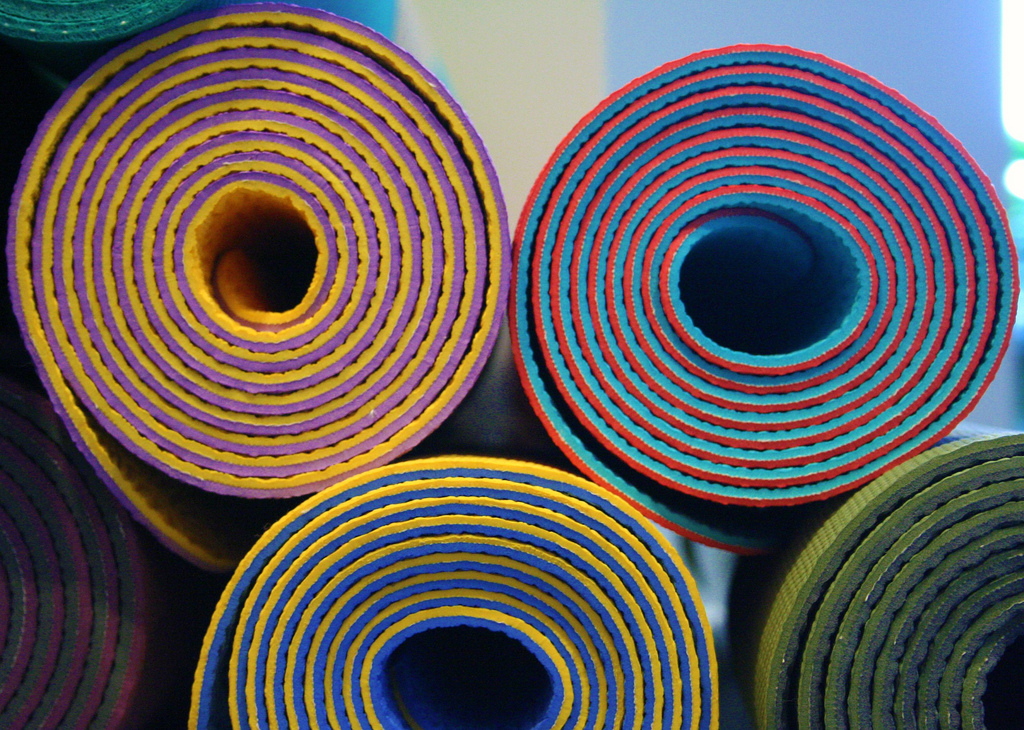
Lots of other people must think so, too, because the class is pretty much always filled to capacity. Classes work on a first-come, first-serve basis; when you arrive at the gym, you can ask for a pass to get into the class, and if they have any more available the person working the front desk will hand a pass to you. If not, you're out of luck!

Photo cred: tricsr4kidz, Flickr Creative Commons
One week, I was a little late getting out of bed and, even thought I arrived to the gym ten minutes before class was scheduled to begin, they were all out of passes. Rats! I thought, but it was not a big deal. I stashed my yoga mat in the locker room and worked out on the elliptical machine instead.

When I was leaving, about twenty minutes before the class was scheduled to end, another woman was standing by the front desk holding a yoga mat of her own. She spotted my yoga mat and summoned me over. "Were you kicked out of the class, too?" she asked.

"Well, I wasn't kicked out... there just wasn't enough room when I arrived."

This woman shook her head angrily. "It's not fair! They should have two classes! I got here at the time the class was supposed to start, and I wasn't able to get into the class! They kicked me out! It's not fair!" She was like a toddler having a tantrum, blaming everyone else but herself for her predicament.

The manager behind the front desk met my eyes with a helpless expression. I realized this other yogi had probably been angrily complaining to her for the past half hour. And now she was trying to get me to gang up on the manager about the completely fair gym policy.

"It was my fault," I said, shrugging. "I should have gotten here earlier. But I still had a great workout anyway!" And then I smiled at the manager and headed out the door. I could still hear the other woman sputtering.

This woman, with her countless loud excuses, reminded me of someone familiar: my writing self, at times. Or more accurately: my non-writing self. For as much as I want to spend my days writing up a storm, on a minute-by-minute level it often feels like writing is the last thing I want to be doing. Because writing is so often difficult! It requires so much thinking and feeling, so much honesty and bravery, and so much willingness to fail, to deal with uncertainty, to feel like you have utterly no idea if what you are creating is going to ever come together at all. Yes, it is scary and exhausting to, as Red Smith famously said, sit down at a typewriter (or computer or notebook), open your veins, and bleed.


Usually, I find it is especially difficult to begin. To climb back into whatever I am working on. To bridge the gap between the shining potential of the idea in my head and the stark lines of words marching imperfectly across the page. And the act of beginning is often when my excuse-laden self pops up and brightly says:

Oh, you can't possibly write today! Look how beautiful and sunny it is outside! You don't want to waste a day like this. Go make a picnic! Go for a hike! Now, now, now!

Oh, look how rainy and dreary it is outside. Why don't you curl up with that new novel you've been wanting to read? Reading a couple chapters will be good for inspiration. Go on, just for a bit. ... Oh, why not read for a bit longer? Reading is important for writing, after all.

Oh no, you woke up late! You're completely behind schedule! No time to write today!

Oh, you woke up early! Aren't you feeling a little groggy still? Why not get a jump on some other projects, and you can come back to your creative writing once your cup of Earl Grey has kicked in?  

Shouldn't you clean the bathroom? Wash the dishes? Put in a load of laundry? Vacuum the carpet? Your desk is looking quite messy -- probably best to organize it first, before you start writing.

Don't you have a little headache? Your back is feeling kind of sore? Maybe you're getting sick. You should go back to bed. You should rest. Is that a pain in your gut? Maybe you should eat something. Drink something. Go put on the tea kettle. Go make a sandwich. 

Oh, and you should definitely check your email and your cell phone! Can't miss any messages! It could be something important!

Does this sound familiar? I've grown to recognize the sabotaging excuse-monster in my head for what she is: afraid. She doesn't want to sit in the discomfort. She doesn't want to risk failure. And so she tries to veer me off course. And, on those days (thankfully, becoming rarer and rarer) when I give in and I don't get the writing done, and I feel guilty and angry for not writing, she always pops up on those days, too. She is filled with those same excuses for why I did not put time into my most meaningful work. She always wants to blame everything else in the world but my own decisions. She is like the other woman who did not get a pass for yoga class.

She has taught me: only by taking responsibility for my own actions, can I change them. Only by recognizing when I am making excuses can I put the brakes on the excuse-train. And only by truthfully assessing my old habits can I build new, better habits.

In a recent podcast with Arch Street Press, Dr. Douglass Jackson, founder of Project C.U.R.E., says, "Figure out what gets you so excited that it gets you up out of bed, puts your feet on the floor, and you just can't wait to get back to it."


Writing has always been that something to me. Now, my habits are reflecting this, too.

Ever since that week when I was too late to get a pass, I arrive to yoga class half an hour early. That early, I always am able to get a pass. I walk into the yoga room and lay out my mat on the smooth wooden floor. I have my pick of places in the room. And then I go ride the exercise bike or run on the elliptical machine until it is time for class to begin. Instead of feeling guilty and upset, I feel empowered.

I think that is one of the best ways to feel in our creative lives and our work lives and our personal lives and our whole lives: empowered.

And the best part of all? It is in our power, every single day, to create that feeling for ourselves.

Friday, January 29, 2016

My Thoughts About Writing, Revising, and Finding Your Genre

One of my guided writing mentees recently sent me a list of terrific interview questions, and she gave me permission to share them, and my answers, with you! I hope these thoughts might be useful or motivating. I would love to hear your comments and answers to these questions below! 

You can also read my thoughts on teaching creative writing here.

My writing desk

When you are writing, do you think about the age differences of your readers? If so, do you have to change anything to make it more age appropriate? 

Usually, I do not think about the age differences of my readers when I am writing the first draft of my story. I prefer to let the story flow out of me as it feels most natural, and not to think too much about ANYBODY reading it -- that sometimes causes me to worry and freeze up and get writers' block. Revising is when I think about my intended audience and the possible ages of my readers. Since I do not write horror or crime novels, I have never really had to worry about inappropriate violence or anything like that. In my latest novel, I did go back through and scale back some of the adult language and sexuality, since the book is intended for a teenage audience.

Was there a teacher in the past that inspired/pushed you to write, or did writing just come naturally? 

I have been fortunate to have many wonderful teachers who have been SO supportive of my writing over the years! I would say my answer to your question is both -- I was inspired by teachers, AND writing came naturally to me. It’s funny, but looking back it’s difficult for me to remember a time before I loved to write! I learned to read when I was four years old, and I gobbled up books. Like many kids, I made up stories; I was compelled to write my stories down. I think this was largely due to my dad being a writer. Every night, my parents would read me bedtime stories, and every morning I would come downstairs and see my dad writing. As a result, I was very aware that someone had written the books I so loved to read. And I decided that I wanted to be someone who writes books for other people to enjoy.

My dad remains the first person who reads my work. His feedback and encouragement are invaluable. I remember when I was little, he would let me type out stories on his computer once he had filed his column for the day -- how special that was! Also, when I was in the first and second grade I was lucky to have an amazing teacher, Diane Sather, who encouraged my love for writing. I remember she had me read one of my stories to the class. I got such a burst of joy from sharing what I had written with others. It never crossed my mind to just write for myself.

How long does it usually take for you to revise your writing or do you just write it and send it off? 

I ALWAYS revise my writing! I think writing without revising would be like trying to play a sport with your shoes untied. You should use every tool in your writers toolbox to make your writing the best it can be! I like to set aside my rough drafts for a few weeks or even a month, so then I can come back and read it with "fresh eyes" and an open perspective. Often I immediately find changes I wish to make, on the word level and on the bigger plot level -- phrasing that sounds awkward, scenes that need to be further developed, actions that don't make much sense. And just one round of revision is never enough. For example, with my most recent novel, I revised it at least seven or eight times -- all 300 pages! -- and it morphed into a whole new book compared to the rough draft. I spent about one year writing the first draft and two years revising it. Sometimes writers start off not liking the revision process very much, but revising has become something I truly enjoy! It is your chance to make your work better and better, to see the world and characters really come alive. I think rough drafts are when you (or, I should say, when I, because all writers are different and I am just drawing from my own experience) sketch out my ideas with rough lines, and the revising process is when everything gets filled in and becomes real.

Do you write in more than one genre? 

Yes, I write both fiction and nonfiction. I would say my "home genre" (where I feel most comfortable and gravitate to most often) is realistic fiction, and more specifically YA realistic fiction. I write short stories for adults as well, and sometimes my fiction crosses over into the magical/fantastical realm. For nonfiction, I most often write short essays about personal experiences I have had, and I also write journalistic articles for magazines and websites. This might entail interviewing people and doing research, which can be a fun break from exploring my own mind and thoughts. When I was younger, I used to write poetry, but I do not write in that genre much anymore.

How did you discover what genre you are best at writing? 

Hmmm... good question! I'm not exactly sure how I knew what I was "best" at writing; I think I simply focused on what genre I enjoyed the most and felt most natural to me. I wrote in that genre the most, and the more you write, the better you become! I also think each idea you have or project you embark on has its own form and genre that feels most natural to the idea itself. For example, sometimes I do not realize I am writing a fantasy story until something magical enters the page -- and it feels like a surprise to me as much as to the reader, but it also feels RIGHT, like it just fits, and I realize that story wants to be magical/fantasy. I just need to listen to the genre of each project instead of trying to force it into a box of my own design. One final thing I would say about this is not to worry about forcing YOURSELF into a "genre box" either -- you are free to write in all different genres and all varieties of projects! Write what you feel excited and passionate about. That is the most important thing.

Do you enjoy teaching other people how to write? 

Oh, yes! It is one of my favorite things. I especially enjoy teaching writing camp and working with talented young writers like you who have a passion for writing and really love writing to begin with. That is my favorite environment to teach in. I have also taught writing to students (for example, as a guest speaker/teacher, a private tutor, and a college writing instructor at Purdue University) who don't really care about writing or want to write. In that arena, my goal as a teacher is to help them see the profound importance of writing and how becoming a better communicator will help them in any field they choose to go into. With all my students, my ultimate aim is to increase their confidence and joy as writers. Teaching writing helps me remember the magic and wonder of the creative process, and my students often inspire me with their enthusiasm and hard work! Also, teaching keeps me honest with my own writing practices. If I am telling students to find at least fifteen minutes to write every day, then I had better be practicing the same advice myself and writing every day, too! :)

Tuesday, November 10, 2015

What a Hay-Bale Labyrinth Taught Me About Writing

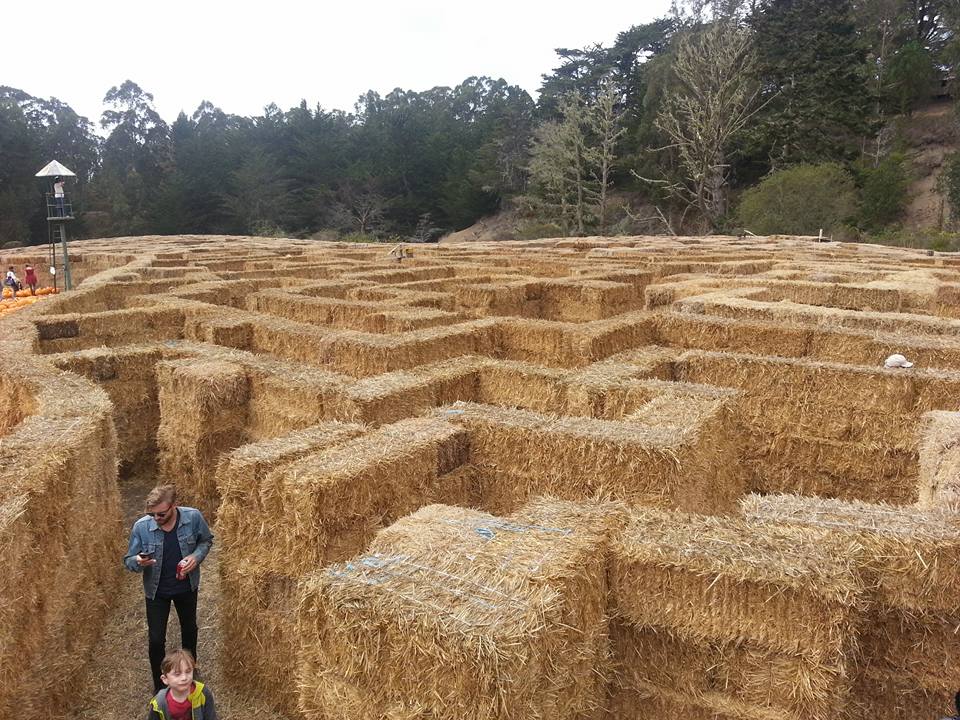
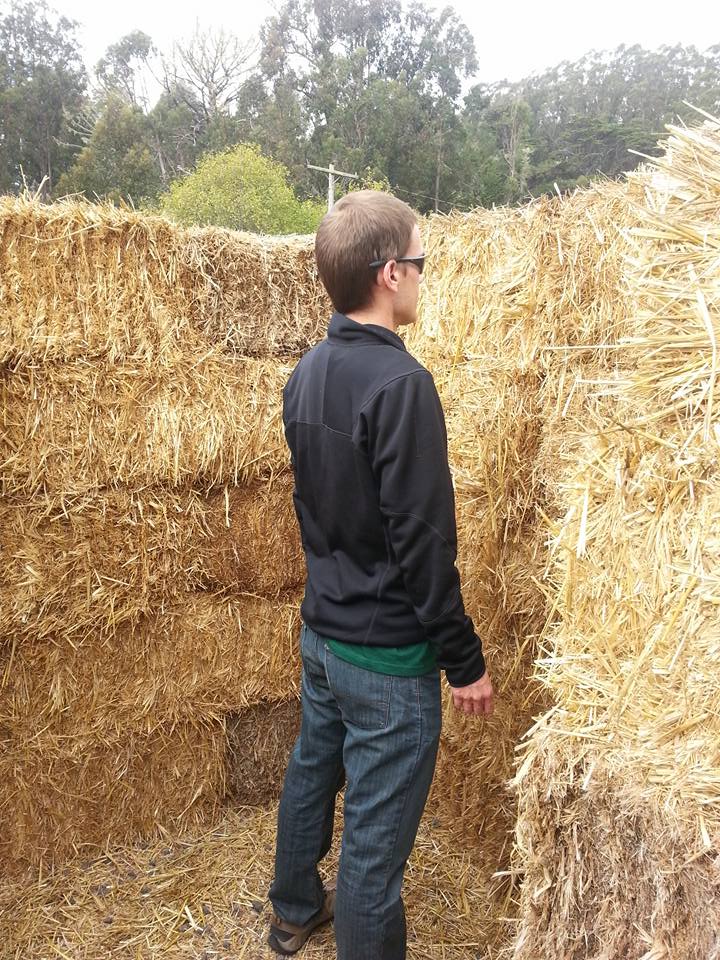
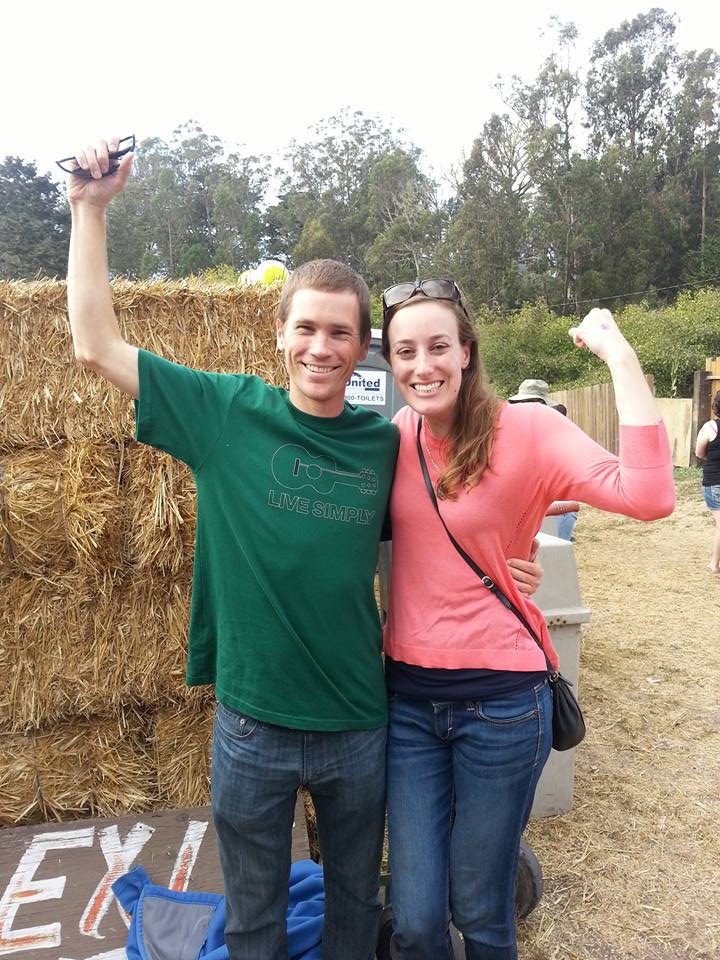
Shortly before Halloween, my boyfriend and I went to Arata Pumpkin Farm in Half Moon Bay, California, to pick out our pumpkins. Arata’s is a famous autumn spot in the Bay Area, and not just for pumpkin selection -- every year, they build a maze attraction out of hay bales. This year, the design was a labyrinth. Believe me, folks, this was not a kiddie maze. This thing was enormous!


Still, before we ventured inside, I was not too concerned. “I bet this will take us half an hour, tops,” I remember thinking as I watched an exuberant group of pre-teen girls run out of the maze’s exit, cheering their success for all to hear.

Not only did the hay-bale labyrinth take us much longer to complete than I expected (and there were moments of despair when I thought we might never make it out!) the experience also illuminated a great deal of truth about being a writer.

Here are the lessons I learned:

1. Often, the best way to start is simply to plunge in. The entrance to the labyrinth is intimidating: a huge minotaur greets you with his battle ax at the ready. Starting a writing project can be similarly daunting. Whether you are preparing to write a short story, essay or poem, or preparing to tackle a longer work like a novel, play or memoir, the blank page can be frightening.

The best strategy I have found is to simply begin. Push past the self-doubt and let your fingers scurry across your computer keys; pick an opening in the maze, scurry past the imposing minotaur, and off you go!


2. There is no map. Before entering the maze, we climbed a staircase outside the entrance to look out over the entire labyrinth, hoping to get an advantage -- to plan our route. But the vantage point was not much help. We could not memorize the proper route to take, and although we could make a general plan, we had to dive in and discover through trial-and-error how to make it through to the end of the labyrinth.

The same is true for writing, or any creative pursuit. You can plan up to a point, but then you must dive in and try it out for yourself. There is no map you are given; you must create the map yourself.


3. Discouragement is not only normal, it is inevitable. There were times when it seemed like we were just wandering in fruitless loops through the maze, retracing our steps over and over again, and discovering a new path through the intricate labyrinth felt impossibly out of reach. I wondered if we would ever find our way out!

In her luminous book of aphorisms Excess of Being from Arch Street Press, artist Lera Auerbach muses:
"An artist's
entrance
to eternity
requires a fee
in disappointment."

Yes, we all inevitably face disappointment, rejection, confusion, and discouragement. That is a part of life. But only by persevering through the maze can we attain new successes and joyful discoveries!
 

4. Feeling challenged is a good sign because it means you are pushing yourself to grow. I had never attempted to make my way through a labyrinth before, so the whole experience was new to me. This made it more difficult, because not only did I not know what to expect, I did not know what to look for. Nor did I have the experience to trust in myself and my knowledge. All the same, undertaking this new challenge pushed me to go with my instincts. It made me grow.

The same is true for writing. It would be easy to write the same stories over and over again. Growing as an artist means trying new things and risking failure. As Lera Auerbach writes:
"I love
what I do
but it's not mutual."

It might not always feel like our art "loves us back" but often that feeling is simply growing pains!

5. Struggle makes the elation of success that much sweeter. When we finally made it out of the hay-bale maze, I felt full-to-bursting with pride. Because the challenge was so difficult, when we finally succeeded, it meant so much. If we had flown through the maze without a hitch in ten minutes, the thrill of success would have been minimal.

The same is true for writing. This is something I must remind myself over and over again, every time I face discouragement or rejection. For example, there is a wonderful literary magazine I have admired and submitted my work to for years. Years! And I received nothing but rejection letters. Still, I kept submitting. Last week, I received an acceptance letter from them! I started crying, I was so overjoyed. The success was made sweeter because of the years of struggle.

 
"Being passionate about your work is 80% of success, but that passion must be sustained over a lifetime. Otherwise it's just an infatuation." - Lera Auerbach, Excess of Being