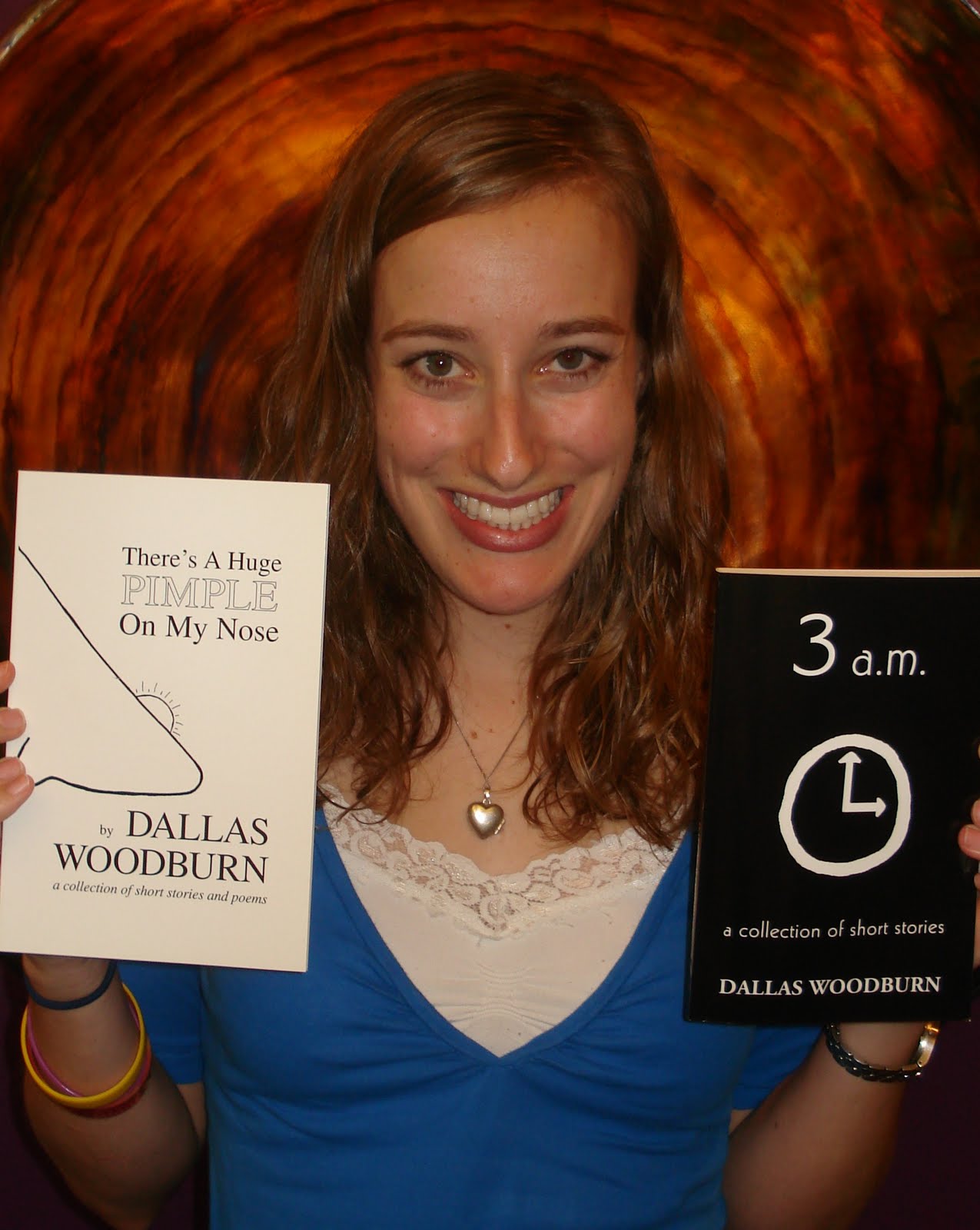
I am delighted to feature an interview today with talented young author Macy Li. I have known Macy since publishing her short story "Teaching Helen Keller" on Word Smorgasbord two years ago. She was a superb writer then, and I have been amazed at how her writing continues to grow and evolve ever since!
Macy just recently published her first book, a fabulous collection of poems, stories, essays and plays titled Shards. (Order your copy on Amazon here!) Macy has won many writing contests, including: Gold and Silver Keys in the Scholastic Art and Writing Awards, Honorable Mentions from Stone Soup magazine, the Best in Class Award for the Growing Up Asian in America Contest, first place in the Art Tales Writing Contest, and prizes in the Palo Alto Writing Contest. Next week, she will be featured on the Palo Alto Podcast. She was kind enough to stop by the blog today to answer some questions about her writing process, finding inspiration, creativity, and more!
Hi Macy! What would you like readers to know about you as an introduction?
My name is Macy Li, I’m thirteen years old, and I grew up in Sacramento, California. Other than writing, I enjoy playing piano, dancing, and reading. I’m also interested in biology and Latin. My favorite genre to write is poetry, because of the amount of emotion and meaning that’s able to be expressed in every line.
Take us through your writing process when you were creating Shards.
Shards is my collection of poems, stories, and plays, consisting of pieces from a year ago until recently. Each piece started out as a spark, an idea, a message that I wanted to share. I laced my thoughts and feelings into tales, hoping to express them in abstract ways that I loved. And so sometimes my words flowed into poems, stories, and plays. Other times, my pieces just didn’t work out. But through these experiences, I came out with a collection of my writing that I felt expressed the most of my emotions. Each word is like a shard, a hint to something bigger, completing my collection.
What do you like most about writing?
My favorite thing about writing is that I can do anything with it. In the real world, there are people I can’t stand up to, things that I can’t do, and lives that I can’t have. But when I write, anything is possible for me. When I write, I finally feel free -- I feel happy. When I write, I escape from reality and drown in my own world. The bottled up emotions spill out, and I can paint worlds from my imagination. Sometimes, I feel weak and lost in reality, but writing gives me a power: a power to create. Writing is something I love.
You write in a variety of different genres -- poetry, short stories, drama, nonfiction. When you get an idea, how do you decide what form it will take?
When I get an idea, I think about which way it would be most powerful when presented. Some ideas are stronger as plays, others as poems, others as stories. I like to use poetry to communicate more abstract ideas and feelings, and I like to write plays to create closer connections between the characters and readers. I use stories to tell more vivid tales, ones which I like to pack a lot of description and emotion in.
Do you have any advice for other writers, or for other young people going after their dreams?
I want anyone who’s interested in writing to know that in every piece of writing, there is always something special and beautiful about it, because reading someone’s writing is like hearing someone’s words from his or her heart. These words are special and amazing. My advice is to just let go when writing. Just relax and let whatever’s on your mind spill into a story. In order for your words to come out, they have to come from the heart. Never be afraid to write out your feelings into tales.
Can you share a few of your favorite books or authors?
Some of my favorite books are The Book Thief by Markus Zusak, To Kill a Mockingbird by Harper Lee, and Mapping the Bones by Jane Yolen. I like to read historical fiction, realistic fiction, and a little bit of science fiction.
What inspires you?
I’m inspired by happiness, laughter, and love. I’m inspired by failure, rejection, and hurt. I’m inspired by mean people, by nice people, by people who make me cry, by people who give me hope. I’m inspired by the words people say, the feelings people feel. I’m inspired by anything that fills me with emotions, thoughts, and ideas.
What are you working on now? What’s next for you?
I’m continuing to write poems, stories, and plays of all kinds, and simply enjoying the art of writing. I hope to be able to compile another collection soon.
Anything else you’d like to add?
Never give up, because there is always hope until you give up. This is the most important thing I’ve learned. If you want to do something, you can do it. There is always a chance.
Thank you so much, Macy!
Dear readers: you can purchase your own copy of Shards on Amazon here!
Showing posts with label fiction. Show all posts
Tuesday, September 11, 2018
Thursday, September 28, 2017
Winners of the Write On! Fiction & Poetry Prizes!
I am so proud to announce the winners of our Write On! Fiction and Poetry Prizes! This was a highly competitive submissions period and we received so many excellent pieces from young writers all around the world. It was a tough decision for our judges! Congratulations to all of our winners and many thanks to everyone who entered. It was a pleasure to read your work!
You can read a selection of the winning entries published on Word Smorgasbord literary journal.
More exciting news: the Write On! Youth Drama Prizes for short plays are currently underway! Learn more and submit your work here!
And now, without further ado...
Write On! Fiction Prize
Ages 12 & under
Gold: Suntali Donahue, “The Dream Portal”
Silver: Alex Zhong, “Hawk and Willow”
Bronze: Ada Sheeran, “Survivors”
Honorable Mention:
- Logan Chan, “The Fox and The Owl: A Tale of Cleverness”
- Benjamin Webb, “The Three Little Figs: A Fairytale Adaptation"
Ages 13-18
Gold: Victoria Saltz, “Escape”
Silver: Anjali Zyla, “The Merry-Go-Round”
Bronze: Andrew Huang, “The Crash”
Honorable Mention:
- Sydney Anderson, “The Little Blue Dragon”
- Aidan Chisholm, “Steps”
- Vichar Lochan, “You”
- Kanchan Naik, “To Mourn a Flower”
- Daisy Wang, “Five Years Later: Bitter Is The Night”
Write On! Poetry Prize
Ages 12 & under
Gold: Macy Li, “One in a Million”
Silver: Elisabeth Baer, “Purple Moon”
Bronze: Samitha Nemirajaiah, “Whisper, Trees”
Honorable Mention:
Silver: Elisabeth Baer, “Purple Moon”
Bronze: Samitha Nemirajaiah, “Whisper, Trees”
Honorable Mention:
- Rosalie Chiang, “Dear Mom”
- Anika Johnson, “Take Care, Take Care”
- Luca Pasquini, “I am from…”
Ages 13-18
Gold: Cameron Moore, “Teach Your Kids to Swim”
Silver: Kanchan Naik, “Summer Angel”
Bronze: Cara Levicoff, “An Exposé on Time”
Honorable Mention:
Congratulations again to all of our winners -- it is my extreme pleasure and delight to share your work with the world! And thank you again to everyone who entered our contest and opened your minds, hearts and imaginations to our judges. We hope you go forth and create more marvelous writing to share with the world!
"Write with passion. Write with love." -Ray Bradbury
Silver: Kanchan Naik, “Summer Angel”
Bronze: Cara Levicoff, “An Exposé on Time”
Honorable Mention:
- Marina Baker, “Growing Pains”
- Michelle Bless, “Falling Down”
- Sam Jacovitz, “Butterfly Effect”
- Sameed Sayeed, “Tomorrow Never Came"
Congratulations again to all of our winners -- it is my extreme pleasure and delight to share your work with the world! And thank you again to everyone who entered our contest and opened your minds, hearts and imaginations to our judges. We hope you go forth and create more marvelous writing to share with the world!
"Write with passion. Write with love." -Ray Bradbury
Wednesday, June 7, 2017
Write On! Youth Fiction and Poetry Prizes
Ten years ago, I held the first Write On! Summer Writing Camp for young writers. In the years since:
- Summer Writing Camp has expanded to two summer weekends with sessions in both the morning and afternoon.
- I now also offer a Winter Writing Camp.
- Dozens of students are enrolled in my yearlong Guided Mentorship program.
- I have been honored to teach hundreds of young writers.
Exciting news! In celebration of the 10th Annual Summer Writing Camp—held this year in Ventura, California, on August 15, 16, 19, and 20—I am holding the first ever Write On! Youth Fiction and Poetry Prizes for young writers ages 18 and under!
You can win prize money, books, a free coaching call with me… and you might even become a published writer! Read below for the rules and submission procedures. I can’t wait to read your work!
Prizes in all categories are:
- First place: $50, a free 30-minute coaching call with me, a signed copy of my book of short stories 3 a.m., and publication of your work on Word Smorgasbord online literary magazine
- Second place: $25, a signed copy of 3 a.m., and publication of your work
- Third place: a signed copy of 3 a.m. and publication of your work
- Finalists: publication of your work
Contest Rules:
- This contest is judged BLIND, which means no identifying information should be on your entry. You will submit your name, age and contact information through the submission form. If your name is included on your entry, it will be disqualified.
- Word limit: fiction should be 1,000 words or less. Poetry should be 2 pages or less.
- There is a $10 entry fee for each piece, or you can submit 3 entries for $25. This helps fund the prizes and the administration costs of Submittable. You also have the option to purchase a copy of Dancing With The Pen II: a collection of today’s best youth writing at the special discounted price of $15, rather than its cover price of $25.
- You may submit as many entries as you would like, as long as you pay the entry fee for each piece you submit.
- The contest deadline is midnight Pacific Standard Time on Sunday, August 20, 2017 (the final day of this year’s Summer Writing Camp).
–> Click here to submit your work now! <–
I can't wait to read your wonderful, beautiful, amazing, brilliant, scary, funny, thrilling, heart-wrenching, goosebump-inducing, magical, lovely stories and poems! :)
Wednesday, October 19, 2016
New story by "Dancing With The Pen II" Contributor Nicole Ham
Today we continue our Dancing With The Pen II blog tour with an exclusive extra story by young writer Nicole Ham, whose short story "Winter Wonderland?" is featured in the book. Order a personalized copy of Dancing With The Pen II: a collection of today's youth writing here or on Amazon here.
The Elephant Who Could Fly
by Nicole Ham
Once there was an elephant. He was an average-looking elephant. Some might have even called him boring. Suddenly, the strangest thing happened. The elephant grew wings! Therefore, he could fly!
However, all the other elephants laughed at him, thinking that there was no way an elephant could actually fly into the air because elephants weigh so much.
Surprisingly, though, this elephant's wings grew and grew and grew until they could lift the elephant up into the sky!
(Did I mention his name? If I didn't, his name was Flippers. Funny name, huh?)
Flippers flew to all sorts of places. People couldn't believe their eyes. "A flying elephant!" they said. "I never imagined such a thing was possible!"
Unfortunately, one man in Madagascar said that it was all a hoax. "It's all false, I tell you!" he shouted. "That elephant is a loser!"
Flippers the elephant heard this man's insults and grew angry. I'll teach him a lesson, he thought.
So Flippers the flying elephant flew over the man and dropped honey onto his head. Ka-plat! The man was a sticky, gooey mess. Flies and bees buzzed around his head, attracted to the honey.
The next morning, when Flippers woke up, his wings had disappeared.
"Awe!" he sighed. So he returned to his normal life as a ground-based elephant.
The Elephant Who Could Fly
by Nicole Ham
Once there was an elephant. He was an average-looking elephant. Some might have even called him boring. Suddenly, the strangest thing happened. The elephant grew wings! Therefore, he could fly!
However, all the other elephants laughed at him, thinking that there was no way an elephant could actually fly into the air because elephants weigh so much.
Surprisingly, though, this elephant's wings grew and grew and grew until they could lift the elephant up into the sky!
(Did I mention his name? If I didn't, his name was Flippers. Funny name, huh?)
Flippers flew to all sorts of places. People couldn't believe their eyes. "A flying elephant!" they said. "I never imagined such a thing was possible!"
Unfortunately, one man in Madagascar said that it was all a hoax. "It's all false, I tell you!" he shouted. "That elephant is a loser!"
Flippers the elephant heard this man's insults and grew angry. I'll teach him a lesson, he thought.
So Flippers the flying elephant flew over the man and dropped honey onto his head. Ka-plat! The man was a sticky, gooey mess. Flies and bees buzzed around his head, attracted to the honey.
The next morning, when Flippers woke up, his wings had disappeared.
"Awe!" he sighed. So he returned to his normal life as a ground-based elephant.
![]() |
| original drawing by Nicole Ham |
----------
Nicole Ham is eleven years old. She likes art and especially animals. Her favorite sport is gymnastics. Her family loves to play board games.
Links:
Order Dancing With The Pen I & Dancing With The Pen II directly (personalized copies available!) or via Amazon.
If you have a few minutes and could write a review on Amazon, that would be fantastic!
Friday, October 14, 2016
New story by "Dancing With The Pen II" Contributor Kevin Ham
Today we continue our Dancing With The Pen II blog tour with an exclusive extra story by young writer Kevin Ham, whose short story "Hot! Hot! Hot!" is featured in the book. Order a personalized copy of Dancing With The Pen II: a collection of today's youth writing here or on Amazon here.
One day, the strangest thing happened: my basketball had a face on it! The ball started bouncing around. I put a basket in front of him. He jumped and landed right in the hoop! I tried bouncing him. I shot him, and he went in the hoop. The face disappeared. I set the ball down, and the face came back.
The next day, I went to the park with the strange ball. I went over to the basketball courts. Some teenagers were playing basketball. They laughed at me because they thought I was bad.
I would prove them wrong. I went all the way to the end of the court, and shot the basketball very softly. Surprisingly, the ball started arcing higher and faster, soaring all the way towards the hoop at the far end of the court. Then... swish!
The teenagers were shocked. Some of them had their mouths open. One said, "You're a legend!" Another asked, "Are you Stephen Curry?"
I became famous all around the world! The next morning, people were surrounding me. I said, "I only have time for one question. You. In the back."
"Is the ball super lightweight or something?"
"No, it isn't," I answered. "Do you want to carry it yourself and see?"
"Oh sure!" replied the man. I tossed the basketball to him and he said, "Yep, this is normal weight."
I went to the park to shoot some baskets, and everyone followed me. I thought it was pretty annoying. I shot and shot. I thought they would start getting bored, but more and more people kept coming. Soon news reporters showed up to talk to the crowd.
One audience member said, "I never saw him miss one."
Another person said, "He should join the NBA. He really should!"
I tried and tried to make my way home, but I couldn't escape through the mob of people. Finally, I slipped through some people's legs and got out. I ran as fast as I could to my house. I shut the door and caught my breath. I said to the basketball, "This was the worst day ever!" I ran around the house and shut every window and locked every door.
Then I plopped on my bed and hid the magic ball underneath it, way in the back. I guess being a regular basketball-playing kid is better than I thought it was!
Links:
The Story of a Basketball
By Kevin Ham
One day, the strangest thing happened: my basketball had a face on it! The ball started bouncing around. I put a basket in front of him. He jumped and landed right in the hoop! I tried bouncing him. I shot him, and he went in the hoop. The face disappeared. I set the ball down, and the face came back.
The next day, I went to the park with the strange ball. I went over to the basketball courts. Some teenagers were playing basketball. They laughed at me because they thought I was bad.
I would prove them wrong. I went all the way to the end of the court, and shot the basketball very softly. Surprisingly, the ball started arcing higher and faster, soaring all the way towards the hoop at the far end of the court. Then... swish!
The teenagers were shocked. Some of them had their mouths open. One said, "You're a legend!" Another asked, "Are you Stephen Curry?"
I became famous all around the world! The next morning, people were surrounding me. I said, "I only have time for one question. You. In the back."
"Is the ball super lightweight or something?"
"No, it isn't," I answered. "Do you want to carry it yourself and see?"
"Oh sure!" replied the man. I tossed the basketball to him and he said, "Yep, this is normal weight."
I went to the park to shoot some baskets, and everyone followed me. I thought it was pretty annoying. I shot and shot. I thought they would start getting bored, but more and more people kept coming. Soon news reporters showed up to talk to the crowd.
One audience member said, "I never saw him miss one."
Another person said, "He should join the NBA. He really should!"
I tried and tried to make my way home, but I couldn't escape through the mob of people. Finally, I slipped through some people's legs and got out. I ran as fast as I could to my house. I shut the door and caught my breath. I said to the basketball, "This was the worst day ever!" I ran around the house and shut every window and locked every door.
Then I plopped on my bed and hid the magic ball underneath it, way in the back. I guess being a regular basketball-playing kid is better than I thought it was!
----------
Kevin Ham is nine years old and goes to John Green Elementary School. He loves basketball and Minecraft. He lives with his mom, dad, grandma and sister.
Links:
Order Dancing With The Pen I & Dancing With The Pen II directly (personalized copies available!) or via Amazon.
If you have a few minutes and could write a review on Amazon, that would be fantastic!
Wednesday, October 5, 2016
Interview with Young Writer Isabella Yang
Can you tell us a little about yourself as an introduction?
Hello! My name is Isabella Yang and I am currently a senior at Groton School, MA. I have just turned eighteen! My hometown is Nanjing, China—miles away from where I live right now. Besides writing I love to paint (both acrylic and watercolor), do music and hike. Creative things in all forms make me happy; I also love the feeling of immersing myself in nature. My other academic interests include languages (especially classics) and history.
So wonderful to have you on the blog today! To begin, can you take us through your writing process?
My writing process differs for different forms. For a short story or creative nonfiction, what pops into my mind first are several lines, usually at the end or somewhere in the middle, that occur to me at random times of inspiration. At such moments I jot down the sentences and do some free writes based on those lines, which will eventually evolve into complete pieces. For poetry and longer pieces of fiction, I start with the very beginning and see where my meandering thoughts lead me to.
Have you been writing for a long time? What do you like about writing?
I have been writing for a long time, but not in English. I grew up in China and have been doing creative writing in Chinese since elementary school. I actually only started seriously doing creative writing in English less than two years ago! Then, I was reading lots of works in English and realized that there were certain things only capable to be expressed fully with words through certain languages, so I started writing in both languages. I guess one thing I like about writing is that it conveys so much and brings emotions together. Reading and writing are inseparable from each other; although writing is cathartic for myself, my ultimate goal is to let people read my work and feel the similar emotions flowing through my world and theirs. Writing for me is like a bridge that connects isolated universes.
That is such a beautiful way of putting it: "a bridge that connects isolated universes." Let's pivot a bit and talk about success as a young writer. You have been accepted into some very prestigious writing programs, such as the Kenyon Review Young Writers Workshop. What does this mean to you? Did you do anything to celebrate?
I felt very honored. Personally I did not care about prestige that much, but it felt good to have my works recognized as potential. The feeling of starting a voyage in which I could be surrounded by so many talented and passionate writers close to my age was fantastic. I was very excited when I got the news and felt encouraged, so I wrote two sonnets the very next day! (That definitely counts as a celebration.)
That does sound like a perfect celebration! Do you have any advice for other writers, or for other young people going after their dreams?
First of all, it’s never late to start. Whenever you feel like writing, just pick up the pen and write! Experience isn’t all in writing—for me, inspiration and passion are equally important. Then, it is very important to keep on learning how to write. There were moments in my past when I made the mistake of thinking that I have learned enough about writing; there is never enough to learn about the art of language, and everyone can be a teacher. Also, there is no bad writing once writers set their hearts to their works: write genuinely and don't judge. Those have been my principles while writing and reading other writings.
Can you share a few of your favorite books or authors?
One of my all-time favorite books is Walden. I love Thoreau’s philosophy about life and nature; this book has inspired me tons as well as calmed my mind so many times. I also love Victor Hugo’s works, especially Les Miserables: it’s just epic. Toni Morrison, Virginia Woolf and J. R. R. Tolkien are probably my favorite writers who write in English, but I also love non-English writers such as Milan Kundera and Gabriel Garcia Marquez. The Unbearable Lightness of Being has been a lighthouse for my life.
What inspires you?
Very random moments of life. The smell of a blossoming late spring, a misty mirror in the bathroom after a shower, a piece of music randomly picked by my player, a conversation I eavesdropped in a small-town Thai restaurant, and so on. Maybe one thing they have in common is that they are all very real, and evoke solid emotions, whatever they may be, in me, which I transmit to my writings.
What are you working on now? What’s next for you?
Right now I’m working on a novel loosely based on my own family history. It tells the story of a Chinese family through the entire span of the 20th Century and several huge political changes of the nation. I am thinking of taking part in the National Novel Writing Month this November. This is the first time I write a novel so I’m really excited! I have also been working on random pieces of poetry and fiction outside of class as well as creative nonfiction in my expository writing class.
Anything else you’d like to add?
A few days ago when our school was doing a class activity, when asked the question “Who are you?” I realized that before thinking about my national, gender or ethnic identity, the first thing that popped into my mind was my identity as a writer. I guess writing will a life-long experience for me, and I hope that whatever I do and whatever life I lead in the future I can always keep that identity. I hope I can, as people from Kenyon Review Young Writers say, “Write hard and die free!”
Links:
Wednesday, March 19, 2014
Terrific Writing Prompt from William Lychack
William Lychack is a fantastic writer, and an extremely generous and kindhearted person -- I had the pleasure of meeting him when I was a student at Purdue and he came to give a reading as part of the Visiting Writers Series. His short story collection The Architect of Flowers is simply marvelous!
I recently came across this writing prompt from William, who now teaches in the creative writing program at the University of Pittsburgh, and I wanted to share it with you because I think it is terrific!
Choose a piece of your writing that you particularly like or need to think about in some way. Rewrite the piece by copying down the opposite of each word in the excerpt (except, perhaps, for "little words" like articles and prepositions). Because most words don't have exact opposites, the possibilities are endless, and that's the point. Your story or poem or letter or postcard probably won't make much sense at first, but continue writing your inversion until you have your own draft. Work quickly on this first draft, letting your unconscious decide the antonyms. Now put the original away and see what you can make of your draft. Look for a sense of place, character, or subject to develop. Cut out what you can't make work. Alter details as much as you wish.
Isn't that a neat exercise? I am going to try it for myself today! Will you join me?
I recently came across this writing prompt from William, who now teaches in the creative writing program at the University of Pittsburgh, and I wanted to share it with you because I think it is terrific!
Choose a piece of your writing that you particularly like or need to think about in some way. Rewrite the piece by copying down the opposite of each word in the excerpt (except, perhaps, for "little words" like articles and prepositions). Because most words don't have exact opposites, the possibilities are endless, and that's the point. Your story or poem or letter or postcard probably won't make much sense at first, but continue writing your inversion until you have your own draft. Work quickly on this first draft, letting your unconscious decide the antonyms. Now put the original away and see what you can make of your draft. Look for a sense of place, character, or subject to develop. Cut out what you can't make work. Alter details as much as you wish.
Isn't that a neat exercise? I am going to try it for myself today! Will you join me?
Tuesday, November 12, 2013
Interview with Patricia Fry
Patricia Fry is a full-time writer/editor and the
author of 40 books. She is also the executive director of SPAWN (Small Publishers,
Artists and Writers network). She says, "While I have written books on a variety of
topics—grandparenting, local history, youth mentoring, journaling and even how
to present a Hawaiian luau on the mainland—most of those I’ve written for the
last fifteen years or so are for writers and authors." The most recent are Publish
Your Book, Promote Your Book and Talk Up Your Book. While she established her own publishing company (Matilija Press) in 1983 in order to produce a
comprehensive local history, some of her books have been published through
traditional publishing houses. Allworth Press is the
publisher for this trio of books. Patricia travels and speak at writers conferences and
for writers groups throughout the U.S. on publishing and book marketing. She also
writes two e-newsletters and a blog for authors and contributes numerous articles
to other publications and blog sites each month. She says, "I spend most of my time
promoting my books and working with other authors on their book projects. Of
course, I also usually have a new book in the works. Most recently, I have
started writing fiction." Patricia has generously given us some of her time today to talk about her novels and making the switch from nonfiction to fiction author!
Tell us about Cat Eye Witness. What was your inspiration/motivation behind this book/this series?
Thank you for asking. For my last
birthday (in June), I decided to treat myself by finally attempting a work of
fiction. I’d been writing nonfiction for nearly 40 years and wanted to try my
hand at a novel. I like reading light (cozy) mysteries and I love cats, so
decided to do what others before me have done and combine the two. Within six
months or so, I had written two novels in my Klepto Cat Mystery series, “Catnapped”
and “Cat-Eye Witness.” I had heard good things about Kindle Direct Publishing
and decided to get my feet wet as a potential novelist through this program.
Both of these novels are at Amazon for Kindle as we speak. (Links below.) There
are no talking cats—just real cats with purrsonality. One cat, in particular,
has a most unusual habit that usually results in helping to solve the
mysteries.
What have you learned through writing novels as opposed to your nonfiction books and articles?
I have learned how much fun it is to manufacture characters and scenarios and what it feels like to be responsible for creating characters and stories that are entertaining as well as meaningful in some way. I notice that I incorporate some of my nonfiction tendencies to teach and educate into the stories I tell. And I’ve come to realize that there must be truth in fiction in order for it to be credible. I’ve been editing fiction for several years and I think this (as well as my tendency to read fiction with a rather critical eye) has helped me to write with my audience in mind. And this is as important in fiction as it is in nonfiction. I’ve also learned that the message I’ve been sharing for years—that the concept of and the process of promoting fiction is not all that different from promoting nonfiction. It has been a real challenge to convince most novelists of this fact.
How did you get started writing?
I was a young mother when I realized that
I enjoyed the process of writing—letters, grocery lists, little stories for my
children, etc. At some point, I decided that when my three daughters were
older, I wanted to write articles for magazines. I was fascinated by the
structure of an article and the wide array of possibilities in the way you
could address a single topic. I started subscribing to writing magazines and I
read a lot of magazine articles. In 1973, when the girls were in their teens, I
borrowed a manual typewriter and wrote my first article. The first magazine I
submitted it to published it. The first book I wrote was also published—by a
New York publisher.
I earned my living through magazine article-writing
for many years. My articles appeared in Cat Fancy, Your Health, Woman’s World,
Ladies Circle, Catholic Digest, Pages, Entrepreneur, Western Horse, Writer’s
Digest and many others over the years.
I now have 40 books to my credit, including
several designed for authors.
I am one of those fortunate people who has figured
out how to create a lifestyle and earn a living through writing.
What is your writing process like? Do you write on a computer? In a spiral notebook? Do you write at the same time every day?
I get up every morning around 4:30 or 5:00 and write (edit, do SPAWN work, respond to interview requests, etc.) until around 9 or 10. I straighten up the house, clean kitty litter boxes and take a walk and then go back into my home office and spend another several hours at the computer. I may take another break and run errands (ship books, pick up supplies, etc.) before finishing up the day of writing work by 3:30 p.m. or so. Often, I can be found conducting research or scheduling tasks for the following day while relaxing in front of the evening news.
As I said, writing for me is a lifestyle. It is my
life—my hobby, my creative outlet and my livelihood. I do all of my writing at
the computer now—although it was hard to switch from the spiral notebook when I
purchased my first word processor some 25 years ago. I had to learn to think
into the computer.
Because I often work (if you can call writing
“work”) seven days a week, I occasionally suffer burnout. That’s when I will
take a longer walk among nature, perhaps. I might do a little gardening or
engage in another creative activity—photography, for example.
How do you get ideas for your fiction?
As you know, I’m new to writing fiction. So far, I’ve written three
novels in the Klepto Cat Mystery series. Two are published for Kindle and one
is waiting in the wings for extensive editing/proofing, etc. I will also turn
it over to some readers before publishing. These three stories have
materialized before my eyes as I write. I start with a premise, come up with a
beginning scene (which may end up in the middle of the book somewhere) and just
start writing. The ideas seem to emerge through the characters. Although, if an
idea strikes me, I will write it down to possibly use in one of the stories.
What is your biggest advice for other writers?
My advice to those who are writing books is, keep your audience in
mind throughout the entire writing process. For nonfiction, make sure the book
is needed/wanted and that you have organized it in the most logical manner.
Write instructions so they are easy to follow. For fiction, write in a genre
that is popular. Write scenes that flow. Don’t leave the reader behind. If you
are writing for publication, you must think about promotion from the very
beginning of the project. I advise authors to build promotion into their books
as they write them and one way is to consider your audience throughout the
process.
What are some of your favorite books?
Because many of your readers are or plan to be authors, I’d like to
talk about books for authors. If you are considering using one of the
pay-to-publish (or self-publishing) companies, please read Mark Levine’s book The
Fine Print of Self-Publishing. He
has just done a major revision. But any edition of his book is worth the price.
He rates and ranks these companies and explains their contracts (good and bad).
Also read my books: Publish Your Book (a great guide to understanding and
learning to navigate the publishing industry) and Promote Your Book (which is
filled with over 250 book promotion ideas and how to use them). Both of these
are available at Amazon.com in print, for Kindle and in audio. Or purchase the
print version here: http://www.matilijapress.com.
Is there anything else you would like to add?
An educated author is a more successful author. Always, always think of yourself as the CEO of your book from the very beginning. Writing may be a creative endeavor, but publishing is a business and should be respected as such.
I’d also like to introduce SPAWN. Mary Embree is
the founder of Small Publishers, Artists and Writers Network. She formed this
organization in 1996 in order to provide the opportunity for authors,
illustrators, printers, publishers, agents, etc. to network face-to-face and
possibly collaborate on projects together. We also brought in experts and
professionals to speak on pertinent topics. We started with three chapters in
the Southern CA area. I have been involved in SPAWN since the beginning. I am
now the executive director. We no longer meet in person. We are online only and
still provide opportunities to network through an online discussion group. I
write the SPAWN Market Update, a meaty
e-newsletter each month for members only that is brimming with opportunities and
resources for authors, artists and other creatives. We have two booths at the
Los Angeles Times Festival of Books each year, where members can sell their
books to some of the 140,000 visitors. Sign up for our free monthly e-newsletter,
SPAWNews http://www.spawn.org. Contact me at Patricia@spawn.org.
Are there any links you'd like me to share?
- http://www.matilijapress.com Here, you’ll find my books showcased, my speaking schedule, a large list of resources for authors, tons of articles of interest to authors and more.
- http://www.patriciafry.com Learn more about my editing services. Also download my free e-booklet, 50 Ways to Establish Your Platform. Sign up for my new e-newsletter, Publishing/Marketing News and Views.
- Join SPAWN (Small Publishers, Artists and Writers Network) http://www.spawn.org. Sign up for our FREE e-newsletter, SPAWNews. Receive a FREE copy of Promote Yourself! 25 Ways to Promote Your Work Whether You’re an Artist, Author of Small Publisher.
- Order Patricia Fry’s two novels for your Kindle: Catnapped http://amzn.to/14OCk0W and Cat-Eye Witness http://amzn.to/1bJiq0x
- Contact Patricia here: PLFry620@yahoo.com
Tuesday, July 9, 2013
Opportunities for Teen Writers
---
YC TEEN ESSAY CONTEST
http://www.ycteenmag.org/ contests/ycteen.html
---
You must be between the ages of 14 and 19 to enter. All essays must be true stories written by you. This is a non-fiction essay contest. If you win, your story will be published on our website and in our print issue. First prize $150. Second prize $75. Third prize $50. Same for ages 15-18.
YC TEEN ESSAY CONTEST
http://www.ycteenmag.org/
---
You must be between the ages of 14 and 19 to enter. All essays must be true stories written by you. This is a non-fiction essay contest. If you win, your story will be published on our website and in our print issue. First prize $150. Second prize $75. Third prize $50. Same for ages 15-18.
CONTEST QUESTION #219
Deadline: September 27, 2013
Describe a personal achievement that you are particularly proud of, and why. Be sure to discuss the challenges you faced in pursuing this achievement, and how you dealt with them. How did you change as a result of this experience?
Deadline: September 27, 2013
Describe a personal achievement that you are particularly proud of, and why. Be sure to discuss the challenges you faced in pursuing this achievement, and how you dealt with them. How did you change as a result of this experience?
SHORTHAND
http://diasporadialogues.com/ youthsite/zine/2013/03/11/mar- 2013/
---
Shorthand is looking for young Canadian writers between the ages of 16-25 to submit work for publication on-line in their New Voices special section. The deadline is the 15th of the month prior to publication. (Example: October 15th for a November publication) Writing must be in English from a resident of Canada, original, never published or produced, 2,500 words or less for fiction or non-fiction and 75 lines or less for poems (up to 3 poems can be submitted). Plays must be short or a one-scene excerpt.
http://diasporadialogues.com/
---
Shorthand is looking for young Canadian writers between the ages of 16-25 to submit work for publication on-line in their New Voices special section. The deadline is the 15th of the month prior to publication. (Example: October 15th for a November publication) Writing must be in English from a resident of Canada, original, never published or produced, 2,500 words or less for fiction or non-fiction and 75 lines or less for poems (up to 3 poems can be submitted). Plays must be short or a one-scene excerpt.
Monday, May 27, 2013
Interview with author & playwright Mark Rigney
Mark Rigney is the author of numerous plays, including Ten Red Kings and Acts of God (both available from Playscripts, Inc.), as well as Bears, winner of the 2012 Panowski Playwriting Competition; during its March, 2013, off-Broadway run, Theatre Mania called Bears “the best play of the year.” His short fiction appears in Witness, Black Gate, The Best of the Bellevue Literary Review, The Long Story, Lady Churchill’s Rosebud Wristlet and Black Static, among many others. “The Skates,” a comic (and ghostly) novella, will be released shortly from Samhain Publishing; in non-fiction, Deaf Side Story: Deaf Sharks, Hearing Jets and a Classic American Musical (Gallaudet University Press) remains happily in print one decade on. Two collections of his stories are available through Amazon: Flights of Fantasy and Reality Checks. His website is www.markrigney.net.
Tell us about your play "End of the Rainy Season," which recently won The Seven playwriting competition. What was your inspiration/motivation behind this piece?
My cousin Madeleine F. is finishing up her doctorate, studying land use and corporate land ownership in third world countries. I loved her stories of traveling through Mozambique, and somehow extrapolated that to the opening scenario of "End of the Rainy Season," where a very bedraggled western woman, traveling alone, begs for a room at a hovel of a hotel. I re-set the piece in Togo, largely because of my father-in-law, who worked in Togo with the Peace Corps in the early sixties. Thanks to him, I have a lovely hardback Ewe phrasebook, so I felt comfortable plucking at least hints of the local language. Of course, with the internet, I could have dealt with Mozambique almost as easily, but I do prefer the feel (and scent) of a scruffy old hardback when it comes to research. Why the piece went where it went after that launch point is anyone’s guess. Frankly, I had no faith in this play at all, and sent it to The Seven contest only as a lark. It now stands as further proof (as if I needed any) that I have no ability whatsoever to judge my own work.
I really admire how you write in all different genres, from playwriting to fiction to nonfiction. How do these different types of writing complement each other?
Tackling different forms of writing allows my moods, on any given day, the full run of any given blank page. To wit, if I’m working on an idea that feels most like a prose piece but the prose, for whatever reason, isn’t flowing, I can do a u-turn and leap into a play. If the two-act family drama isn’t chugging along, I can tackle something short, "End of the Rainy Season," perhaps. (It probably needs re-writing. Plays always need re-writing.) If I’ve got an opinion that nobody wants to hear, that’s a signal it’s time for some non-fiction. And so on. Different written forms are the key to forever disarming the demon of writer’s block. For what it’s worth, I offend everyone, from my agent to my readers, by constantly crossing (or tangling) the line between commercial and literary fiction. The sword-and-sorcery stories I’ve published with Black Gate are light years from the experimental tropes of my Birkensnake offering, or the highbrow work now available (online and in print) at Witness. Artificial barriers, generally imposed by well-meaning critics, simply cry out to be breached. I do my best to oblige. All of which is to say that really, I’m a creature of caprice. Like Toucan Sam: follow your nose! Who knows (pun) what will turn up?
How did you get started writing?
I wrote an age-appropriate and completely juvenile play with several friends in second grade. The structure was good, I think: two rival street gangs taunt each other into entering the local haunted house. In they go, one by one, and get eaten by the resident monster, until the last kid barges in (said kid was played by Robert Gaucho, who was enormous), and then the monster gets pounded to mincemeat. One line survives in memory from the now-missing script: “Look at those turkeys, those eels!” I know, I know––but please don’t judge too harshly. This was the seventies, y’know? We were trying to be cool. Groovy, even. Anyway, I didn’t write anything else play-wise until seventh grade, at least, and not again until senior year of college. But one thing I learned along the educational way, and that was that I could generate material (essays and book reports and so on) faster than anyone else I knew. That doesn’t mean it was necessarily good, and my grasp of grammar was generally lousy, and I had no ability to spot a tpyo, but: at least I was a quick draw. Since math and science continually frustrated me (although I love involving both in my writing), it made sense, of a sort, to pursue writing full-time. It didn’t make financial sense, as I know now, but I suppose one cannot have everything.
What is your writing process like? Do you write on a computer? In a spiral notebook? Do you write at the same time every day?
I’ve been known to write on napkins, coupons, and on my palms. No kidding: when an idea hits, I may only need a keyword or two to hold it for future use, but ideas often arrive at awkward or otherwise inopportune moments, so I get those words written on whatever’s handy. Most of the time, however, I type on a wireless keyboard rigged up to a mid-level Mac. Can’t afford the top-of-the-line stuff, you know. Not until I sell a screenplay to Dreamworks. I don’t use spiral notebooks except when attending play readings or rehearsals. Then I take oodles of scrawled notes, and transcribe what changes I need from these to the computer later on, as time and geography permit. As for writing at the same time every day, that’s a trap. Write when you can, or when you must, or both. My workday is typically the six-hour span during which my children are in school. The rest of the time, I’m Susie Homemaker. You want to talk laundry, or how to bake the perfect lasagna? In the words of the mighty Leonard Cohen, I’m your man.
How do you get ideas for what you write?
People frequently ask this, and it’s the only question I’d love to dodge, because I’m not entirely clear about this. I don’t want to fall back on, “It’s magic,” or, “The universe enters my mind and I become one with the cosmos, an astral being; I come back to my body blessed with a workable idea.” I don’t want to fall back on any of that because…well, because it’s not true. The problem is, it’s not untrue, either. What I can say with some surety is I write to entertain myself (Benjamin Disraeli: “When I want to read a book, I write one”), and the longer the piece, the more likely it is to be founded on some subject that bothers me, a problem to which I have no answer. I’m sure I’m not the only writer who needs spurs kicking my flanks in order to get from “Once upon a time” to “The End,” and the best way I know of completing a project (besides trusting myself) is to have, as my subject, a Gordian knot.
What is your biggest advice for other writers, particularly young writers or playwrights just starting out?
Begin in the right place. It can be helpful to rely on “the Passover Question,” that being, “Why is today different from all other days?” If you can answer that, the second stumper worth considering is how late in any give scene or event can you begin. Of course, some stories do begin with description, and deservedly so, but the shorter the work, the more likely it is you need to open with action. Do so with alacrity. Don’t bother with “setting the scene” so much as entering the scene. Jump in at a moment where the stakes are already high, and your characters in flux. That way, the rest of the writing is a sort of downhill race; an avalanche, built-in, nips at your heroes’ heels. Most beginning writers try to do everything all at once: describe each person, provide an annotated list of their clothes and what’s in the room and who knew Aunt Dottie back in 1968. You can’t do it all at once. Provide what will hook a reader, and then “backfill” as you go, penciling in whatever else is needed.
What are some of your favorite books and/or plays?
Among the best contemporary plays are Itamar Moses’s Bach at Leipzig, Sara Ruhl’s Eurydice, August Wilson’s Joe Turner’s Come and Gone, and Gina Gionfriddo’s Becky Shaw. Read those four and you’ll have a pretty fair idea of what the stage can offer. Then read Tom Stoppard’s Arcadia.
For short stories, I come back again and again to Shirley Jackon’s “The Lottery,” and Alice Sheldon’s “The Screwfly Solution,” also Z.Z. Packer’s “Brownies.” But of course there are literally millions of short stories to wade through, and once in a while, you turn up a gem no one’s ever heard of, one you more or less by default get to keep for yourself.
My favorite novel bar none is T.H. White’s The Once and Future King, which, in its proper form, would also contain its addendum, The Book of Merlyn. Recent favorites include John Crowley’s hugely emotional magnum opus Little, Big, and I am about to start Edith Wharton’s Custom of the Country. I find it helpful to alternate contemporary work with the classics––or possibly this is simply my own alarming sense of elitism making unhappy demands on my time.
What links can readers visit to learn more about you and your work?
Please come visit my website, which contains links to many of my stories and plays. That way you can judge for yourself if I’m a total fraud. (A fear or fraudulence is, by the by, very healthy; it keeps you sharp. As Neil Young put it, “You’re only as good as your last note.”) http://www.markrigney.net/Rigney/Home.html
Also, I collect very old beer cans––got any? In fact, pretty much any beer-related item made before about 1970 is of interest to me. Check out my “Cans” page: http://www.markrigney.net/Rigney/Cans.html
And if you’d like to delve farther (also further) into the literary vs. genre fiction debate, may I suggest beginning here:
http://www.blackgate.com/2012/09/17/genre-2012-the-ghetto-remains-the-same/
Labels:
advice,
author,
contest,
fiction,
interview,
Mark Rigney,
nonfiction,
novels,
plays,
playwright,
stories,
story,
winner,
writer
Tuesday, May 7, 2013
One Teen Story contest
The wonderful literary magazine One Teen Story is having a contest for young writers! Here's the info! You should enter -- what do you have to lose??
Here's the announcement:
If you know a great teen writer between the ages of 14 and 19, tell them to submit a story before June 30, 2013. The contest will be judged by best-selling young-adult author Matt de la Peña, and the winner will be published in our May 2014 issue.
Good luck!!
Tuesday, September 4, 2012
Interview with best-selling author & screenwriter William Martin
I am so thrilled and honored to have William Martin as a guest on the blog today! He has written ten novels, an award winning PBS documentary, book reviews, magazine articles, and one of what he calls "the cheesiest horror movies of all time." His first novel, Back Bay, spent fourteen weeks on the New York Times Bestseller List and introduced Boston treasure hunter Peter Fallon. Since then he has been telling the American story, from the Pilgrims to 9/11. His tenth novel -- and fifth to feature Peter Fallon -- is The Lincoln Letter which was published by Forge this past August. In 2005 he received the prestigious New England Book Award, given "to an author whose body of work stands as a significant contribution to the culture of the region." There are now over three million copies of his books in print. He has three grown children and lives near Boston with his wife. He says, "I am fortunate to have lasted for more than three decades in a very unpredictable business." I feel very grateful that he took the time to answer some questions for us about his latest book and his writing process. Enjoy!
Tell us about your latest book The Lincoln Letter.
Like all the Peter Fallon novels, it is a history/mystery. Abraham Lincoln loses his diary in the spring of 1862. What was in it? Who got hold of it? And where is it today? Like its predecessors, it's two stories in one. Peter and Evangeline set out to find the diary in the modern day. Their search takes them into the Civil War history of Washington DC. And as they search history, it comes to life. Peter was one of the first of a fictional type that has become quite popular of late: the smart guy searching for the lost historical artifact that can change the world. What separates the Peter Fallon books from the others, however, is that the reader gets to live the history. The Lincoln Letter is both a modern suspense thriller and a historical novel set in gritty, muddy, conspiracy-filled Civil War Washington.
How does writing a novel compare to writing a screenplay?
Much more freedom with a novel. A screenplay should only be about 120 pages, tops. A novel can be however long it takes to tell the story. A screenwriter is an architect, drawing a blueprint for a movie. A novelist is director, writer, actor, cinematographer, set designer, special effects coordinator... Novelists have more freedom to write what they want and usually fewer people offering opinions when they are done.
How did you get started writing?
I went to LA to study moviemaking. I figured out that the quickest way into the business was to write screenplays. I wrote several that I could not sell (the fate of most screenplays). A producer said, "The way you write, you should write a novel." So I wrote Back Bay and it became a best seller.
What is your writing process like? How do you balance writing and research?
I write on a computer, like most people these days. I used to write longhand on looseleaf, then type it all myself. That was a killer. The computer can't write for you. I mean, how many of the great novels were written on computers? But it sure can make the whole process easier. As far as balancing writing and research, there really is no balance. You just do what you have to to give the story and its characters the truth that they need.
How do you get ideas for what you write?
I don't know is the honest answer. But... I read, I ruminate, I talk to my agent and editor. And once I'm writing, I often let history give me my big scenes, like, say, the Battle of Anteitam or the assassination in Ford's Theatre.
What is your biggest advice for young people reaching for their dreams?
If your dream is to write, WRITE. Don't dream about it. Many people will tell you the odds against you, but you have to believe in yourself.
Is there anything else you would like to add?
Samuel Johnson said, "No man but a blockhead ever wrote for anything but money." And yes, I write to pay the bills, to put three kids through college, to buy a few nice wines, to do some traveling. But there are easier ways to make money. Like most writers, I also write for fulfillment, for the fun of traveling to different places or times to meet, in my imagination, people whom I would never encounter in real life. I write to learn and perhaps to teach. I write to get myself through the day and to help others get through the night. I write because I hate traffic and would kill myself if I had to commute beyond my attic office. And I write because I love knowing that somewhere, right now, someone is reading one of my books and seeing the world through my eyes.
Connect with William Martin:
Tell us about your latest book The Lincoln Letter.
Like all the Peter Fallon novels, it is a history/mystery. Abraham Lincoln loses his diary in the spring of 1862. What was in it? Who got hold of it? And where is it today? Like its predecessors, it's two stories in one. Peter and Evangeline set out to find the diary in the modern day. Their search takes them into the Civil War history of Washington DC. And as they search history, it comes to life. Peter was one of the first of a fictional type that has become quite popular of late: the smart guy searching for the lost historical artifact that can change the world. What separates the Peter Fallon books from the others, however, is that the reader gets to live the history. The Lincoln Letter is both a modern suspense thriller and a historical novel set in gritty, muddy, conspiracy-filled Civil War Washington.
How does writing a novel compare to writing a screenplay?
Much more freedom with a novel. A screenplay should only be about 120 pages, tops. A novel can be however long it takes to tell the story. A screenwriter is an architect, drawing a blueprint for a movie. A novelist is director, writer, actor, cinematographer, set designer, special effects coordinator... Novelists have more freedom to write what they want and usually fewer people offering opinions when they are done.
How did you get started writing?
I went to LA to study moviemaking. I figured out that the quickest way into the business was to write screenplays. I wrote several that I could not sell (the fate of most screenplays). A producer said, "The way you write, you should write a novel." So I wrote Back Bay and it became a best seller.
What is your writing process like? How do you balance writing and research?
I write on a computer, like most people these days. I used to write longhand on looseleaf, then type it all myself. That was a killer. The computer can't write for you. I mean, how many of the great novels were written on computers? But it sure can make the whole process easier. As far as balancing writing and research, there really is no balance. You just do what you have to to give the story and its characters the truth that they need.
How do you get ideas for what you write?
I don't know is the honest answer. But... I read, I ruminate, I talk to my agent and editor. And once I'm writing, I often let history give me my big scenes, like, say, the Battle of Anteitam or the assassination in Ford's Theatre.
What is your biggest advice for young people reaching for their dreams?
If your dream is to write, WRITE. Don't dream about it. Many people will tell you the odds against you, but you have to believe in yourself.
Is there anything else you would like to add?
Samuel Johnson said, "No man but a blockhead ever wrote for anything but money." And yes, I write to pay the bills, to put three kids through college, to buy a few nice wines, to do some traveling. But there are easier ways to make money. Like most writers, I also write for fulfillment, for the fun of traveling to different places or times to meet, in my imagination, people whom I would never encounter in real life. I write to learn and perhaps to teach. I write to get myself through the day and to help others get through the night. I write because I hate traffic and would kill myself if I had to commute beyond my attic office. And I write because I love knowing that somewhere, right now, someone is reading one of my books and seeing the world through my eyes.
Connect with William Martin:
Monday, August 13, 2012
Interview with Erika Dreifus, author of Quiet Americans
I am so excited to have Erika Dreifus as a guest on my blog today! I first discovered Erika through her extremely helpful newsletter The Practicing Writer, and was blown away by her moving and beautifully nuanced collection of short stories Quiet Americans. I am delighted to have her here today to talk more about her fiction and her own writing journey.
Erika is the author of Quiet Americans: Stories (Last Light Studio), which is a 2012 ALA Sophie Brody Medal Honor Title for outstanding Jewish literature. Quiet Americans was also named a Notable Book (The Jewish Journal) and a Top Small-Press Book (Shelf Unbound). Erika is a contributing editor for The Writer magazine and Fiction Writers Review and an advisory board member for J Journal: New Writing on Justice, and she wrote the section on “Choosing a Low-Residency MFA Program in Creative Writing” for the second edition of Tom Kealey’s Creative Writing MFA Handbook (Continuum, 2008). Erika is also the editor/publisher of The Practicing Writer, a free (and popular) e-newsletter featuring advice, opportunities, and resources on the craft and business of writing for fictionists, poets, and writers of creative nonfiction.
Tell us about Quiet Americans. What was your inspiration/motivation behind this book?
First, Dallas, thanks so much for your interest and for the opportunity to "meet" your readers. Quiet Americans is a collection of short stories. It’s a book of fiction, but most of the stories are inspired in some way by the histories and experiences of my paternal grandparents, German Jews who immigrated to the United States in the late 1930s, and by my awareness of this legacy.
How did you get started writing?
I was a reader, first. An early and enthusiastic reader! Words, stories, and books simply grabbed me. My first bylined publications were brief poems that were published in my elementary-school newsletter. I haven’t stopped writing since then.
What is your writing process like?
My process isn’t fixed. It can vary by genre or assignment, and it has definitely changed over the years that I’ve been writing (computers weren’t always an option!). These days, most of the writing I do these days is, in fact, on a computer. But sometimes I really enjoy returning to a notepad or notebook, especially if I’m working on a shorter piece or just beginning something new.
What are some of your favorite books?
A few years after those poems were published in my elementary-school newsletter, I read Betty Smith’s classic A Tree Grows in Brooklyn for the first time. That novel became and remains one of my favorite books. And I’ve studied French history and literature fairly extensively, so there are several French books—like Gustave Flaubert’s Madame Bovary—that mean a great to me, too.
What is your biggest advice for young people reaching for their dreams?
Don’t give up!
Erika has generously offered to give an ebook copy of Quiet Americans away to one lucky blog reader!! All you need to to do enter is leave a comment below. A winner will be chosen at random on Friday, August 17.
(The ebook will be through Kindle, but readers don't need to own a Kindle device to read Kindle e-books! http://www.amazon.com/gp/feature.html/ref=sv_kinh_1?ie=UTF8&docId=1000493771)
Connect with Erika:
Erika loves to share writing resources with others. For starters, check out her Practicing Writing blog and Practicing Writer newsletter. Her website also features an extensive resources section. You can follow Erika on Twitter (@erikadreifus) or via Facebook (facebook.com/erikadreifusauthor).
Erika is the author of Quiet Americans: Stories (Last Light Studio), which is a 2012 ALA Sophie Brody Medal Honor Title for outstanding Jewish literature. Quiet Americans was also named a Notable Book (The Jewish Journal) and a Top Small-Press Book (Shelf Unbound). Erika is a contributing editor for The Writer magazine and Fiction Writers Review and an advisory board member for J Journal: New Writing on Justice, and she wrote the section on “Choosing a Low-Residency MFA Program in Creative Writing” for the second edition of Tom Kealey’s Creative Writing MFA Handbook (Continuum, 2008). Erika is also the editor/publisher of The Practicing Writer, a free (and popular) e-newsletter featuring advice, opportunities, and resources on the craft and business of writing for fictionists, poets, and writers of creative nonfiction.
Tell us about Quiet Americans. What was your inspiration/motivation behind this book?
First, Dallas, thanks so much for your interest and for the opportunity to "meet" your readers. Quiet Americans is a collection of short stories. It’s a book of fiction, but most of the stories are inspired in some way by the histories and experiences of my paternal grandparents, German Jews who immigrated to the United States in the late 1930s, and by my awareness of this legacy.
How did you get started writing?
I was a reader, first. An early and enthusiastic reader! Words, stories, and books simply grabbed me. My first bylined publications were brief poems that were published in my elementary-school newsletter. I haven’t stopped writing since then.
What is your writing process like? My process isn’t fixed. It can vary by genre or assignment, and it has definitely changed over the years that I’ve been writing (computers weren’t always an option!). These days, most of the writing I do these days is, in fact, on a computer. But sometimes I really enjoy returning to a notepad or notebook, especially if I’m working on a shorter piece or just beginning something new.
What are some of your favorite books?
A few years after those poems were published in my elementary-school newsletter, I read Betty Smith’s classic A Tree Grows in Brooklyn for the first time. That novel became and remains one of my favorite books. And I’ve studied French history and literature fairly extensively, so there are several French books—like Gustave Flaubert’s Madame Bovary—that mean a great to me, too.
What is your biggest advice for young people reaching for their dreams?
Don’t give up!
Erika has generously offered to give an ebook copy of Quiet Americans away to one lucky blog reader!! All you need to to do enter is leave a comment below. A winner will be chosen at random on Friday, August 17.
(The ebook will be through Kindle, but readers don't need to own a Kindle device to read Kindle e-books! http://www.amazon.com/gp/feature.html/ref=sv_kinh_1?ie=UTF8&docId=1000493771)
Connect with Erika:
Erika loves to share writing resources with others. For starters, check out her Practicing Writing blog and Practicing Writer newsletter. Her website also features an extensive resources section. You can follow Erika on Twitter (@erikadreifus) or via Facebook (facebook.com/erikadreifusauthor).
Friday, August 10, 2012
Guest Post by Mariana Ashley
Writing about writing:
The importance of a writing journal
by Mariana Ashley
At one point I wrote so much I felt as though I was going crazy.
On top of my freelance writing duties, I try to write a little bit of my own fiction on the side every day or at least a few times a week. If I’m really on a roll, I could be writing over 3000 words a day counting my professional writing and the fiction that I do in my spare time. I wish I had more of those days, but sometimes I just don’t have the energy to produce content constantly.
About a year ago, amidst a particularly grueling week of writing, I found read a post from some writing blog (I can’t remember the name for the life of me) that advocated for keeping up a writing journal. Is this person out of their mind? I thought. I’m putting in tons of hours to write for work and for my own personal enjoyment, and now it’s expected that I keep up a journal too? How could a person possibly cope with that much time in front of a page?
Despite my misgivings, I tried keeping a journal on the side of everything else. The post made it very clear that this writing journal was meant solely for you to express how you were feeling at that moment, no matter what was on your mind. Relationships, writing habits, career ambitions, and general musings were all fair game. The writing journal isn’t about sketching out a new story or figuring out the next plot point in your novel; it’s time for you to reflect on you.
According to the blogger, the point of the writing journal was for you to wrestle with any emotions or troubles that kept you from making progress or breaking through on your other work. Rather than sublimate and dismiss any negative emotions, you could feel free to write them out in full in the journal.
I can’t even begin to articulate what the writing journal did for me. I had been plagued with doubt about so many writing projects at the time that it had seriously affected the quality and quantity of my writing. Once I started working out those doubts and inhibitions on paper, I could see clearly that the things that worried me and kept me up at night had no basis in reality—they were just negative thoughts that kept me from taking serious leaps in my work. I worried too much about how people would receive my writing rather than take the time to actually develop and shape it. Seeing these thoughts splayed out on the journal was like a revelation.
Now I write in my writing journal almost every day. It’s an indispensable tool for keeping my emotions in check and staying level headed when the writing process because particularly grueling and difficult. I recommend a writing journal for any writer, if just to get in touch with your emotions.
Do you keep a journal of any sort? I’d love to hear about it!
BIO: This guest post is brought to you by Mariana Ashley, a prolific blogger who provides web content to a number of blogs and websites. She's most interested in providing guidance to prospective college students who wish to attend online colleges in Montana. When she's not writing or researching online education trends, she enjoys riding her horse, George, and spending quality time with her four nieces. Mariana welcomes your questions and comments at mariana.ashley031@gmail.com.
Monday, January 30, 2012
Where Elizabeth Berg Finds Inspiration
I just finished reading Elizabeth Berg's captivating collection of short stories, Ordinary Life. I was drawn in immediately her portrayals of everyday men and women, struggling with the ups and downs of ordinary living and loving. The Boston Globe raved, "Elizabeth Berg's gift as a storyteller lies most powerfully in her ability to find the extraordinary in the ordinary, the remarkable in the everyday."I think that could be a challenge for all of us writers: how can we imbue the ordinary with a sense of extraordinary in our work?
About ten years ago I was fortunate enough to get the chance to meet Elizabeth Berg when she gave a talk at the Santa Barbara Writers Conference. I went up and introduced myself to her afterwards, and after she had signed my book -- her terrific novel Durable Goods -- I asked if she had any advice for a young writer like me. She gave me some of my most cherished writing advice, words I find myself turning to again and again: "First, please yourself." The older I get and the more I write, the deeper this advice rings true to me.
In an interview at the end of her story collection Ordinary Life, Berg discusses where she finds inspiration for her stories and novels:Ideas come from life: what happens in mine, what I see happening in others', mixed with a great deal of imagination. I might see a person in a grocery store and build a whole character and life out of what's in her basket. I might read a newspaper story about a guy on a bus and build a family for him. I might get a phone call from an old boyfriend and it might raise a lot of "what if" questions that become material. I might watch people in a bar, overhear a piece of a conversation. material is all around, all the time. Pots are boiling on all four burners. The only thing I have to do is feel in the mood to cook, which I usually do. Once I get a vague idea, I let the story write itself. When I write, I operate as a writer and a reader both -- I never know what's going to happen.
Do you write this way, too -- as a "writer and reader both"? Or are you more of the outlining type? I'd love to hear your thoughts in the comments section!
I'll close with a final passage from Elizabeth Berg's "Author's Note" at the end of Ordinary Life:
I love these stories the way I love my novels, which is rather how I love my children. My children are not perfect, but they are perfect. These stories are not perfect either, but they are the best I could do to portray certain life events, to illuminate certain ways of thinking, to illustrate the way we can get from here to there, or document some interesting insights. More than anything, they are meant to celebrate the extraordinary moments and events that make up ordinary life.
Monday, January 16, 2012
Story Published & Nominated for Pushcart Prize

A *big* thanks to the editors at the Valparaiso Fiction Review for not only publishing my story "Jared Sampson's Mom" in their debut issue, but also nominating it for the prestigious Pushcart Prize! I feel honored, humbled, and very grateful for their support of my work.
Here is the opening of the story:
She died in a car crash yesterday. She was driving down Hawthorne, past the strip mall with the Benihana's, when her '05 Corolla unaccountably careened over the center meridian and into oncoming traffic.
"I just thought you should know, sweetheart," my mother says. My cell phone feels hot against my ear. "I know you and Jared were never close, but you did go all through school together. And Annette was such a lovely woman." My mother sighs loudly into the phone. "Only fifty-three. So young. I just can't believe it."
"Me neither."
"Maybe you could send Jared a message on that bookface thing."
I'm not Facebook friends with Jared Sampson. I haven't really spoken to Jared since eighth grade, when I asked him to dance at the semi-formal and he said, "Um—no thanks, I’m okay." That was the first time I wore mascara, and Jared was the first boy I cried over in a musty, cramped bathroom stall, and I unknowingly wiped mascara-tears all over the front of my new white dress.
"Yeah, Mom," I say now. "I'll do that."
You can read the rest of the story here.
Friday, August 19, 2011
Interview with Young Author Corinne Fombelle
At just thirteen years old, Corinne Fombelle published her 245-page novel Below the Surface, which she describes as "a novel about a girl and her best friend who wind up in a wild ocean adventure full of sharks, dolphins, fun, and surprises." The book is available as a Kindle download. Read on for Corinne's inspirational interview!
How did you get the idea for Below the Surface?
I decided I wanted to write a book, and I was trying to come up with something. I remember looking around the room trying to come up with a random idea. I saw a picture of a boat on the water and imagined something big going on underwater. That's when I first got the basic idea, and it just snowballed from there.
What made you first interested in writing?
In the fifth grade, when I was ten years old, my teacher Mrs. O'Brien gave us a creative writing assignment. It wasn't anything crazy, just a few short pages would do. So I wrote my little story for class and ended up really enjoying it. After I had turned it in, I decided to write a longer story, more like a book.
What is your writing routine?
When I was writing Below the Surface, I would go on our desktop computer in the basement about every day and type. My family didn't even really realize the extent of my project until I told them it was finished. I asked my mom if she would print it for me. I would always just call it "my story" so they assumed that it wasn't much longer than the one I had written for class. She told me that when she went to print it, the printer ran out of paper, and she was so surprised. That was when she realized that I had really written a book at the age of ten. I just liked writing so much that I would go and work on it nearly every day.
What do you like about writing?
My favorite thing about writing is probably that there aren't really any restrictions. You can take it wherever you want and think of anything that pops into your head and weave it into an entire plot.
How do you deal with disappointment and rejection?
As a writer, there are many times you get turned down. The biggest problem I faced was my age. To get a book published with a real company, you need to get an agent or they won't listen to you regardless. But I also think it's hard to make agents pay attention if you're under eighteen. When I finally realized that there wasn't a way to get agents to read my manuscript, I tried to find another way to get my book published, which was my ultimate goal from the time I finished it. I did many revisions and tweaked lots of things, just to get it that much better while I was trying to find another way to get the public to read my work. Finally, my uncle sent me an email about Kindle publishing, and how it was a great opportunity. I looked into it, and found out that there was no down side, and went through with it. Basically, I just always try to find a way to make things work out.
What is your biggest advice for a young person going after their dreams?
I would tell anyone who wants to get into writing or anything else that they should do the best they can to perfect their skills at whatever it is they're doing, and then things will just work out. If you're put a lot of work into something, people will notice and try to help you reach your goal.
Is there anything else you'd like to add?
I finished Below the Surface when I was ten and didn't get it published until I was thirteen. I never gave up on it. I didn't quit. I still was working on it even further and fixing little things in the story. I was still trying to find a way to make it happen, and finally my uncle gave me the last boost I needed, the information about Kindle publishing. If I hadn't still been editing the book and trying to make it better yet, I wouldn't have been told about Kindle publishing because I would have probably stopped writing. So, even if you face disappointments that seem to stop you, keep trying and always keep the things in your life that make you happy, and they will someday benefit you because of your passion for it.
How did you get the idea for Below the Surface?
I decided I wanted to write a book, and I was trying to come up with something. I remember looking around the room trying to come up with a random idea. I saw a picture of a boat on the water and imagined something big going on underwater. That's when I first got the basic idea, and it just snowballed from there.
What made you first interested in writing?
In the fifth grade, when I was ten years old, my teacher Mrs. O'Brien gave us a creative writing assignment. It wasn't anything crazy, just a few short pages would do. So I wrote my little story for class and ended up really enjoying it. After I had turned it in, I decided to write a longer story, more like a book.
What is your writing routine?
When I was writing Below the Surface, I would go on our desktop computer in the basement about every day and type. My family didn't even really realize the extent of my project until I told them it was finished. I asked my mom if she would print it for me. I would always just call it "my story" so they assumed that it wasn't much longer than the one I had written for class. She told me that when she went to print it, the printer ran out of paper, and she was so surprised. That was when she realized that I had really written a book at the age of ten. I just liked writing so much that I would go and work on it nearly every day.
What do you like about writing?
My favorite thing about writing is probably that there aren't really any restrictions. You can take it wherever you want and think of anything that pops into your head and weave it into an entire plot.
How do you deal with disappointment and rejection?As a writer, there are many times you get turned down. The biggest problem I faced was my age. To get a book published with a real company, you need to get an agent or they won't listen to you regardless. But I also think it's hard to make agents pay attention if you're under eighteen. When I finally realized that there wasn't a way to get agents to read my manuscript, I tried to find another way to get my book published, which was my ultimate goal from the time I finished it. I did many revisions and tweaked lots of things, just to get it that much better while I was trying to find another way to get the public to read my work. Finally, my uncle sent me an email about Kindle publishing, and how it was a great opportunity. I looked into it, and found out that there was no down side, and went through with it. Basically, I just always try to find a way to make things work out.
What is your biggest advice for a young person going after their dreams?
I would tell anyone who wants to get into writing or anything else that they should do the best they can to perfect their skills at whatever it is they're doing, and then things will just work out. If you're put a lot of work into something, people will notice and try to help you reach your goal.
Is there anything else you'd like to add?
I finished Below the Surface when I was ten and didn't get it published until I was thirteen. I never gave up on it. I didn't quit. I still was working on it even further and fixing little things in the story. I was still trying to find a way to make it happen, and finally my uncle gave me the last boost I needed, the information about Kindle publishing. If I hadn't still been editing the book and trying to make it better yet, I wouldn't have been told about Kindle publishing because I would have probably stopped writing. So, even if you face disappointments that seem to stop you, keep trying and always keep the things in your life that make you happy, and they will someday benefit you because of your passion for it.
Subscribe to:
Posts (Atom)