Monday, March 24, 2014

Interview with James Patterson, author of "Living with the Bully of Crohn's Disease"

James Patterson is the author of the just-released book Living with the Bully of Crohn's Disease, which is available on Amazon here. James is a native Southern Californian who grew up enjoying the wonderful weather, the beach and surfing. He did his undergraduate work at UC Riverside and received his MS in Biochemistry from Michigan State. He migrated back to California and, after spending time in the San Francisco Bay area, settled in Ventura County thirty years ago. His initial career focus was the research lab but his interest in interacting with people led to various sales and marketing roles in medical companies. This evolved further as he became a medical recruiter over twenty years ago. James says, "It is perfect blend of working with high-technology medical companies and people. I thoroughly enjoy the counseling aspects of my work as I interact with others and help them find meaningful work that is nourishing and rewarding." James has recently become an author with the publication of his book Living with the Bully of Crohn's Disease. He was kind enough to take a few minutes of his time to answer some questions for the blog. Enjoy!


Tell us a little bit about your book. What was your inspiration behind it?

I was impacted by Crohn's disease at the age of thirteen and never knew it. I recognized that something was wrong with me but it took almost four decades to identify the issue. Crohn's is a disease that waxes and wanes and makes life difficult; not understanding that you have it only makes it worse. have met and read about many people, especially young adults, who have been devastated by this ailment and I observed that while the physical elements of the disease were challenging, the emotional issues of sadness, grief, fear and anger were even more pronounced. I recognized that my almost fifty years of experience with Crohn's gives me a wealth of knowledge that I can share with others in the hope that they can benefit from my mistakes and the mental and emotional processes I used to manage this disease and build health. My hope is that other patients will recognize their lives can continue to be full and rich, even with a disease likes Crohn's.

How do you balance writing with all the other things going on in your life, like your work, family, health?

Once I made a decision to write this book, it took about a year. Just like we take time to eat and sleep, writing became a requirement and a part of my regular process. While the project was large, I recognized that the best way to manage it was to work on a consistent basis. Some days I did more than others and there were periods when work and family did not allow time for writing. I think my motivation to write about a topic that would help others was a major driver for me to complete the task. I felt the message of the book would be medicine for people with Crohn's to help cool their inflamed and distressed minds and I wanted it to be available to those who need it.  

What is your writing process like? 

I try to write during the morning when I feel most alert, rested and creative. I use a PC and rarely take written notes because I cannot read my handwriting! If I have the time, I prefer to write in 2-4 hour bursts. I work off of an outline but once I start to write I do not pay much attention to the outline, grammar or exactly where I am going. I tend to get large chunks of ideas that come forth and I continue to write until they stop. This can go on for some time and the ideas and thought trails take me in various directions. During these times, I am not so concerned about the exact content of my thoughts but want to get things down on paper. I will go back later and clean it up but these creative thought bursts contain the best ideas and I allow them to continue unabated and I don't get in their way with too much concrete thinking. 

What is your biggest advice for other writers, particularly young writers just starting out?

I think it begins with having something meaningful to say. I never considered writing a book during the first five decades of my life. I started writing this book when a number of people told time that I had something that could help others and this serviced as my motivation to start writing. Once I made the commitment to write, the next issue for me was organization. I spent time outlining the main themes and points and did this before I did any writing. I wanted to have the bullet points in mind and then build out the rest of the story. I had forty pages of outline before I wrote my first sentence.

What are some of your favorite books? 

I love science fiction and read a lot of the old books byArthur C. Clarke, Lester Del Rey and Ray Bradbury, among others. I also read The Hobbit and the Lord of the Rings Trilogy when they first came out and thoroughly enjoyed Harry Potter. I have many interests in nonfiction as well and enjoy authors like Caroline Myss, Deepak Chopra, Wayne Dyer and Robert Leichtman. 

What's next for you? 

I have started outlining two more books, one on how companies can hire and retain great people while creating a culture of excellence and support. The other is about how people can find meaning and nourishment in their life's work. Both of these relate to what I have done for over twenty years and I think I can add value in writing these books. 

Is there anything else you would like to add? 

Writing is a wonderful opportunity to go into detail on issues and ideas that can impact people's lives. As the writer, you have control over your message and do not need to be concerned about brevity. You can take the time to develop the idea and then express it in its fullness. 

You can connect with James Patterson online here:

Friday, March 21, 2014

Seventh Annual Summer Writing Camp is Open for Registration!


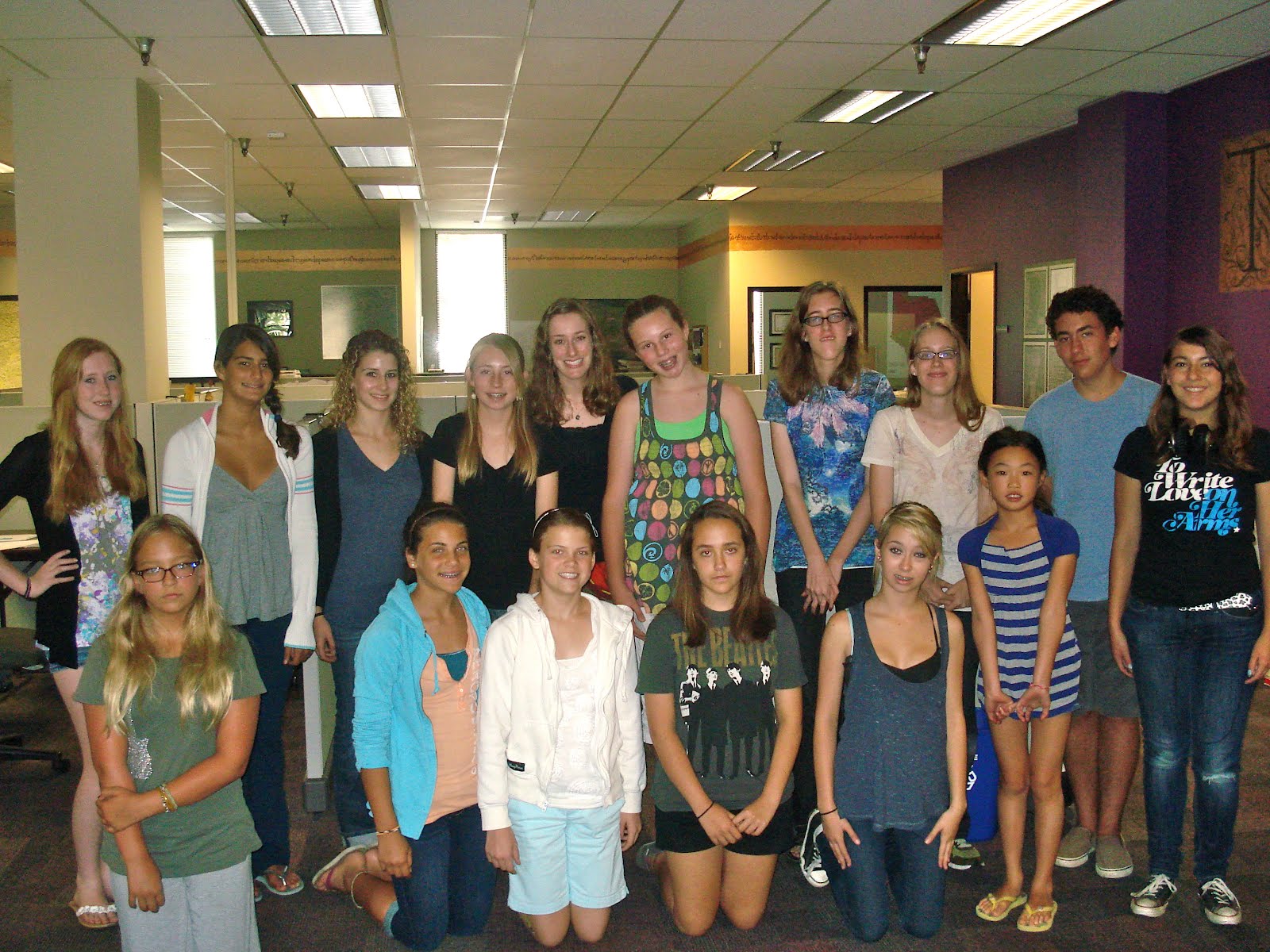
This year is the SEVENTH ANNUAL Write On! Summer Writing Camp!
What: Students will have FUN while learning how to improve central components of their writing, including dialogue, characterization, plot and setting, through various creativity-inducing writing exercises.
Who: Students ages 8-18. Poets, playwrights, short-story writers, future novelists – all are encouraged and welcome to join!
When: The weekends of July 19 & 20, 26 & 27. There are two time sessions available: mornings from 10 am-noon or afternoons from 1-3 pm. It is perfectly all right if you can only make one of the weekends, or even just one day — I’d love to have you join us!
Where: In the conference room of Jensen Design & Survey in Ventura at 1672 Donlon Street (near Target).
How: If you’re interested in getting signed up, simply download, print and send in the PDF of the registration form (link below). There are early-registration and sibling discounts available! Proceeds benefit Write On! For Literacy, my organization that empowers youth through reading & writing projects including an annual Holiday Book Drive for underprivileged kids.
Download the registration form herehttp://writeonbooks.org/?page_id=2
Price breakdown: SPACE IS LIMITED!
Early Registration Special (before June 30)
All four sessions: $125.00 – BEST VALUE!
Three sessions: $100.00
Two sessions: $80.00
One session: $40.00
Regular Registration (after June 30)
All four sessions: $150.00 – BEST VALUE!
Three sessions: $125.00
Two sessions: $100.00
One session: $50.00
Hope to see you there!! 

Wednesday, March 19, 2014

Terrific Writing Prompt from William Lychack

William Lychack is a fantastic writer, and an extremely generous and kindhearted person -- I had the pleasure of meeting him when I was a student at Purdue and he came to give a reading as part of the Visiting Writers Series. His short story collection The Architect of Flowers is simply marvelous!

I recently came across this writing prompt from William, who now teaches in the creative writing program at the University of Pittsburgh, and I wanted to share it with you because I think it is terrific!

Choose a piece of your writing that you particularly like or need to think about in some way. Rewrite the piece by copying down the opposite of each word in the excerpt (except, perhaps, for "little words" like articles and prepositions). Because most words don't have exact opposites, the possibilities are endless, and that's the point. Your story or poem or letter or postcard probably won't make much sense at first, but continue writing your inversion until you have your own draft. Work quickly on this first draft, letting your unconscious decide the antonyms. Now put the original away and see what you can make of your draft. Look for a sense of place, character, or subject to develop. Cut out what you can't make work. Alter details as much as you wish. 

Isn't that a neat exercise? I am going to try it for myself today! Will you join me?

Friday, January 10, 2014

Great quote

"The most important thing about art is to work. Nothing else matters except sitting down every day and trying."
-Steven Pressfield

What are you going to sit down and try this weekend?

Thursday, January 2, 2014

Make 2014 Your Best Writing Year Yet!


Happy New Year, everyone! I love the brand-new slate a new year brings. A chance to reflect on where we've come and where we want to go.

Here are some of my goals for 2014:

Writing Goals
1. Establish writing routine. 400 words. Every day. No excuses.
2. Revise thesis manuscript and send to agent.
3. Complete memoir manuscript.
4. Complete 200 pgs of new novel.
5. Write a new one-act play.
6. Write a full-length play.
7. Finish Verna novella & put out as an ebook.
8. Write three blog posts a week.
9. Read at least one short story a week.
10. Read at least 40 books.

Write On! For Literacy Goals
1. Send out a newsletter every other month.
2. Become an official nonprofit organization.
3. Teach a summer writing camp.
4. Teach a winter writing camp.
5. Teach a college essay/app seminar.
6. New ebook of work by young writers.
7. Compile Writing Camp ebook/program
8. Hold a Holiday Book Drive.

I'm inspired by this story shared by Glamour Editor-in-Chief Cindi Leive: "When my father-in-law was 58, he volunteered with a group that assists disabled athletes. Fit but no marathoner, he agreed to run the first half of the New York City Marathon tethered to a blind runner who'd flown all the way from Thailand for the race. At mile 13, another volunteer would take over. Except: That other volunteer never showed, and there was my father-in-law, exhausted, with 13 painful miles he'd never trained for ahead of him. 'What did I do?' he recalls now. 'I kept going!' All the way to the finish line -- inspired by the even more heroic efforts of the blind man beside him. I think of that story often, and not just while running. With the right motivation you can almost always go farther, accomplish more, reach higher than you thought."

What motivates you to go farther and reach higher than you thought possible? And how can you stretch that motivation past the sparkling new shine of 2014, into the coming weeks and months?

Here are some habits that work for me, to help keep me motivated:
  • Keep a gratitude journal to remind yourself of all the things going well in your life.
  • Keep a list of all your successes to look over whenever you feel discouraged.
  • Set goals that are based in ACTIONS rather than results. For example, instead of setting a goal to win first place in a writing contest (something you have no control over) set a goal to enter x number of writing contests. Entering contests is an action you can control; the judging process is something you have zero control over.
  • Remind yourself of the "big picture" -- what are the bigger underlying reasons you are going after your goals? For example, maybe you want to write a book this year. Who is the audience you are writing for? How might they be inspired by what you have to say? Imagining a reader picking up your book and being moved by your words can be enough to banish ever the worst case of writers block!  
I'll leave you with this quote, one of my favorites, from Sallie Krawcheck of 85 Broads: "Plant seeds, plant seeds, and don't ask for anything. The seeds will grow." 

What seeds can you plant today?

Monday, December 30, 2013

Writing advice from author Jennifer Donnelly

I just finished reading the wonderful, sweeping historical epic The Tea Rose by Jennifer Donnelly. At the end of the book there is a Q & A with the author, and I thought her advice for young writers was terrific, so I wanted to share it with you! Below are quotes from Donnelly about how to become a writer.


  • "There's only one thing that makes you a writer -- and that's writing."
  • "Writing -- any kind of writing: journals, term papers, letters to your grandmother -- will hone your ability with words. As you keep writing, you'll learn how to do more with less. You'll get a feel for simplicity and elegance, when to let rip and when to hold back, and how the subtle art of suggestion can lend incredible power to a paragraph or scene."
  • "Reading is also incredibly important. It shows you how other writers do it, how they succeed, and where they fail."
  • "Whether it's a novel, a newspaper article, or the copy on the back of a cereal box -- it's all writing. Someone had to think about it and make choices. It's your job as a reader to decide how well the author did."
  • "You may not be aware of it, but every time you get lost in a story, or intrigued by a magazine article, you're also picking up pointers on structure, plot, and style."
  • "Lots of kids, and older people, too, tell me that they have so many stories started. Started is good. Beginnings are good. But you have to finish. Finishing is what makes the difference between ideas and books."
  • "Force yourself to sit down at your desk -- glue your butt to your chair -- and work through the problems. It's very important. It's very good discipline. It forces you to see an idea through from beginning to end and to do the hard work of bringing the various threads of the story together in a satisfying way. Do this and you'll become more confident in your ability to tell a story."
  • "Listen to your own thoughts and feelings very carefully, be aware of your observations, and value them."
  • "When you're a teenager -- and even when you're older -- lots of people will try to tell you what to think and feel. Try to stand still instead all of that and hear your own voice. It's yours and only yours, it's unique and worthy of your attention, and if you cultivate it properly, it might just make you a writer."

Source

Tuesday, November 12, 2013

Interview with Patricia Fry

Patricia Fry is a full-time writer/editor and the author of 40 books. She is also the executive director of SPAWN (Small Publishers, Artists and Writers network). She says, "While I have written books on a variety of topics—grandparenting, local history, youth mentoring, journaling and even how to present a Hawaiian luau on the mainland—most of those I’ve written for the last fifteen years or so are for writers and authors." The most recent are Publish Your Book, Promote Your Book and Talk Up Your Book. While she established her own publishing company (Matilija Press) in 1983 in order to produce a comprehensive local history, some of her books have been published through traditional publishing houses. Allworth Press is the publisher for this trio of books. Patricia travels and speak at writers conferences and for writers groups throughout the U.S. on publishing and book marketing. She also writes two e-newsletters and a blog for authors and contributes numerous articles to other publications and blog sites each month. She says, "I spend most of my time promoting my books and working with other authors on their book projects. Of course, I also usually have a new book in the works. Most recently, I have started writing fiction." Patricia has generously given us some of her time today to talk about her novels and making the switch from nonfiction to fiction author!

Tell us about Cat Eye Witness. What was your inspiration/motivation behind this book/this series?

Thank you for asking. For my last birthday (in June), I decided to treat myself by finally attempting a work of fiction. I’d been writing nonfiction for nearly 40 years and wanted to try my hand at a novel. I like reading light (cozy) mysteries and I love cats, so decided to do what others before me have done and combine the two. Within six months or so, I had written two novels in my Klepto Cat Mystery series, “Catnapped” and “Cat-Eye Witness.” I had heard good things about Kindle Direct Publishing and decided to get my feet wet as a potential novelist through this program. Both of these novels are at Amazon for Kindle as we speak. (Links below.) There are no talking cats—just real cats with purrsonality. One cat, in particular, has a most unusual habit that usually results in helping to solve the mysteries.

What have you learned through writing novels as opposed to your nonfiction books and articles?

I have learned how much fun it is to manufacture characters and scenarios and what it feels like to be responsible for creating characters and stories that are entertaining as well as meaningful in some way. I notice that I incorporate some of my nonfiction tendencies to teach and educate into the stories I tell. And I’ve come to realize that there must be truth in fiction in order for it to be credible. I’ve been editing fiction for several years and I think this (as well as my tendency to read fiction with a rather critical eye) has helped me to write with my audience in mind. And this is as important in fiction as it is in nonfiction. I’ve also learned that the message I’ve been sharing for years—that the concept of and the process of promoting fiction is not all that different from promoting nonfiction. It has been a real challenge to convince most novelists of this fact.

How did you get started writing?

I was a young mother when I realized that I enjoyed the process of writing—letters, grocery lists, little stories for my children, etc. At some point, I decided that when my three daughters were older, I wanted to write articles for magazines. I was fascinated by the structure of an article and the wide array of possibilities in the way you could address a single topic. I started subscribing to writing magazines and I read a lot of magazine articles. In 1973, when the girls were in their teens, I borrowed a manual typewriter and wrote my first article. The first magazine I submitted it to published it. The first book I wrote was also published—by a New York publisher.

I earned my living through magazine article-writing for many years. My articles appeared in Cat Fancy, Your Health, Woman’s World, Ladies Circle, Catholic Digest, Pages, Entrepreneur, Western Horse, Writer’s Digest and many others over the years.

I now have 40 books to my credit, including several designed for authors.

I am one of those fortunate people who has figured out how to create a lifestyle and earn a living through writing.

What is your writing process like? Do you write on a computer? In a spiral notebook? Do you write at the same time every day?

I get up every morning around 4:30 or 5:00 and write (edit, do SPAWN work, respond to interview requests, etc.) until around 9 or 10. I straighten up the house, clean kitty litter boxes and take a walk and then go back into my home office and spend another several hours at the computer. I may take another break and run errands (ship books, pick up supplies, etc.) before finishing up the day of writing work by 3:30 p.m. or so. Often, I can be found conducting research or scheduling tasks for the following day while relaxing in front of the evening news.

As I said, writing for me is a lifestyle. It is my life—my hobby, my creative outlet and my livelihood. I do all of my writing at the computer now—although it was hard to switch from the spiral notebook when I purchased my first word processor some 25 years ago. I had to learn to think into the computer.

Because I often work (if you can call writing “work”) seven days a week, I occasionally suffer burnout. That’s when I will take a longer walk among nature, perhaps. I might do a little gardening or engage in another creative activity—photography, for example.

How do you get ideas for your fiction?
As you know, I’m new to writing fiction. So far, I’ve written three novels in the Klepto Cat Mystery series. Two are published for Kindle and one is waiting in the wings for extensive editing/proofing, etc. I will also turn it over to some readers before publishing. These three stories have materialized before my eyes as I write. I start with a premise, come up with a beginning scene (which may end up in the middle of the book somewhere) and just start writing. The ideas seem to emerge through the characters. Although, if an idea strikes me, I will write it down to possibly use in one of the stories.

What is your biggest advice for other writers?
My advice to those who are writing books is, keep your audience in mind throughout the entire writing process. For nonfiction, make sure the book is needed/wanted and that you have organized it in the most logical manner. Write instructions so they are easy to follow. For fiction, write in a genre that is popular. Write scenes that flow. Don’t leave the reader behind. If you are writing for publication, you must think about promotion from the very beginning of the project. I advise authors to build promotion into their books as they write them and one way is to consider your audience throughout the process.

What are some of your favorite books?
Because many of your readers are or plan to be authors, I’d like to talk about books for authors. If you are considering using one of the pay-to-publish (or self-publishing) companies, please read Mark Levine’s book The Fine Print of Self-PublishingHe has just done a major revision. But any edition of his book is worth the price. He rates and ranks these companies and explains their contracts (good and bad). Also read my books: Publish Your Book (a great guide to understanding and learning to navigate the publishing industry) and Promote Your Book (which is filled with over 250 book promotion ideas and how to use them). Both of these are available at Amazon.com in print, for Kindle and in audio. Or purchase the print version here: http://www.matilijapress.com.

Is there anything else you would like to add?

An educated author is a more successful author. Always, always think of yourself as the CEO of your book from the very beginning. Writing may be a creative endeavor, but publishing is a business and should be respected as such.

I’d also like to introduce SPAWN. Mary Embree is the founder of Small Publishers, Artists and Writers Network. She formed this organization in 1996 in order to provide the opportunity for authors, illustrators, printers, publishers, agents, etc. to network face-to-face and possibly collaborate on projects together. We also brought in experts and professionals to speak on pertinent topics. We started with three chapters in the Southern CA area. I have been involved in SPAWN since the beginning. I am now the executive director. We no longer meet in person. We are online only and still provide opportunities to network through an online discussion group. I write the SPAWN Market Update, a meaty e-newsletter each month for members only that is brimming with opportunities and resources for authors, artists and other creatives. We have two booths at the Los Angeles Times Festival of Books each year, where members can sell their books to some of the 140,000 visitors. Sign up for our free monthly e-newsletter, SPAWNews http://www.spawn.org.  Contact me at Patricia@spawn.org.

Are there any links you'd like me to share?
  •  http://www.matilijapress.com Here, you’ll find my books showcased, my speaking schedule, a large list of resources for authors, tons of articles of interest to authors and more.
  • http://www.patriciafry.com Learn more about my editing services. Also download my free e-booklet, 50 Ways to Establish Your Platform. Sign up for my new e-newsletter, Publishing/Marketing News and Views.
  • Join SPAWN (Small Publishers, Artists and Writers Network) http://www.spawn.org. Sign up for our FREE e-newsletter, SPAWNews. Receive a FREE copy of Promote Yourself! 25 Ways to Promote Your Work Whether You’re an Artist, Author of Small Publisher.
  • Order Patricia Fry’s two novels for your Kindle: Catnapped http://amzn.to/14OCk0W and Cat-Eye Witness http://amzn.to/1bJiq0x
  • Contact Patricia here: PLFry620@yahoo.com