Sunday, August 28, 2011

I'm now offering "Guided Mentorships" for young writers!

I have received emails from parents asking if I do any writing workshops during the school year. Thanks to the Internet, I am now offering "Guided Mentorships" for young writers across the country!

If you would like to sign up for a Guided Mentorship with me, you will receive:
  •  a creative writing exercise/prompt emailed to you once a week
  • a market to submit your writing to once a month
  • a 20-minute individual phone call or Skype session with me every month for you to discuss your writing and get personal feedback on your work
You can sign up on a month-by-month basis (for example, while some of my mentees want to sign up for every month, others prefer to sign up for every other month or perhaps do two months, skip one, and come back again -- which is perfectly all right!) ... I typically charge $30 per month, but I'm currently doing a back-to-school discount for new mentees to receive a $20-per-month rate.

If you're interested in signing up for a Guided Mentorship with me, send me an email at dallaswoodburn@gmail.com. I'd love to work with you!

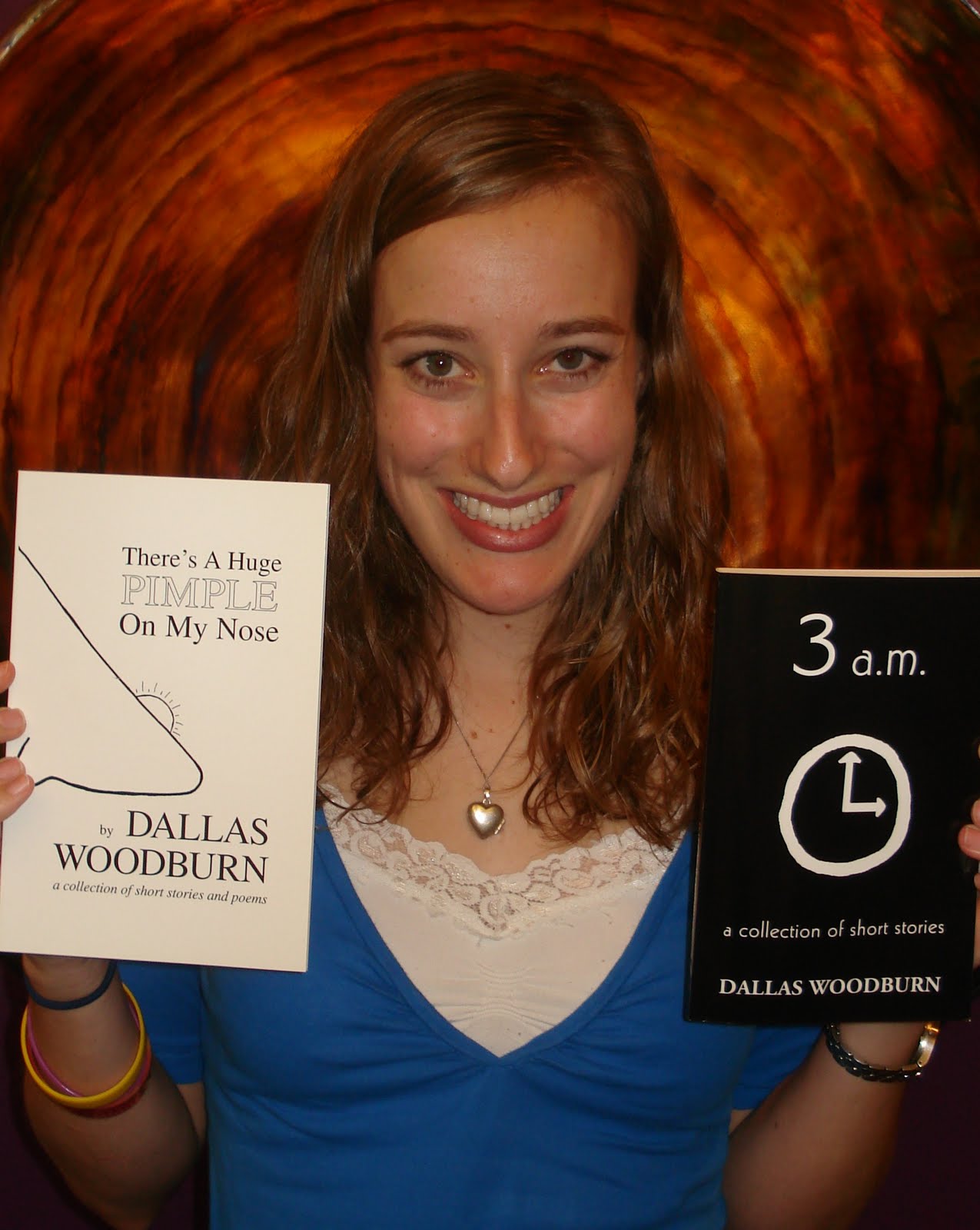
With a few young writer friends at this year's Summer Writing Camp

Tuesday, August 23, 2011

Guest Post by Holli Dawson: How to Write Vivid Characters

Finding People: Writing Characters That Feel Real

by Holli Dawson

Sometimes when you start a new story or writing project, the actual story starts to emerge as fully realized and solid, but the people inhabiting your imaginary world are somehow not quite as clear. Reading a novel with poor characterization is like ordering an ice cream sundae and only getting a scoop of ice cream and a banana on the side, without all the other ingredients that make it taste special. Imagine if Charles Dickens had left out any description or characteristics of Oliver in Oliver Twist. Would anyone have cared about his story or the book in general? What if Dorothy Gale had been written as some rather average girl with no discernable personality? Would we still be fascinated with The Wizard of Oz, and all the books in L. Frank Baum’s series?

Without interesting characters, a short story or book can feel unfinished and unsatisfying. Writing strong characters is vital to creating a great story. So, what do you when you are stuck? Below are some quick and easy suggestions to help you create three-dimensional people on two-dimensional paper.

1. Buy a Notebook and Carry It With You… Everywhere

If you love writing, you may already do this. However, set aside a few pages of your notebook for notes about people. On these special pages, instead of jotting ideas for your next series of short stories, or lines from poems that pop into your head, plan to write about what you see around you. Particularly the people you see around you. You can even draw sketches of them to jog your memory later.

2. Go to “The Source”

What’s “The Source”, you ask? “The Source” is any place where lots of people gather. Find a mall and sit in the food court. Go to your local community, fitness, or religious center and watch the people pass. Make notes about what you see, paying particular attention to those habits or actions that make each person unique. Maybe you see a child on the merry-go-round at the playground who giggles uncontrollably on the swing set, or a man at the truck rental counter who licks the end of his pen every time he is about to sign something. Look for the little things that make the people around you individuals.

3. Observe, Write, Repeat

When possible, go back to the same places, around the same time, each week. You may get lucky and see some of the same people. Seeing a person buy the newspaper at the same stand four or five times in a row makes it possible to notice little things like how they fold their money, or what they do with their coffee while they are trying to juggle their change, the paper, and the hot cup. Observe, write, and then go back and do it again.

4. Mix It Up

Once you have a couple of pages of observations, cut up the pages and drop the pieces on the floor face down. Mix them up and then turn a few over. Look at the combinations of habits and traits that you have selected. Maybe you chose “always wears baggy clothes”, “only eats apples”, and “buys two copies of the newspaper each morning.” These are all characteristics that can be added to the people who inhabit your story, and if used properly, can also inform and affect the action of your tale as well.

5. Remember Who You Are Observing

Remember, these are real people you are observing, so try to remain objective in your observations and simply observe rather than judge. Even if you see someone very interesting, do not simply recreate the person on paper. It is very disturbing to recognize yourself in someone else’s writing. Mix up your observations and create new people, rather than simply “borrowing” the personality of someone you observe. The more creative you are in the development of your characters, the more successful your story.

Saturday, August 20, 2011

Call for Submissions from Young Writers: Crashtest

If you are a teenager currently enrolled in high school, grades 9-12, Crashtest, the new online literary magazine for high school writers, would like to hear from you!

Crashtest publishes poetry, stories and creative non-fiction in the form of personal essays, imaginative investigation, experimental interviews, or whatever else you would like to call it. We’re looking for writing that has both a perspective and a personality. We’re looking for authors who have something to say. Check us out at www.crashtestmag.com.

Guidelines: Crashtest only accepts email submissions. Send submissions, in the form of a .doc or .rtf attachment only, and any queries to (replace (at) with @ when sending e-mail.)
 

Poetry: 3-5 poems at a time.

Fiction: 1 piece at a time (no word or page limit)

Creative Non-Fiction: 1 piece at a time (no word or page limit)

Please go to www.crashtestmag.com for complete guidelines.

Friday, August 19, 2011

Interview with Young Author Corinne Fombelle

At just thirteen years old, Corinne Fombelle published her 245-page novel Below the Surface, which she describes as "a novel about a girl and her best friend who wind up in a wild ocean adventure full of sharks, dolphins, fun, and surprises." The book is available as a Kindle download. Read on for Corinne's inspirational interview!

How did you get the idea for Below the Surface?

I decided I wanted to write a book, and I was trying to come up with something. I remember looking around the room trying to come up with a random idea. I saw a picture of a boat on the water and imagined something big going on underwater. That's when I first got the basic idea, and it just snowballed from there.

What made you first interested in writing?

In the fifth grade, when I was ten years old, my teacher Mrs. O'Brien gave us a creative writing assignment. It wasn't anything crazy, just a few short pages would do. So I wrote my little story for class and ended up really enjoying it. After I had turned it in, I decided to write a longer story, more like a book.

What is your writing routine? 

When I was writing Below the Surface, I would go on our desktop computer in the basement about every day and type. My family didn't even really realize the extent of my project until I told them it was finished. I asked my mom if she would print it for me. I would always just call it "my story" so they assumed that it wasn't much longer than the one I had written for class. She told me that when she went to print it, the printer ran out of paper, and she was so surprised. That was when she realized that I had really written a book at the age of ten. I just liked writing so much that I would go and work on it nearly every day.


What do you like about writing?

My favorite thing about writing is probably that there aren't really any restrictions. You can take it wherever you want and think of anything that pops into your head and weave it into an entire plot.

How do you deal with disappointment and rejection?

As a writer, there are many times you get turned down. The biggest problem I faced was my age. To get a book published with a real company, you need to get an agent or they won't listen to you regardless. But I also think it's hard to make agents pay attention if you're under eighteen. When I finally realized that there wasn't a way to get agents to read my manuscript, I tried to find another way to get my book published, which was my ultimate goal from the time I finished it. I did many revisions and tweaked lots of things, just to get it that much better while I was trying to find another way to get the public to read my work. Finally, my uncle sent me an email about Kindle publishing, and how it was a great opportunity. I looked into it, and found out that there was no down side, and went through with it. Basically, I just always try to find a way to make things work out.

What is your biggest advice for a young person going after their dreams?

I would tell anyone who wants to get into writing or anything else that they should do the best they can to perfect their skills at whatever it is they're doing, and then things will just work out. If you're put a lot of work into something, people will notice and try to help you reach your goal.

Is there anything else you'd like to add?

I finished Below the Surface when I was ten and didn't get it published until I was thirteen. I never gave up on it. I didn't quit. I still was working on it even further and fixing little things in the story. I was still trying to find a way to make it happen, and finally my uncle gave me the last boost I needed, the information about Kindle publishing. If I hadn't still been editing the book and trying to make it better yet, I wouldn't have been told about Kindle publishing because I would have probably stopped writing. So, even if you face disappointments that seem to stop you, keep trying and always keep the things in your life that make you happy, and they will someday benefit you because of your passion for it.

Friday, August 12, 2011

Interview with Robert-Harry Rovin, writing teacher to the homeless

A few weeks ago I was introduced to an amazing fellow writer, writing teacher, and literacy advocate named Robert-Harry Rovin. (Thanks to the wonderful Ilene Dillon, host of the Emotional Pro radio show, for making the introduction.) Robert-Harry leads a writing workshop for the homeless, coincidentally also called W R I T E O N, which proves that great minds do think alike! :) He was kind enough to visit the blog today to speak about the empowerment and hope that writing can bring into people's lives.

What would you like readers to know about you as an introduction?

I have a background of professional acting, singing and dancing in New York City and studies in Continuum with Emile Conrad, then teaching her work. I practiced Rosen Method Bodywork for twenty years and was a member of an Authentic Movement group for many years. Also for many years I’ve offered a program of the lyric poetry of nature as Green Man Alive as well as Yertl the Turtle and The Lorax for children portraying this archetypal character. Eleven years ago I enrolled as a student in Ridhwan’s Diamond Approach, a somatically based inquiry and meditation practice of self realization, which continues to be a strong foundation for my life.

Tell us about how the Write On! Workshops began.

Eight years ago I started a creative writing program for homeless people called W R I T E O N ! I had been working in a homeless shelter for years and felt that the depersonalization that results from people being enmeshed in the social service system was not being dealt with. I started offering creative writing classes to support people’s connection to their deeper selves and to nourish their well-being through self-expression. I combined the inquiry and meditation methods of the Diamond Approach with creative writing.

What have you learned through creating this program?

The creative work that has come forward also helps shift social perceptions: through the eyes of those more comfortably ensconced, the homeless can now be seen as creative individuals of worth rather than faceless abstractions; and in turn these souls without homes are supported in their ability to relate to the more affluent on a level where creativity and truth of expression are a shared experience.

I've been so moved watching people come alive as they discover and articulate their personal truth through prose and poetry. This aliveness has translated into all of us finding our deeper, more authentic voices as well as homeless people having more confidence and more success in advocating for a home, good health and work.


In your opinion, why is writing so important?

Writing provides an opportunity to give language to sensation, feeling and thought. Once articulated onto the page, this material is available for reflection and makes room for the next wave of truth telling to appear. Additionally, in W R I T E O N ! workshops the writers have the opportunity to read what they've written, then to receive only positive reflection of their writing, which further affirms the validity of their expression.

What is your writing process like?

In the workshops as well as at home or around and about, I write in a composition book with a black and white marbleized cardboard cover. Writings I wish to preserve I copy into my laptop. Occasionally I draw illustrations or elaborate doodles to accompany my poems, stories and essays.

Does teaching these workshops influence your own writing?

Extending unconditional acceptance to the writers in the workshops has had the affect of extending that affirming support to my own creative process, including writing.

What is your biggest advice for young people reaching for their dreams?

For young people, I would advise them to feel what part of their dream is most alive to them and to focus on following that aspect first; the rest will follow.

What are some of your favorite books?

Favorite books include Mary Oliver’s New and Selected Poems and Writing Alone or With Others by Pat Schneider. Right now I’m enjoying Speak Peace in a World of Conflict by Marshall B. Rosenberg, Ph.D; Wisdom Jesus by Cynthia Bourgeault; and Working in the Dark by Jimmy Santiago Boca.

Is there anything else you would like to add?

W R I T E O N ! presents public readings of creative writing and also has an internet radio program (www.blogradio.com) where people share their creative work. Type in robert-harryrovin at their web site to select an archived episode; or Google "Robert-Harry Rovin" to arrive at the W R I T E O N ! page on the same web site. Check out some of our participant’s writings on the blog at www.writeonworkshops.org

Tuesday, August 9, 2011

Part II: Interview with Alan Sitomer, award-winning author of NERD GIRLS

Today I am delighted to continue our Write On! interview with award-winning author and California 2007 Teacher of the Year Alan Sitomer. His latest book, Nerd Girls, is available on Amazon here. 


Besides being an author, you are an award-winning teacher. How does teaching influence your writing and the creation of your material?

I show all of my books to real kids first. My students, former students, fans I have gotten to know from around the country, they all get to check out my books hot off the press before anyone else gets a chance to see them. That means before my literary agent. That means before my editor. That means before anyone in the adult world who works in “the publishing industry.” Real kids are my readers and if they don’t like something – if they don’t laugh, if they don’t cry, if they don’t approve – then it doesn’t really matter what the adults think.

Kids are my best, and toughest audience. If my books flies with them, then I know I am good and I’ll go ahead and take it to the next level and begin to show it to the people in the publishing industry. But if I do not get their seal of approval, I stop, listen to their feedback and go back into the piece to go make it work. It’s probably why my fans are so loyal; they know that I respect them and I listen to them and I like them.

Kids who read my books can know that other kids have read them first and given the “Thumbs Up!” sign. I really think that is an important element to my work.


You often talk about “puttin’ the fun” in reading, writing and school. Why?

Let’s be honest: sometimes school can get SO BORING! And there’s no reason for it. But still, grumpy adults sometimes send the message to kids that life is to be serious, serious, serious and humorless, humorless, humorless.

To them I say BLAAAAHHH!

Students are at their best when they are enjoying what they are doing. Students will read more books when they like what they are reading. Students will learn more about a subject when they like what they are learning. Students will try harder to do a good job on the work they are being asked to do if they like the work that they are doing.

That’s my belief and I am sticking with it. (Besides, I was named California Teacher of the Year so ya might think I know just a wee little bit about this stuff, huh?)

Of course, there is a time to be serious. But being serious does not mean that you can’t enjoy yourself. Of course kids have to realize that there are some things in life you just have to do - and do well - even if they are not “fun.” I get that. It’s called reality and the bigger point of school is not to be entertaining. But for the most part I’ve found it’s actually quite satisfying to work really, really hard on something that challenges you deeply. Finding the joy in the challenge is what brings out the best in us.

However, sad to say, it seems as if some schools have forgotten this. Not all – and if you have a teacher that tries hard to make learning fun and meaningful and exciting and interesting – consider yourself lucky. Why? Because I’d venture to say that teachers like this eventually end up teaching you a great deal. School is not a comedy club, but it’s not a funeral home, either, and I believe that a classroom without laughter is a classroom that is not operating at its highest possible potential. Before kids are students, they are people and people need to laugh much like they need to eat and breathe and love.

Just to be clear, I believe that working hard is important. In my classroom, I have little patience for goof-offs but I have a lotta love for kids who put good ol’ fashioned positive energy into their efforts. My belief is that you are not enjoying the work, you probably aren’t going to learn as much as you would if you were enjoying the work. Plus, you are much more likely to try harder when you care about and enjoy what you are doing. Making reading enjoyable and making writing enjoyable makes better readers and writers.

Fun is my secret sauce. It works!

What else can we expect from Nerds Girls beyond this first book?

There is all kinds of crazy, fun stuff right now. I’ve built a game. I’ve created some author videos. There’s a Nerd Girls comic.

All free for anyone who wants them.

Of course, there’s already Hollywood talk of a movie and a TV show and clothes and merchandise and blah, blah, blah. (www.TheNerdGirlsWorld.com is the home base for information about all of this stuff.)

But for me, it’s all about the core material right now. Nerd Girls Book II is on its way and beyond that there are a few more surprises in the works.

All in all, I guess it’s just about making sure to have fun, work hard and continue enjoying all the great kids I get to meet who have become fans of my writing. Of course, the teachers and the librarians are great, too, but it’s all about the kids. Their approval means the most to me.

And really, how ridiculously lucky am I to have it? As I tell folks all the time, it’s quite healthy to channel your inner nerd. That’s all I am doing right now. It’s good for the soul.

If you missed Part I of my interview with Alan, check it out here.

Links:

Monday, August 8, 2011

Part I: Interview with Alan Sitomer, award-winning author of NERD GIRLS

Alan Sitomer is California’s 2007 Teacher of the Year. In addition to being an inner-city high school English teacher and former professor in the Graduate School of Education at Loyola Marymount University, Mr. Sitomer is a nationally renowned speaker specializing in engaging reluctant readers who received the 2004 award for Classroom Excellence from the Southern California Teachers of English and the 2003 Teacher of the Year honor from California Literacy. In 2007, Alan was named Educator of the Year by Loyola Marymount University and in 2008 The Insight Education Group named him Innovative Educator of the Year.

Mr. Sitomer has also authored 11 books to date for esteemed publishers such as Disney, Scholastic, Penguin/Putnam, and RB Education. These include six young adult novels, three children’s picture books, two teacher methodology books, and a classroom curriculum series for secondary English Language Arts instruction called The Alan Sitomer BookJam. In the past he’s been honored by the American Library Association (the A.L.A. named Homeboyz a Top Ten Book of the Year 2008, receiving the prestigious ALA Quick Pick Recognition for young adult novel which best engages reluctant readers) and within the next 18 months Alan will have four new titles hitting the shelves.

Mr. Sitomer is currently on sabbatical from the classroom as he works to re-shape literacy education through policy dialogue, professional development workshops, and authoring new materials for classroom use. He was kind enough to fit an interview with Write On! into his very busy schedule to talk about his newest release, NERD GIRLS, released last month from Disney books.

Alan, it is truly an honor to have you here today! What inspired you to write Nerd Girls?

There are a variety of reasons why I wrote Nerd Girls. Number one, I’m sorta a dork. I mean, I like reading, I like writing, I like learning about things that interest me and I love teachers and librarians.

Plus, I’ve been known to embarrass myself now and then. For example, I once gave an oral report in front of an entire class with my fly unzipped. I thought people were laughing at my ingenious use of comedy. Instead they could see my tightie-whities.

Oy vey!

Of course, when I was a kid in school this made my life kinda tough but once I realized that I am what I am the world got a lot easier for me. I wasn’t cool, sexy, the class president, or voted most likely to conquer the planet. I was awkward with members of the opposite sex, laughed like a goofball, and there were times when I felt like the loneliest person on the planet.

Add it all up and I was a nerd.

Then I realized, once I got older, that there are more of “us” than there are of “them” anyway so I decided to channel my inner nerd and put some smiles on paper. The result was this book and it’s been received really, really well. (Hey, people like to laugh.) I’m very proud of the work and plan to do more.

Nerd Girls is your first comedy. How is writing comedy different than writing in other genres?

Writing comedy is very different in some regards and yet, writing comedy is very much the same as all other genres of writing. For example, when you write action adventure, you have chase scenes where the bad guy hotly pursues the hero in fast paced, breathless action. In comedy, somebody farts. Or bonks their head. Or farts while bonking their head while being hotly pursued by a bad guy in fast paced-breathless action.

As you can see, it’s an art.

However, the rules of good writing still apply. You must have a protagonist with a goal who wants something. And that protagonist must have stuff that gets in their way which prevents them from obtaining that which they want.

Stories are all about protagonists taking meaningful journeys. And we love stories so because all of us are taking our own journeys right now. We identify with people who get into trouble, people who have a crush, people who screw up BIG TIME and people who pull a rabbit out of their butt at the very last minute and save the day in a way that proves, “Ya know what, I actually have something good to offer this world after all. So NAH!”

And then they fart and then we smile and then we realize that the characters in the books we read and love are actually our true friends. They are people who understand us, people who inspire us and people who make us realize that doing good things and living in a good way makes us feel good on the inside.

Really, what beats that?


Where did the kooky characters in this book come from?

The first kooky character is probably me. I just love to laugh. Basically, my rule is, if the book doesn’t make me laugh, then why in the world should I expect that it’s going to make anyone else laugh, either? This means that while I was writing Nerd Girls, I was laughing a lot.

Out loud.

All by myself.

In a room with no other human beings. Just me sitting behind a desk laughing out loud with no one else around.

They lock people up for that kind of stuff.

Also, some parts of the book were written when I was sitting on airplanes on my way to go visit a school and talk with the kids. (I do that a lot.) This means I’m the loony guy chuckling out loud to himself on a crowded airplane where no one else ever gets to see the joke or learns what’s so funny.

I’m used to people staring. But hey, whatever works, right?

Of course I draw my inspiration from other people, too. Lots of real people. Real kids especially. Here’s a practice test.

1) Think of a dork you know.

2) Now think of that person doing something dorky.

3) Now think of that person doing something dorky while thinking to themselves that what they are doing is not dorky at all but rather totally normal behavior.

That right there is how my characters are born. Some people are just downright funny. I put those people in my books. See… simple.

I gotta admit though, I think I was born with a weirdo magnet in my body because kooky, nutty, dorky, oddballs just seem to find me. When I was a kid in middle school, I knew people who smelled their belly button lint. When I went to college, I knew a person that ate their cereal with Coca-Cola instead of milk. Now, as an adult, people who own hairless dogs sit next to me and just start conversations for no reason at all.

Like I said, it must be a magnet. But when you are a writer, it comes in handy.

Indeed, all of my characters are fiction. But really, they’re not. They’re just people I know or see or meet with a few name changes. After all, why invent dorks and nerds and doofuses when there are dorks and nerds and doofuses all around us?

In Nerd Girls the good guys win but also, they don’t. Why write a book for kids that is layered with complexity like this?

Look, kids today are smart. Wicked smart. And writing neat little sweet stories that wrap up like perfect little fairy tales is hardly the way the real world works.

Now, I don’t want to give anything away about the book for those that have not yet read it but are planning to, but twists are important to good books. It’s part of the magic that makes them memorable and while I wanted to write an LOL comedy – which I kinda believe I have – I also wanted to make sure today’s young readers didn’t feel as if I was writing down to them or not respecting their cerebral abilities. Like I said, kids today are smart and sure, they want to laugh, but they also want to be challenged and appreciated for being more intelligent than so many adults often believe they are.

Nerd Girls is layered and complex because today’s young people are layered and complex. But today’s young people also have a wonderful sense of humor. They love to laugh.

And so do I.

In a way, this laughter is where we all get to meet.

# # #

Check back tomorrow for PART II of my interview with Alan Sitomer!

And in the meantime, for more information about Alan, please visit his official website at www.AlanSitomer.com.